Why Underground Distribution Lines Deliver 90% Fewer Power Outages
Published: Author: Conor
Underground distribution lines are the gold standard of a new electrical infrastructure with reliability, visual beauty, and immunity to weather-related outages that can not be matched. With cities getting congested and extreme weather events increasing, underground power distribution systems are becoming the most favored option in distributing electricity safely and reliably to residential, commercial, and industrial establishments.
The Growing Need for Underground Distribution Lines
Power systems rely on electrical distribution systems and this system moves electricity off the substations and into homes, businesses and industry. Historically, the power distribution involved mass power lines that crossed over poles within the neighborhoods and city-scapes. Even though these overhead lines have served us for decades, they have some limitations.
The vulnerability of the overhead lines to damage due to weather includes exposure to high winds, heavy snow and lightning. They can also be ugly, spoiling the aesthetic beauty of cities and towns. This has led to the current trend of underground distribution lines, which is being mostly adopted in most new cities, due to their reliability and aesthetic appeal.
What Are Underground Distribution Lines?
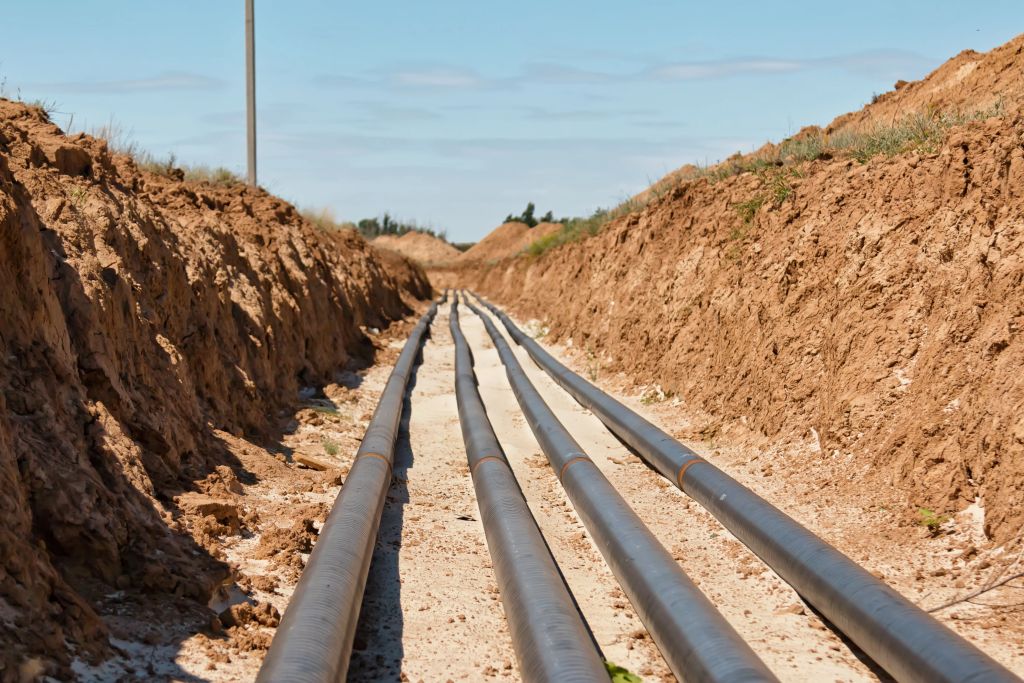
Underground distribution lines are literally what they sound like: a set of electrical cables installed underground to help transmit power to consumers at the substations. Such lines are typically composed of copper or aluminium cables that are insulated and coated to conduct electricity safely and efficiently. The cables are then laid in trenches or ducts that shelter them against all the elements of weather, making the system less susceptible to external conditions.
Underground distribution lines must be installed with rigorous formatting, which involves digging unfilled holes where the conduits will be set and cables put in place to prevent wear and tear. Additionally, the monitoring of these lines is primarily conducted using remote sensing and diagnostic tools to ensure that they operate continuously without interruption.
Key Benefits of Underground Distribution Lines
Underground distribution lines are highly beneficial and a studio attraction in urban areas and other regions with extreme weather conditions. The main benefits of underground electrical systems are as follows:
1. Increased Reliability and Safety
Among the most compelling reasons to invest in underground distribution lines is increased reliability. Underground systems are not subject to weather-related problems, such as storms, high winds, and falling trees, that affect overhead lines. The result is a reduced number of outages and interruptions of power supply so that people can access a steady and reliable source of power in their respective homes and business sectors.
In places that are often afflicted with violent storms or wildfires, the use of underground lines poses a great hindrance to the occurrence of power cuts due to the possible impacts of fallen trees or lightning during these times. The possibility of damaging infrastructure will also be nonexistent since the power lines will be out of reach deep in the ground, and this is a safer alternative in general.
2. Aesthetic Appeal and Space Efficiency
The underground distribution lines may serve as a component of aesthetic enhancement in cities. Above-ground power lines can be unattractive, especially in areas with beautiful scenery or those that are highly populated. Cities can maintain their natural beauty by undergrounding the layout of power lines, which will decongest their appearance. This is especially true in regions where development is taking off and there is a great need for a clean and attractive urban environment.
Besides improving the beauty of a city, underground lines also create a better utilization of the available space. No bulky poles and overhead cables are required, so the city space can be used better and leave space for parks, commercial buildings, etc.
Overhead lines must be maintained and repaired regularly, especially during calamities/storms and heavy snowfall. Getting on top of utility poles to fix the fallen lines can be costly and hazardous. However, underground distribution lines are less likely to require maintenance as often since they are not exposed to the elements all the time. The long-term savings on operational expenses, such as maintenance, can be substantial, although the initial installation cost may be high.
Being less prone to the effects of physical impacts, such as vehicles hitting poles or animals chewing on wires, underground systems can be significantly less affected than overhead lines.
4. Improved Resilience and Security
Underground distribution lines are also not prone to external threats, such as vandalism, theft, or false damage. When power lines are in open fields, there is always a danger of interference or malicious damage, leading to large power outages. Such risks are reduced with underground lines, and the over-grid is now more secure and more resilient.
Also, the underground systems enable maximization of the grids to natural disasters such as earthquakes and floods. The cables are buried deep in the ground; hence, the chances of them being targeted by soil movement or water buildup are minimal.
Challenges of Underground Distribution Lines
Although underground distribution lines have several benefits, they also face a few challenges that should be considered before the government installs the line underground. The most typical of the problems are:
1. Higher Initial Installation Costs
The installation of underground lines is usually more expensive than the installation of overhead lines. Digging, Trenching, and cable laying are labour-intensive tools, and one needs a heavy investment in terms of both machinery and manpower. Also, special materials that might be required e.g. high-quality insulating coating, may be an addition.
These increased installation costs, however, can be recovered over time by the money saved on maintenance and repairs, making underground distribution lines a more economical solution in the long run.
2. Complicated Installation and Maintenance
The cost of installing underground lines is not cheap, as it involves a considerable amount of planning and coordination especially when carrying out the task in a densely populated city, since the excavation of a trench may likely affect the existing infrastructure. The type of existing utilities, including water lines, gas lines, and sewer lines, should be carefully taken care of during the installation process, which can be challenging.
It is also possible that the maintenance of underground systems is more complex than that of overhead lines. In the event of an error, locating and detecting the error in a buried cable requires specialised equipment and may take considerable time. In underground lines, repair may mean digging up parts of the trench, which is not only expensive but also very inconvenient.
3. Limited Access for Future Upgrades
Whereas underground lines are built to endure long, renovating or adjusting an underground system might be complex than undertaking the same process in cases of overhead lines. Adding or expanding connections may involve excavations in parts of the grid, which can be time-consuming and energy-intensive, and may also be a nuisance to the immediate population.
As power requirements evolve, the electrical equipment and supplies incorporated into the underground system must be well-designed to accommodate subsequent requirements. This can be achieved through the use of modular and flexible systems, which can be easily modified without requiring major construction work.
The Role of Electrical Equipment and Supplies in Underground Distribution
High-quality electrical equipment and supplies are essential for underground distribution lines to operate effectively and efficiently. Amongst the major elements of these systems, we can include:
Cables: These consist of the major part of underground transmission of electricity; they are thin electric wires and are either copper or aluminum and are insulated to avoid wastage of electricity or short circuiting. The cables should be strong enough to withstand the pressure of the environment, which includes a temperature swing and mechanical tension.
Transformers are essential for converting high-voltage electricity into usable energy. Subway systems can utilize custom transformers to address the challenges of underground power and wiring.
Switchgear and Circuit Breakers: Switchgear and circuit breakers, including DC circuit breakers where applicable, are employed to protect the grid against overload and faults. They are designed in such a way that when part of the grid becomes faulty, they automatically de-energise the grid, preventing the entire system from going offline. These can be found in underground vaults in cases of underground systems to ensure accessibility for maintenance and repair.
Conduits and Ducts: They are used to put up the electrical cables to be safe other than getting unprotected rattled. They are usually constructed using strong materials such as PVC, which are very resistant to environmental conditions.
Electric equipment supplies play a crucial role in ensuring the success of underground distribution lines. Unless there exist trustworthy pieces, the benefits of underground systems may be canceled, and the blackouts may still take place. Suppliers of electrical equipment must also be able to provide quality products that can sustain the unique requirements of underground installations.
The Future of Underground Distribution Lines
With the increasing size of cities and the ensuing need for reliable and sustainable power, underground distribution lines will become increasingly critical over time. Due to recent technological innovations, underground systems will become cheaper, more sustainable, and easier to maintain. Advances in the material used to make cables, distant monitoring, and automatic fault detection systems will enhance the stability of these systems and hence minimize the expenditure on the repair of such systems and delays in their restoration.
Moreover, renewable energy sources connected to the grid will also contribute to the demand for secure and resilient infrastructure. As more homes and businesses adopt solar panels and electric vehicles, the power grid will need to adapt to accommodate these emerging trends in energy consumption. A flexible solution that allows incorporation of decentralized energy sources is the underground distribution lines, which can benefit the establishment of a more sustainable and efficient power grid.
Final Thoughts
The underground distribution lines are also a crucial aspect of the recent electrical infrastructure and offer several benefits compared to conventional overhead lines. They are a safer, more reliable, and aesthetically cleaner way of distributing power to homes, businesses, and industries. Although it has a greater installation expense and increased difficulty during maintenance and upgrades, underground systems are worth the investment in the long run.
The importance of underground distribution lines cannot be overstated as cities become more densely populated, demand clean, sustainable energy, and require protection against inevitable power outages. These systems will continue to develop and meet the future’s energy demands with the help of high-quality electrical equipment and supplies.
You may want to know more about power distribution. Click on the following article to read:
Figure 1. Contactors, circuit breakers, and motor starters solve different control and protection tasks. These three devices often appear in the same motor-control panel, but they solve different problems. A contactor handles frequent, remote, or automatic switching during normal operation. A circuit breaker interrupts abnormal current within its rated capability. A motor starter normally combines […]
Only “solarcombiner box” in your quotation is far from sufficient. What should be connected to the box? A PV string or an inverter output? They match different jobs. The price and enclosure size can be considered at a later stage. What connects to the input is the top priority. To be more specific, a DC combiner […]
The main types of circuit breakers used in low-voltage distribution include miniature circuit breakers (MCBs), molded case circuit breakers (MCCBs) and residual-current devices such as RCCBs and RCBOs. They are not interchangeable. MCBs and MCCBs are selected for overcurrent protection in different circuit roles, an RCCB provides residual-current protection without integral overcurrent protection, and an […]