Heavy machinery has become a basic need in industrial areas, offices, and even homes. And it is also quite necessary to save heavy machinery from sudden electric faults. One fluctuation in an electric current can destroy your expensive motors. They can cause costly repairs or can even have to replace the machine with a new one.
Your machine can be saved from all this if you just install thermal overload relays of your equipment. Different thermal overload relays are available for all kinds of requirements and will always keep you safe from any harm from the equipment.
Why is Thermal Overload Protection Essential?
The most essential component of any electrical device is its motor. It drives the whole mechanical system in industry, manufacturing plants, or even home appliances.
However, these essential components can sometimes be harmed by electrical surges or other faults. In case of any fault, the motors get overheated, which can lead to damage, expensive repairs, or even replacement.
But, to get rid of all of that, you can always have overload protection in your systems. Without overload protection, the machine can experience excessive current flow, which can cause overheating and malfunctioning.
There is a 100 percent chance that the machine can burn out due to these electrical spikes. To get away with all these, different thermal overload relays can be quite effective in making sure that the motor and other components are safe from these electrical spikes.
What is a Thermal Overload Relay?
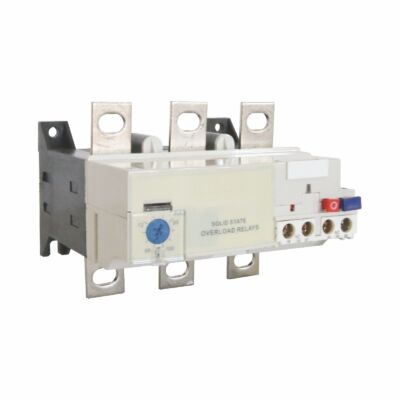
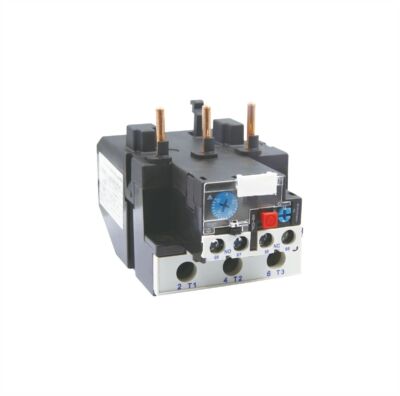
Thermal overload relays are electromagnetic protecting devices that save your motor and other electrical components from overload of current and other failures. They work by monitoring the heat generated by the flow of current.
If it starts to overheat, that means the current is overflowing. The thermal overload relay then immediately cuts off the power supply.
Conjunction and contractors are two devices that control the power supply to motors. Thermal overload relays are typically used with them once they detect an excessive amount of current. Thermal relays instantly trip and shut down the circuit.
Components of a Thermal Overload Relay
Thermal overload relays consist of many essential components that work together and can detect any issue or electric surge right away. These components are:
Bimetallic Strip
Bimetallic strips are the main component of thermal overload relays. These strips are two metals with different thermal expansion rates. When the current overflows and generates heat, one metal expands more than the other, and the strip starts to bend. This bending action triggers the relay to shut the trip and the power supply.
Contact Mechanism
The contact mechanism is the component that shuts down or turns on the circuit. When the bimetallic strip bends, it signals the contact mechanism. The contact mechanism then breaks the connection and stops the flow of electricity to the motor and other components.
Once the issue is resolved and the condition is cleared, you can reset the relay to turn on the power supply back again.
Auxiliary Contacts
The auxiliary contacts provide additional features in thermal overload relays. They are mainly used to trigger alarms or send signals to the control panel. They can also shut down a part of the system in case of overload. Because of these auxiliary contacts, the operator can be aware of the electrical faults and take necessary action.
How Does Thermal Overload Relay Work?
Thermal overload relays work by sensing heat through the excessive amount of current flow, which can harm the entire system. Here is how it works.
Thermal Setting Mechanism
The thermal setting mechanism works with the help of a bimetallic strip. When the current overflows, it generates heat. The strip then starts to bend due to overheating.
Tripping Mechanism
When the bimetallic strip starts to bend, it triggers the tripping mechanism. This action opens the circuit and cuts off all the power supply to the system. When the system gets disconnected, it saves the motor from overheating and getting damaged.
Reset Mechanism
After the thermal relay trips and cuts off the circuit, it can be reset and continue to work again. In every thermal relay, there are both manual and automatic reset mechanisms. The manual mechanism requires an operator to turn the system back on. And the automatic reset mechanism will start over automatically once the issue is resolved.
Different Types of Thermal Overload Relays
Depending on different types of applications and environments, there is always a type of thermal overload relay that could fit the requirements perfectly. Understanding each type and knowing the differences in all will help pick the right thermal relay for your system.
Bimetallic Thermal Overload Relays
The most common type of thermal overload relays are ones with bimetallic strips. The reason for being everyone’s priority is that they are reliable and affordable. That is why they are very common in industrial areas. In addition to this, they are easy to maintain, which is why they are quite popular when it comes to protecting motors.
Electronic Thermal Overload Relays
These types of relays use sensors and components to control and monitor the flow of current through the motor. They are more accurate than bimetallic strips and are adjustable. You can easily adjust the sensors according to your requirements. Because of their accuracy, they are often fit for the usage of sensitive and high-precision applications.
Single-Phase VS Three-Phase Relays
Single-Phase Relays: They are normally used in homes and small businesses because they are designed for systems that use one phase of power.
Three-Phase Relays: Their ability to handle three-phase power makes them the perfect option for large industrial systems. When one of the phases gets lost or fluctuates, it can cause some serious damage to the motor. Here, three-phase relays come to the rescue and protect motors from such incidents.
Applications and Benefits of Thermal Overload Relays
There are many reasons for the use of thermal overload relays in industries. Some of its main applications are as follows.
Motor Protection
Thermal overload relays make sure that the motor works efficiently and safely. It also saves the motors from expensive repairs or downtimes. They protect motors from overheating because of excessive current or mechanical blockage.
Pump and Compressor Protection
Pumps and compressors are the most essential machines for industries like oil and gas, water treatment, and manufacturing. These machines must keep running smoothly without overheating. We can use thermal overload relays to make it possible. They help both pumps and compressors to work smoothly without any damage.
HVAC System
In the heating, ventilation, and air conditioning systems, motors are the main components that control the airflow and temperature of the building. But, they can fail if they get overloaded. It can also cause the system to break.
Thermal overload relays save the motors from such failures and make sure that the HVAC system works smoothly, whether it is in the home or any commercial building.
Conveyors and Industrial Machinery
In industrial settings, heavy machinery and powerful motors are very common. They can cause overheating and stop production or even cause expensive repairs. But thermal overload relays save them from such massive losses. They make sure that the motor keeps running and performs smoothly in various industries.
How to Select the Right Thermal Overload Relays
There are many important factors to consider before selecting a thermal overload relay. Here are some of the important points.
Motor Specification
Before choosing a thermal overload relay, make sure that it matches the current rating and power supply of your motor. The relay should be able to handle the current without tripping again and again.
Adjustable vs. Fixed Setting Relays
Some relays come with the option of adjusting your device based on the monitoring conditions of your motor. They are called adjustable setting relays. On the other hand, fixed-setting relays work on specific current levels. They are easy to install but are not very flexible.
Ambient Temperature Compensation
Temperature changes can also affect how a relay temperature works. Choose the relay with ambient temperature compensation if the equipment is in an area where the environment keeps changing. It will help the relay to work properly even if there are fluctuations in temperature.
Final Thought
Motors and equipment in any home, office, or industrial area are just one electrical fault away from becoming useless. They could easily go wasted because of overheating. But they can still work fine if you have thermal overload relays installed for equipment. Quality thermal overload relays from reliable electric equipment suppliers make sure that your heavy motors stay safe and damage-free during any electric spike.
For different kinds of environments, places, and requirements, there is always a kind of thermal overload relay that could fulfill your every need. They are even available in manual and automatic mechanisms to make it convenient for you to protect your high-end machinery.
FAQs
What to do if the temperature around the equipment keeps changing?
If the environment keeps changing, the thermal relays will keep tripping. For such conditions, look for thermal relays with ambient temperature compensation.
How does thermal overload protect relays?
Thermal relays detect the overflow of electric current when the system starts to overheat. In such cases, it immediately shuts down the circuit to stop the overflow and save the device.
Can I use the thermal overload relays again after they have tripped?
Once the relay trips because of any fault, it can be reset after the issue has been resolved, either manually or automatically.
How does a thermal overload relay work?
Thermal overload relay works by detecting overheating in the machine. They use bimetallic strips that bend due to overheating and break the circuit immediately.
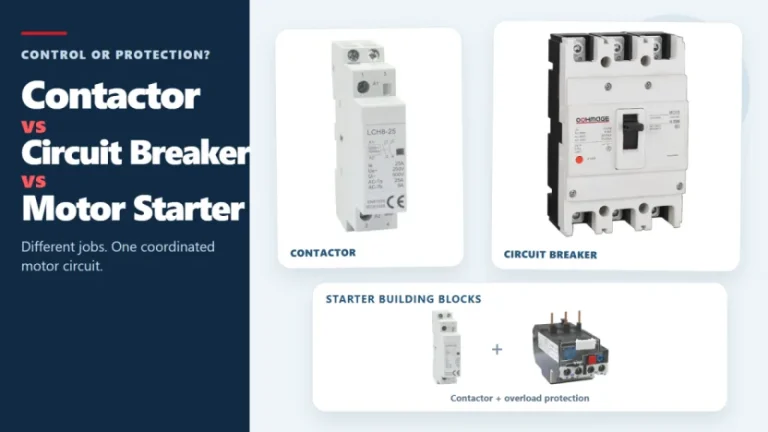
Figure 1. Contactors, circuit breakers, and motor starters solve different control and protection tasks. These three devices often appear in the same motor-control panel, but they solve different problems. A contactor handles frequent, remote, or automatic switching during normal operation. A circuit breaker interrupts abnormal current within its rated capability. A motor starter normally combines […]
The main types of circuit breakers used in low-voltage distribution include miniature circuit breakers (MCBs), molded case circuit breakers (MCCBs) and residual-current devices such as RCCBs and RCBOs. They are not interchangeable. MCBs and MCCBs are selected for overcurrent protection in different circuit roles, an RCCB provides residual-current protection without integral overcurrent protection, and an […]
Introduction If you are searching for the RCBO BS number, the answer most commonly required in UK and IEC-based electrical procurement is BS EN 61009-1. This is the principal product standard associated with residual current circuit breakers with overcurrent protection used in residential, commercial, and similar installations. However, merely the BS number is not sufficient […]