What Is a Contactor and How Does It Work in Circuit Control?
Published: Author: Conor
A contactor is a key electrical component used to control the flow of electricity within a circuit. Acting as an electrically controlled switch, it is commonly found in industrial, commercial, and residential applications where the need to control high-voltage equipment with low-voltage signals arises. Contactors are most often used in motor control circuits and automation systems, enabling the safe and efficient operation of machinery and other devices. In this article, we’ll explore what a contactor is, how it works in circuit control, and why it’s essential for maintaining system performance and safety.
A contactor is an electrically controlled switch used to manage the flow of electricity within a circuit. Typically, it’s employed to control high-voltage devices using low-voltage control signals. A contactor consists of several key components: a set of electrical contacts (usually made from silver or copper), a coil (which is energized to open or close the contacts), and a spring (to return the contacts to their default position when the coil is de-energized).
When the contactor’s coil is energized, it generates a magnetic field that pulls the contacts together, allowing electricity to flow through the circuit. When the coil is de-energized, the spring pushes the contacts apart, cutting off the power.
Contactor applications are widespread, especially in motor control and lighting circuits. For example, in industrial settings, contactors are used to switch large motors on and off. A simple example is the use of a contactor in an HVAC system, where the contactor switches the compressor on and off based on temperature settings.
Contactors can also incorporate overload protection and are designed to handle frequent switching cycles, making them suitable for environments with high demand and heavy-duty applications.
The operation of a contactor is based on an electromagnetic mechanism. When a low-voltage signal energizes the coil inside the contactor, it creates a magnetic field. This magnetic force pulls the contacts together, allowing the current to pass through and power the connected equipment. When the coil is de-energized, the magnetic field collapses, and a spring mechanism pushes the contacts apart, cutting the power and stopping the equipment.
For example, in a motor control circuit, when the coil is energized, the contactor allows power to flow to the motor, enabling it to run. When the coil is de-energized, the contactor cuts off the power, stopping the motor. This ability to remotely control high-power systems with a low-voltage signal makes contactors invaluable for applications that require frequent switching, such as in HVAC systems, industrial machines, and lighting controls.
Contactor design allows it to handle large amounts of electrical current without damage, making it highly reliable in systems that need frequent or automated switching. Its simple yet effective design also ensures it can endure thousands of switching cycles, providing a durable and safe solution for circuit control.
The Role of a Contactor in Circuit Control
The primary role of a contactor in circuit control is to act as a reliable switch that can handle the opening and closing of high-voltage circuits using low-voltage signals. This capability is crucial in systems where frequent switching is required, but manual intervention would be impractical or inefficient.
In motor control applications, contactors are essential for controlling the start and stop of motors. For instance, in an industrial pumping system, the contactor is used to remotely turn the pump on and off based on the system’s demand or automated control signals. When the control circuit sends a low-voltage signal, the contactor closes the circuit, allowing the motor to operate. Once the signal is removed, the contactor opens the circuit, stopping the motor.
Contactor systems are also integral in automation and HVAC systems, where they control the operation of critical equipment like compressors, fans, and cooling units. By using contactors, these systems can operate efficiently without constant manual operation.
Additionally, contactors are designed to withstand frequent switching cycles, making them durable enough for industrial environments where reliability is paramount. This ability to control large electrical loads remotely not only enhances safety but also optimizes system performance and energy efficiency.
Types of Contactors Used in Circuit Control
Contactor systems come in various types, each designed to meet specific needs in circuit control. The most common types of contactors used in electrical systems are AC contactors, DC contactors, and specialized contactors.
These are the most commonly used contactors, designed to handle alternating current (AC) circuits. AC contactors are widely used in motor control applications, lighting systems, and HVAC systems. They are designed to handle high-voltage AC power and are ideal for systems that require frequent switching. For example, an AC contactor in an industrial motor control system can switch large motors on and off with ease.
DC Contactors
DC contactors are used in direct current (DC) circuits, where they manage the flow of power in systems such as electric vehicles, battery-powered equipment, and renewable energy applications. Since DC circuits have a constant current flow, DC contactors are designed to handle the unique challenges of switching DC loads, such as arc formation when the contacts open. These contactors are built to handle higher inrush currents and prevent arc damage.
Specialized Contactor Types
Specialized contactors are designed for specific applications that require additional features or protection. This category includes thermal overload contactors, which protect motors from damage by disconnecting the power in case of overloads, and magnetic contactors, which use electromagnetic force to open and close contacts rapidly. These contactors are commonly used in automation systems and industrial applications, where frequent switching and precise control are required.
Each type of contactor is tailored to meet the demands of specific electrical systems, ensuring efficient and safe operation.
Advantages of Using Contactors in Circuit Control
Using contactors in circuit control offers several key advantages that enhance the efficiency, safety, and reliability of electrical systems.
Remote Control and Automation
One of the primary benefits of contactors is their ability to control high-voltage equipment through low-voltage signals. This allows for remote operation of systems like HVAC units and industrial motors, reducing the need for manual intervention. For instance, a contactor can enable an HVAC system to operate automatically, based on temperature settings, without the need for a technician to turn the system on or off.
Reliability and Durability
Contactors are designed to withstand frequent switching cycles, making them highly reliable in environments with continuous operation. This durability is particularly valuable in industrial applications, where equipment like motors or conveyor belts require regular switching. The long lifespan of contactors reduces the need for maintenance, ensuring consistent performance.
Energy Efficiency
By enabling precise control of power distribution, contactors help optimize energy usage. In applications like lighting systems, contactors can be used to automatically turn off lights when they are not needed, contributing to energy savings.
Safety
Contactors are also crucial for ensuring electrical safety. By controlling the power supply, they prevent overloads and protect equipment from damage. For example, thermal overload contactors protect motors from running at unsafe temperatures, preventing potential damage and system failure.
How to Choose the Right Contactor for Your Circuit
Selecting the right contactor for your circuit is crucial to ensure both efficiency and safety. Here are the key factors to consider:
Voltage and Current Rating
The contactor must be capable of handling the voltage and current levels of your circuit. For AC circuits, ensure the contactor is rated for the correct voltage (e.g., 110V, 230V, or 480V) and can handle the required current load. Always choose a contactor with a higher current rating than your circuit’s maximum to prevent overheating or failure.
Type of Load
Different types of loads require specific contactor features. For inductive loads (e.g., motors), choose a contactor with a higher breaking capacity to handle inrush currents. If you’re switching resistive loads (like lighting), standard contactors are usually sufficient.
Environment
Consider the operating environment. If the contactor is exposed to dust, moisture, or extreme temperatures, ensure you choose one with the appropriate environmental protection rating (e.g., IP65). For example, IP-rated contactors are suitable for outdoor or harsh industrial environments.
Control Voltage
The control voltage (typically low voltage) for energizing the contactor coil should match your control system. Ensure the coil voltage aligns with your control signal (e.g., 24V DC, 120V AC).
By considering these factors—voltage, current, load type, environmental conditions, and control voltage—you can ensure that the contactor chosen will provide optimal performance and reliability in your circuit.
Troubleshooting and Maintenance of Contactors
Maintaining and troubleshooting contactors is essential to ensure their continued performance and to avoid potential failures in your electrical system. Here are some common issues and maintenance tips:
Common Issues
Worn Contacts: Over time, the contacts inside a contactor can wear out due to frequent switching, leading to poor performance or failure to complete the circuit. If you notice flickering lights or equipment not powering up, it may be due to worn contacts.
Coil Failures: A damaged or burned-out coil is a common issue, particularly if the contactor has been subjected to excessive voltage. A burnt coil can prevent the contactor from switching, even when a signal is applied.
Overheating: If a contactor is overloaded or operating in a high-temperature environment, it may overheat, causing failure. This can lead to damage to the contacts or coil.
Maintenance Tips
Regular Inspection: Periodically inspect the contactor for signs of wear, arcing, or burning. Pay special attention to the contacts and coils for any damage.
Clean Contacts: Dust or dirt on contacts can cause poor conductivity. Use a soft brush or compressed air to clean them regularly.
Check Coil Voltage: Ensure that the coil is receiving the correct voltage as specified by the manufacturer to avoid overheating or damage.
Conclusion
In summary, contactors are essential components in circuit control, enabling the safe and efficient management of high-voltage systems using low-voltage control signals. Whether in motor control, HVAC systems, or industrial automation, contactors play a crucial role in ensuring reliable performance and safety. By understanding how contactors work, selecting the right type for your system, and performing regular maintenance, you can enhance the longevity and efficiency of your electrical circuits. With their ability to handle frequent switching, contactors remain a cornerstone in modern electrical systems, supporting both everyday operations and critical applications.
If you’re looking for high-quality contactors for your electrical systems, explore our Oohmage website or contact us for expert advice tailored to your needs.
FAQs
What is the difference between AC and DC contactors?
AC contactors are designed to control alternating current (AC) circuits, typically used in motor control, HVAC systems, and lighting. DC contactors, on the other hand, are used for direct current (DC) circuits and are designed to handle the unique challenges of switching DC loads, such as preventing arc formation when contacts open, which is more common in DC circuits.
Can contactors be used for light-duty residential applications?
Yes, contactors can be used in residential applications, especially in systems that require automated or remote control of high-voltage equipment, such as lighting systems, heating systems, or air conditioning units. However, for light-duty applications, a standard, lower-rated contactor may be sufficient, as long as it meets the voltage and current requirements of the system.
How often should I maintain or inspect a contactor?
Regular maintenance and inspection of contactors are recommended to ensure their optimal performance. Inspect the contacts for wear and arcing, check for coil damage, and ensure the contactor is free from dust or debris. Maintenance frequency depends on the environment and usage, but a yearly inspection is a good practice for most applications.
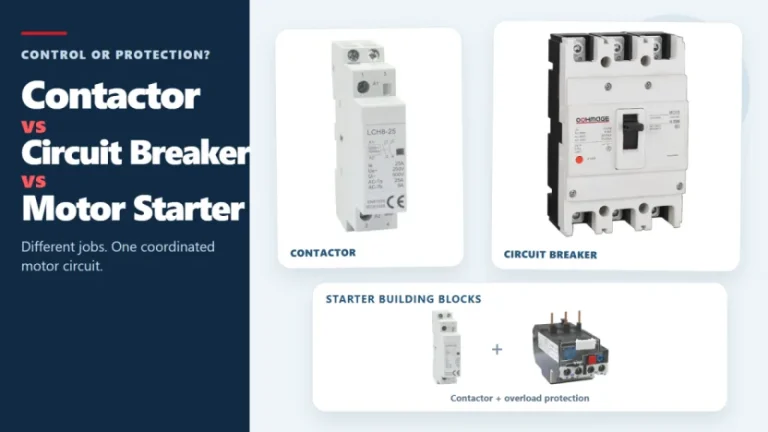
Figure 1. Contactors, circuit breakers, and motor starters solve different control and protection tasks. These three devices often appear in the same motor-control panel, but they solve different problems. A contactor handles frequent, remote, or automatic switching during normal operation. A circuit breaker interrupts abnormal current within its rated capability. A motor starter normally combines […]
The main types of circuit breakers used in low-voltage distribution include miniature circuit breakers (MCBs), molded case circuit breakers (MCCBs) and residual-current devices such as RCCBs and RCBOs. They are not interchangeable. MCBs and MCCBs are selected for overcurrent protection in different circuit roles, an RCCB provides residual-current protection without integral overcurrent protection, and an […]
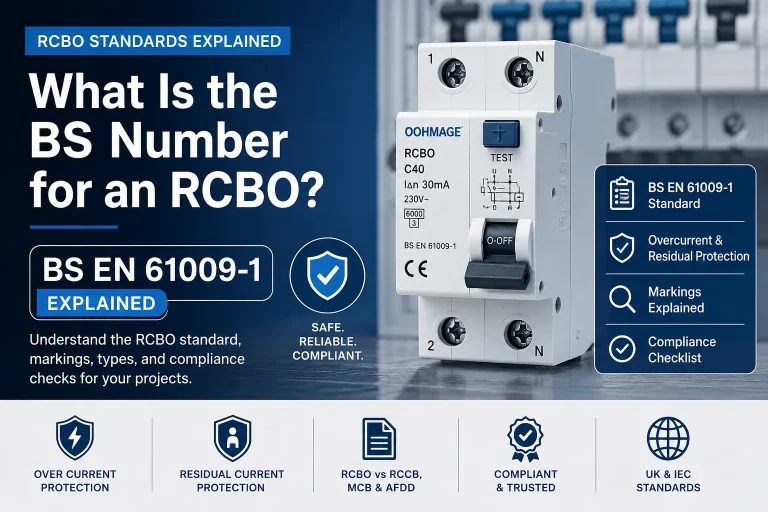
Introduction If you are searching for the RCBO BS number, the answer most commonly required in UK and IEC-based electrical procurement is BS EN 61009-1. This is the principal product standard associated with residual current circuit breakers with overcurrent protection used in residential, commercial, and similar installations. However, merely the BS number is not sufficient […]