What is a Tandem Circuit Breaker: A Complete Guide
Published: Author: Conor
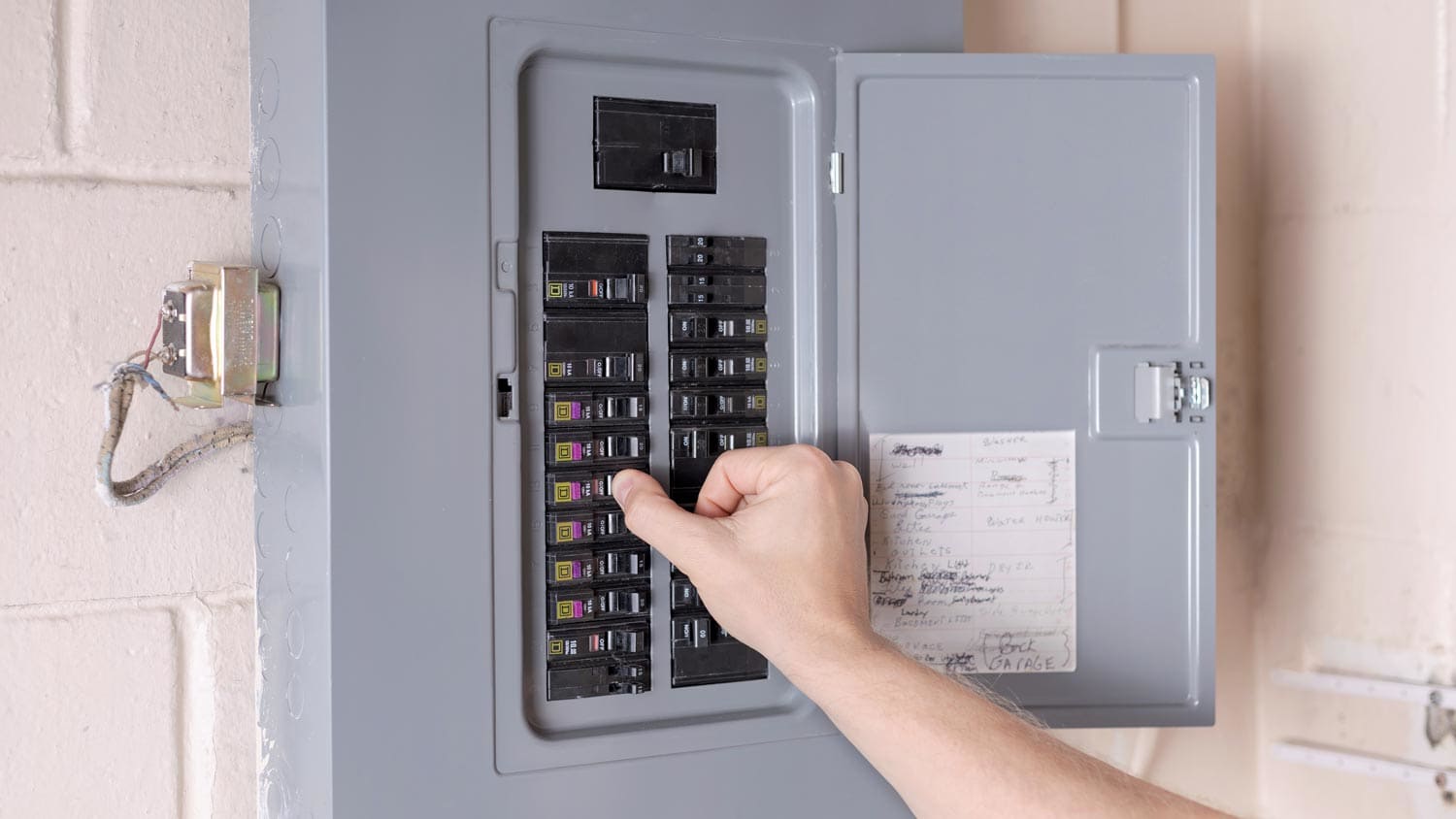
A tandem circuit breaker is a single breaker that fits into one panel slot but provides two separate 120-volt circuits. Electricians use tandem breakers when a panel runs out of physical space but still allows additional circuits—without replacing the entire panel. If you’ve ever opened your breaker panel and noticed a breaker with two small switches where one normally sits, that’s a tandem breaker.
In this guide, we’ll explain how tandem circuit breakers work, when they’re allowed, when they’re a bad idea, and how they differ from double-pole breakers—so you can decide if one actually makes sense for your panel.
What Is a Tandem Circuit Breaker?
A tandem circuit breaker is a single breaker unit that fits into one panel slot but provides two independent 120-volt branch circuits. Each circuit has its own switch and overcurrent protection, even though both share the same physical breaker space.
In most electrical panels, standard breakers—such as miniature circuit breakers(MCBs) commonly used in residential and light commercial applications, or molded case circuit breakers (MCCBs) designed for higher-capacity and industrial loads—protect one circuit per breaker slot. A tandem breaker changes only the space arrangement, not the electrical fundamentals.
Each half of a tandem breaker functions like a standard single-pole breaker:
It supplies a separate 120V circuit
It trips independently under overload or short-circuit conditions
It does not share load current with the other half
What makes a tandem breaker different is that both circuits connect through the same bus bar position in the panel. This design allows electricians to add circuits when physical space is limited—but it also explains why panel approval and slot designation are critical.
How a Tandem Circuit Breaker Works
A tandem breaker works almost the same way as two standard single-pole breakers—just packaged into one slot.
Each tandem breaker contains two separate ON/OFF switches, and each switch controls its own circuit. If one circuit trips, the other keeps running. From the panel’s perspective, each half behaves like a normal single-pole breaker.
2. Shared Connection to the Bus Bar
Both circuits draw power from the same bus stab, but internal conductors keep the circuits electrically independent. Neutral wires terminate on the neutral bar just like standard breakers.
Sharing a bus connection is why panel approval matters. Not every panel can safely handle tandems in every position.
3. Independent Trip Protection
Each circuit has its own thermal-magnetic trip mechanism. If one circuit encounters excessive current or a fault:
Only the affected breaker trips
The other circuit continues operating normally
This selective protection is a key reason tandem breakers are considered safe when installed in approved panel positions.
4. Circuit Ratings and Load Handling
Tandem breakers typically come in standard ratings like 15A/15A or 20A/20A, with some models offering mixed ratings such as 15A/20A. Each side has its own thermal-magnetic trip curve, so circuits must be sized according to their specific load requirements.
Each circuit must be sized correctly for its wiring and load. Tandem breakers do not increase panel capacity—they only save space.
Types of Tandem Circuit Breaker
i) Standard Tandem BreakersThese are the most common tandems. They contain two single-pole breakers in one housing. Common configurations include:
15/15 amp: General lighting and outlets
20/20 amp: Higher-load outlet circuits (not for kitchen or bathroom small-appliance circuits)
Designed with rejection features that prevent installation in unauthorized slots
Help limit the total number of circuits a panel can safely handle
Non-CTL Breakers
Designed for older pre-1965 panels
Fit into any slot, which is why they are restricted
Not permitted in modern panels under NEC rules
Using a non-CTL tandem in a modern panel is a common inspection failure.
iii) Manufacturer-Specific Tandem Breakers
Tandem breakers are often panel-brand specific. Using a breaker that isn’t listed for your panel may result in loose connections, poor contact pressure, and bus bar overheating. Always match the breaker to the panel manufacturer and model.
iv) Handle-Tie Tandems
Some tandem breakers include handle ties for specific applications, but these should not be confused with double-pole breakers. Handle-tie tandems do not provide 240V power and are not substitutes for true two-pole circuits.
Use a tandem circuit breaker only when your panel is specifically designed to accept it and the circuits you’re adding are light-load.
✓ 1. When the Panel Allows Them
Some panels label specific slots for tandem breakers. Look for markings such as:
“Tandem Allowed”
“CTL Slots Only”
“Use Type ___ in Designated Positions”
If the panel explicitly allows it, installing a tandem breaker is both safe and code-compliant. In these cases, a tandem breaker lets you add circuits without tearing out a working panel, which saves time, labor, and inspection risk.
✓ 2. When Adding Low-Load Circuits
Tandem breakers work best for light, intermittent loads such as:
Bedroom or living room outlets
General lighting circuits
Attic or basement lighting
Smoke detector circuits
These circuits draw modest current and don’t run continuously. Using a tandem breaker here gives you extra circuit capacity without increasing service size, which is exactly what they’re designed for.
✓ 3. During Remodeling or Temporary Expansions
During remodeling or construction, tandem breakers can provide extra capacity for:
Temporary lighting
Extra receptacle circuits
Workspace receptacles
In panels that allow tandems, this approach avoids a full panel upgrade when space—not total capacity—is the real limitation.
✓ 4. For Non-Critical CircuitsHallway lights, spare bedrooms, and similar loads are typical candidates. These circuits don’t justify a panel replacement, but they still need proper overcurrent protection—which tandem breakers provide when used correctly.
When You Should Not Use a Tandem Breaker
Tandem breakers aren’t suitable for every panel. Installing them in the wrong context can create overheating, code violations, or even fire hazards.
✗ 1. When the Panel Does NOT Allow Tandems
Installing tandems in unauthorized slots can lead to:
Bus bar overheating
Poor breaker contact
Failed inspections
Modern 100A and 200A panels often restrict tandem placement.
✗ 2. When Adding High-Load Circuits
Never use tandem breakers for:
EV chargers
Water heaters
HVAC systems
Ranges or dryers
These require dedicated 240V double-pole breakers and proper load calculations.
✗ 3. As a Substitute for a Panel Upgrade
Tandems should not be used to bypass the need for a proper panel upgrade. In homes with heavy electrical usage, adding circuits without increasing panel capacity can overload wiring and feeders.
✗ 4. When Using Non-CTL Breakers in Modern Panels Installing non-CTL tandems in a modern panel is a code violation and a common cause of inspection failure.
Example: A homeowner wants to install an EV charger, but the panel is full. Using a tandem breaker to free up space for a double-pole breaker is unsafe and illegal. EV chargers require a dedicated 240V breaker and proper load calculations.
Tandem vs. Double-Pole Breaker (Comparison Table)
These two are frequently confused, but they serve very different purposes.
Feature
Tandem Breaker
Double-Pole Breaker
Appearance
Two switches in 1 slot
One handle spanning 2 slots
Circuits
Two 120V circuits
One 240V circuit
Uses
Lighting, outlets
Dryer, AC, water heater
Trip function
Independent
Common trip
Space used
1 slot
2 slots
Key Difference:
A tandem breaker can never supply 240V power. A double-pole breaker is mandatory for any 240V load.
Limitations and Safety Precautions
Tandem circuit breakers are useful only within strict limits. Ignoring these constraints is one of the most common reasons for failed inspections and long-term panel issues.
i) Not Panel-Universal
Tandem breakers are not compatible with every electrical panel. Panels are listed and labeled to allow tandem breakers only in specific positions, and some panels prohibit them entirely.
Before installation, always verify:
Panel manufacturer and model
Panel labeling for tandem or CTL-approved slots
Breaker type listed for that panel
A breaker that physically fits but isn’t listed for the panel can lead to loose connections and overheating.
ii) No Increase in Electrical Capacity
Tandem breakers do not increase your panel’s service capacity. They only add circuits where space is available.
If the panel, feeder, or bus bar is already heavily loaded, adding more circuits—even small ones—can increase heat buildup and stress the system. Load calculations should always be reviewed before adding circuits.
iii) Load and Circuit Limitations Still Apply
Each circuit on a tandem breaker has its own amperage limit, but total panel loading still matters. Tandem breakers should never be used to accommodate high-demand or continuous loads such as EV chargers, HVAC systems, or water heaters. Using them this way shifts risk downstream rather than solving the underlying capacity issue.
iv) Always Follow Panel Documentation
Panel manuals and labeling exist for a reason. They define where tandems are allowed, which breaker types are acceptable, and how many circuits the panel can safely support. Ignoring these specifications is a common cause of:
Inspection failures
Bus bar overheating
Premature breaker wear
When there’s any uncertainty, consulting the panel manufacturer is the safest approach.
Conclusion
A tandem circuit breaker is a practical, space-saving option when your panel is designed to accept it and the added circuits are light-load. It allows electricians to expand branch circuits without triggering a full panel replacement—but it does not increase electrical capacity and should never be used as a shortcut for high-demand equipment.
Before installing one, always confirm panel labeling, breaker compatibility, and total load. When used in the right context, tandem breakers solve a space problem cleanly. When used in the wrong one, they create inspection failures and real safety risks.
If you’re unsure whether a tandem breaker is appropriate for your panel—or whether upgrading the panel is the safer path—Oohmage works with project teams and OEM buyers to review technical requirements and compatibility before decisions are locked in.
FAQs
Why do some panels allow tandem breakers only in specific slots?
Because panel bus bars are not designed to handle the same heat and load in every position. Manufacturers test and list only certain slots for tandem breakers based on thermal performance and contact design. Installing tandems outside these positions can lead to overheating—even if the breaker appears to fit.
Is a tandem breaker a permanent solution or a temporary one?
It depends on the situation. In approved panels with light-load circuits, tandem breakers can be a long-term solution. In other cases—such as remodels or short-term expansions—they’re often used as a temporary measure until a panel upgrade or subpanel is installed.
Should tandem breakers be avoided in OEM or commercial projects?
Not necessarily—but they require more scrutiny. OEM and commercial projects often face stricter inspections and documentation requirements. Any use of tandem breakers should be clearly supported by panel listings, load calculations, and compliance checks to avoid rework or approval delays.
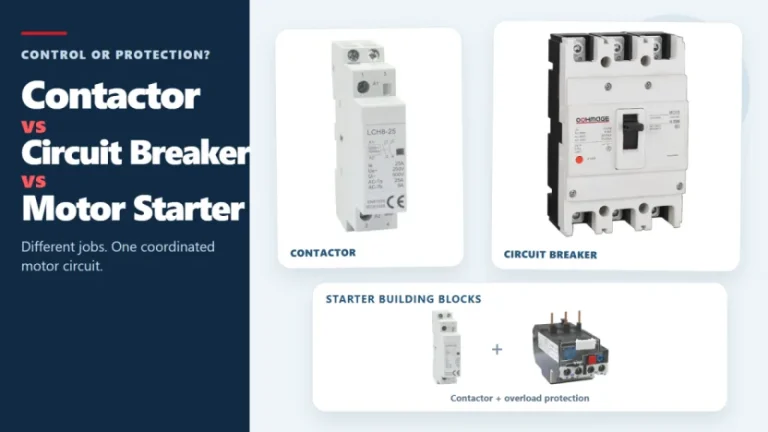
Figure 1. Contactors, circuit breakers, and motor starters solve different control and protection tasks. These three devices often appear in the same motor-control panel, but they solve different problems. A contactor handles frequent, remote, or automatic switching during normal operation. A circuit breaker interrupts abnormal current within its rated capability. A motor starter normally combines […]
Introduction The concept of remote tripping is simple, but in actual operation, project teams often encounter difficulties in specifying the components. The panel factory may require circuit breakers triggered by fire alarm relays, PLC outputs, building management system instructions, or other coordinated control. At this point, “diversion tripping” is only the first step in the […]
The main types of circuit breakers used in low-voltage distribution include miniature circuit breakers (MCBs), molded case circuit breakers (MCCBs) and residual-current devices such as RCCBs and RCBOs. They are not interchangeable. MCBs and MCCBs are selected for overcurrent protection in different circuit roles, an RCCB provides residual-current protection without integral overcurrent protection, and an […]