MPCB vs MCCB: Select the Right Circuit Breaker for Business
Published: Author: Conor
In the electrical system, safety and functionality are the most important features of equipment. Circuit breakers are crucial electric control and electrical protective devices that save the systems from many faults. Among these, MPCB vs MCCB is a hot topic about two important devices with their specific purposes and capabilities.
Understanding the differences between the MPCB and MCCB will help in finding the correct device for your application. The article will provide an in-depth comparison, of features, applications, and advantages that one should know to make a proper decision.
Understanding MPCB and MCCB
Motor Protection Circuit Breaker (MPCB): The MPCBs are specifically designed for the protection of motors against faults such as overloads, short circuits, phase loss, and undervoltage. They provide specific protection for motors and can handle inrush currents without disconnecting the circuit. This makes them indispensable in industrial applications where motors are a critical part of the operation.
Molded Case Circuit Breaker (MCCB): MCCBs are general-purpose circuit breakers used for protection against overloads and short circuits in electrical circuits. They find applications in power distribution, motor protection with additional accessories, and feeder circuit protection. Their adaptability extends their application to various electrical systems.
Read further in our blog: FAQ on MCCBs to know more about MCCB.
Key Features
Feature
MPCB
MCCB
Primary Use
Motor protection
General-purpose circuit protection
Fault Protection
Overload, short circuit, under-voltage, phase loss
Overload, short circuit (additional accessories for other protections)
Response to Inrush
Withstands motor starting currents
Requires careful selection to avoid tripping
Design Focus
Tailored for motors
Versatile for circuits and systems
MPCB vs MCCB
Design and Construction
MPCBs are specifically designed for motor protection and have features:
Adjustable bimetallic strips for overload protection.
Ability to handle high inrush currents characteristic of motor start-up.
Compact designs that fit easily into motor control circuits.
MCCBs, on the other hand, have a more general design with components:
A bimetallic strip and magnetic element for overload and short circuit protection.
A robust casing to handle high fault currents.
Compatibility with additional accessories for expanded functionality.
Protection Capabilities
MPCB: Offers motor-specific protection with comprehensive features including phase loss and undervoltage faults. These features are very crucial in industries where motors run continuously and losses due to downtime are costly.
MCCB: Primarily protects against overloads and short circuits but requires additional components for motor-specific faults like phase loss. MCCBs are better suited for systems that require flexible configuration options.
Applications and Use Cases
1. MPCB Applications:
Industrial motors
HVAC systems
Conveyor belts
Pumps and compressors
2. MCCB Applications:
Power distribution systems
Capacitor banks
Feeder protection
Backup protection for large motors
Adjustability and Settings
The load current settings in the MPCB are according to the motor’s full-load current and give very accurate protection as per the needs of the motor.
On the other hand, MCCB provides broader adjustability for overload, short circuiting, and trip delay and hence finds applications in various fields.
Integration in Electrical Systems
Mostly, MPCBs are integrated into motor control circuits without needing extra relays. For the same functionality in the motor circuits, MCCBs, while versatile, need extra elements such as contactors and overload relays. Proper integration ensures not only maximum protection but also efficiency in operation.
MPCB vs MCCB: Pros and Cons
MPCB
MCCB
Pros
Application-based motor protection.
Versatile for various applications.
Simplifies circuit design; eliminates any additional components for circuit designing.
High current ratings and fault-handling capabilities.
Capable of withstanding current during the starting of a motor.
Adjustable settings for diverse circuit protection needs.
Increased safety because of integrated phase loss and undervoltage protection.
Robust construction for industrial environments.
Cons
Limited to motor-specific applications.
Requires additional components for comprehensive motor protection.
Not suitable for general circuit protection.
May trip during motor startup if not properly selected.
May lack flexibility in non-motor-related setups.
Larger size compared to MPCBs in some configurations
Installation and Maintenance
Installation Best Practices
MPCB: Install directly in the motor circuit; set the load current correctly. Also, check that the breaker is rated appropriately for the starting and running conditions of the motor.
MCCB: Utilize appropriate accessories like contactors and relays for motor protection. Compatibility with the voltage and current ratings of the system is paramount.
Maintenance
1. Routine testing and inspection shall be carried out to ensure optimum functionality.
2. Clean terminals periodically and look for wear or damage.
3. Overload and short circuit settings shall also be tested for MCCBs during routine maintenance.
4. Replace aging active components to ensure continued reliability and safety.
Troubleshooting Tips
If the devices trip frequently, check for loose connections or inappropriate parameter settings.
Ensure the environmental condition (e.g., temperature, humidity) is within the limit of the device specification.
The inrush currents in the case of MCCBs in motor circuits should be considered during device selection.
Final Thoughts
MPCBs and MCCBs are essential components of electrical systems, each offering unique benefits tailored to specific applications. MPCBs excel in motor protection with integrated features, while MCCBs provide versatile protection for circuits and systems.
Selecting the right device depends on your application needs, fault protection requirements, and system design. By understanding the differences and advantages of MPCB vs MCCB, businesses can ensure optimal safety and performance in their electrical systems.
FAQs
What are the main differences between MPCB vs MCCB to be used industrially?
The MPCBs are designed with motor protection in mind, but MCCBs are general-purpose devices that need additional accessories for motor-specific protection.
Can MCCB replace MPCB in the motor protection circuit?
While MCCBs can be applied, they require external components such as overload relays to give complete motor protection, making MPCBs efficient in motor circuits.
What certifications should I look for when buying MPCBs or MCCBs?
Ensure the devices comply with international standards such as IEC 60947 for safety and performance.
How to determine the correct ratings for MPCBs or MCCBs for my business?
Consider the load current, fault levels, and application requirements to choose the right breaker.
What are the bulk order considerations for B2B procurement?
Consider lead times, the provision for customization, the reliability of electric equipment suppliers, and after-sales support.
Can I integrate MPCBs and MCCBs with automation systems?
Both devices can be integrated into modern control systems; compatibility with IoT or smart systems may be checked.
What is the typical life of these devices, and how to make them durable?
The lifespan depends upon operating conditions and maintenance. Regular inspections and adherence to guidelines by the manufacturer extend durability.
How do temperature and humidity affect circuit breaker performance?
Severe conditions may affect it; select devices with environmental ratings appropriate for ideal performance.
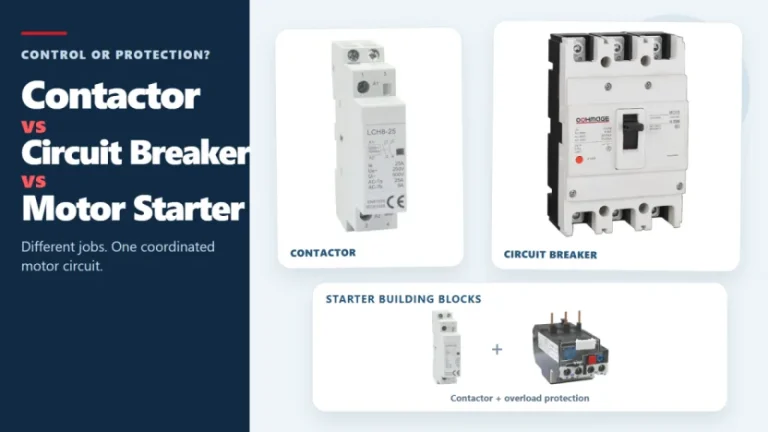
Figure 1. Contactors, circuit breakers, and motor starters solve different control and protection tasks. These three devices often appear in the same motor-control panel, but they solve different problems. A contactor handles frequent, remote, or automatic switching during normal operation. A circuit breaker interrupts abnormal current within its rated capability. A motor starter normally combines […]
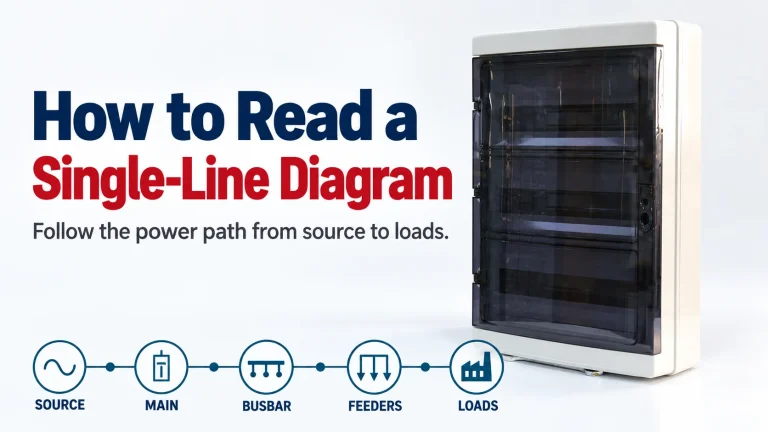
A single-line diagram can look simple and still be difficult to read. One line may represent a multiphase circuit, a small symbol may stand for a major protective device, and a short label may carry the information that determines what equipment belongs downstream. The most reliable way to read a single-line diagram is to follow […]
Figure 1. Three-phase SPD selection starts with system facts, not the largest kA number. A three-phase surge protector should not be selected by the largest kA number on its label. First confirm the system voltage, whether a neutral is present, the earthing arrangement, the installation point, and the required SPD type. Then compare Uc, Up, […]