Lifespan of Electrical Grid: How Long Do Electrical Grids Last?
Published: Author: Conor
The electrical grids are symbols of our modern civilization since they are the providers of power that must be utilized to run the houses, businesses, and industries. As the population relies increasingly on electricity, it is equally crucial to understand the lifespan of the electrical grid before it can be used in sustaining the efficient energy flow, but also the direction that energy management takes in the future.
With a rising, better-developed technology and the growing requirement for cleaner and greener energy, our electrical grids of the future must become a subject of debate.
The electrical grid, as an omnipresent aspect of life, is usually perceived as an invisible system that operates behind the scenes every hour on a 24-hour basis.
The primary task of the grid is to move the electricity generated within the power plants to the households and the industries in order to maintain a steady flow of electricity. But then these systems, like any infrastructure, have a lifespan.
We do not know how long these grids are, because we are interested in it, it is an essential part of planning and further development of the systems, which will ultimately sustain our lives.
What Determines the Lifespan of an Electrical Grid?
The durability of the electrical grid can be influenced by numerous other factors, which can be caused by the quality of the material assembled in the grid, the character of the technological innovation applied in the product.
On average, the larger components of the electrical grid (transmission lines, substations, and transformers) require about 4070 years.
The reasons why these parts become decadent are as follows:
1. Weather Conditions
Severe weather, e.g., hurricanes, snowstorms, or heat ignition, may lead to wear and tear in the electrical equipment. With time, the intensity of the harsh conditions may shorten the lives of the infrastructure.
2. Technological Advancements
Advancements in technology also have a role to play. The emergence of new technologies of energy efficiency, renewable energy sources, and smart grid will help to prolong the lifespan of the older systems or even substitute obsolete infrastructure completely.
3. Maintenance and Upgrades
Electrical grids require thorough maintenance and upgrading in order to maintain maximum levels of operation. This can be very dangerous as the overall grid life span may be substantially reduced if such activities are not carried out.
4. Demand and Usage
The growing need for electricity, particularly with the popularity of electric vehicles and the spread of digital technologies, places an additional burden on the current infrastructure. Misuse of electrical systems can lead to a fast degradation of the system, especially when it is overused.
5. Economic Factors
Economic conditions are also another factor. The funding of infrastructure has also tended to vary with governments’ priorities, financial limits, and the market itself, which may affect the overall long-run performance of the grid.
The world is in transition in terms of energy, paying more attention to sustainability and the effect on the environment.
Older systems of electrical grids that were primarily powered using fossil fuels are undergoing an overhaul to become cleaner and tougher systems that incorporate renewable energy resources, such as wind and solar.
The dynamic is included in the global struggle to address the issue of climate change; to minimize the emission of greenhouse gases and, most importantly, to address the rising energy demand.
This evolution impacts the lifespan of the electrical grid in several key ways:
Integration of Renewable Energy
There are new challenges and opportunities that come with the integration of renewable energy into the grid as more of these sources are incorporated.
Green energy such as solar and wind energy is not constant; hence, they do not generate energy. To cope with this, the grids are becoming more intelligent, having sophisticated systems capable of coping with the changes in the supply of energy.
Smart Grids
Digital communication technology is used in these grids to make decisions on grid changes and respond to grid modifications to give improvements in efficiency and reliability of power distribution.
The usage of rooftop solar panels (decentralized energy sources) through an interconnection to the power grid may also become instrumental due to the increasing number of people needing alternative energy sources, since it can be connected fully to smart grids.
Energy Storage
It’s considered to be one of the greatest challenges with renewable energy.
The energy storage possibilities, including advanced batteries, enable to store the extra energy when it is produced in large amounts and use it when there is a huge demand on energy. The technology can be used to make sure that the electrical grids are reliable and efficient.
Electric Vehicle Integration
There is an increased demand for electrical grids due to the introduction of electric vehicles (EVs). This integration is a part and parcel of electrical grid modernization because it brings about novel schemes of energy utilization that one needs to manage diligently.
Decentralization and Microgrids
The tendency towards decentralization of energy generation allows the generation of power at or near where they are consumed.
More localized energy production and consumption through microgrids, smaller self-contained power entities, can be achieved.
These microgrids may stand alone or they may be at the grid connection level, which increases resilience and also gives backup in times when the grid breaks off.
The Future of Electrical Grids: Preparing for the Next Century
In the future, the duration of electrical grids will be predicted by the ability of these systems to be transformed to adapt to the times.
As the number of people worldwide continues to increase and energy demand continues to rise at record rates, it is evident that the electrical infrastructure should be solid and flexible. That is how some electrical grids are getting ready for the future:
1. Grid Modernization and Upgrades
A major problem is grid modernization and upgrading. Most electrical grids, particularly those that are located in older cities, are not designed for older technology.
By updating these systems using the best in the new automation, sensor application, and the utilization of renewable energy, these systems will be able to meet the needs of tomorrow.
Manufacturers of utilities and electrical apparatus are making constant efforts to modernize the archaic systems so that they can be compatible with new thinking, such as electric vehicles and renewable energy sources.
2. Increased Investment
The governments and utilities are making more investments in grid modernization projects aimed at making the grid more durable and resilient.
Such investments are important to satisfy the increasing energy demand in the country, eliminate power blackouts, and ensure that the grid will be able to cope with new challenges.
3. Cybersecurity
Electric grids are more connected than ever; therefore, more electric grids are susceptible to cyberattacks. Such threats will be critical in making the functionality of the grid successful in the long-term perspective.
Utilities are making investments in cybersecurity solutions to protect the grid infrastructure against possible attacks.
4. Distributed Energy Resources (DERs)
An increased interest in distributed energy resources such as solar panels and home battery storage is beginning to make utilities rethink their strategy of managing and distributing electricity.
Connection of DERs makes energy supply and demand less rigid; hence, grids can better fix demand and supply imbalances.
5. Climate Resilience
Climate change is likely to prompt an escalation in the frequency and severity of extreme weather conditions, i.e., hurricanes, floods, and wildfires.
The interconnected grid systems will have to be established with an aim of withstanding these challenges. This will need vast investment in climate-proof infrastructure, such as the strengthening of power lines, and the location of power plants strategically.
The Role of Electrical Equipment Solutions
Electrical components suppliers are also an inseparable constituent of the long-term lifespan of electrical grids.
It is through these suppliers that the vital infrastructure is supplied, viz., the transformers, switchgear, miniature circuit breakers, and other parts which form the grid. These components have to be reliable because any failure can lead to large areas of outage and failure.
Electrical equipment solutions are continually providing ways of giving out products that can last long and also be capable of integration with other emerging technologies.
They have a significant role to play in terms of the modernization of the grid and making sure that the grid is capable of accommodating renewable energy, also in terms of the charging of electric vehicles, and more.
Indicatively, firms such aselectrical equipment suppliers are already investing in more effective, reliable, and intelligent components that will be able to survive in the dynamics of a modern and decentralized grid.
Another role played by these suppliers is the provision of the solutions that will lessen the impact on the environment on the electrical grid line, energy-saving products, and sustainability solutions are provided.
Preparing for the Unknown
An electrical grid is not an eternal mortal either. Like any other multifaceted system, variables always exist that can either increase the life of the grid or reduce it.
What is certain, though, is that going forward, innovation, investment and the implementation of new technology will be a critical aspect of electrical grids in the future.
The electrical grids of the future are promising as the operating principles of the present electrical grids are getting more and more sustainable, efficient, and resilient.
They can probably keep developing, though they will still be the key to our energy system. The future electrical grids will demand modernization, vision, and flexibility to address the need of an ever-changing world in the next century.
Electric grids are getting smarter, more resilient and more sustainable (with more investment in the longevity of the grids), the investments in the longevity of the grids is a chance to determine a more sustainable and efficient future.
The energy systems that we construct now will drive the world tomorrow, as a result, let us make sure that they up to the task.
You may want to know more about the electrical distribution. Click the following articles to read:
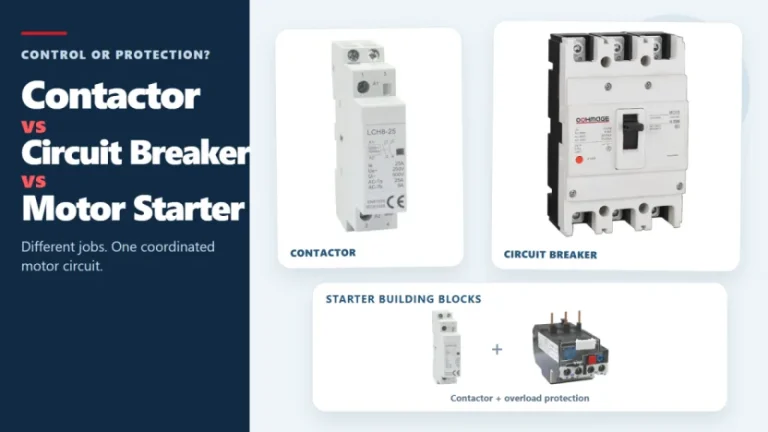
Figure 1. Contactors, circuit breakers, and motor starters solve different control and protection tasks. These three devices often appear in the same motor-control panel, but they solve different problems. A contactor handles frequent, remote, or automatic switching during normal operation. A circuit breaker interrupts abnormal current within its rated capability. A motor starter normally combines […]
The main types of circuit breakers used in low-voltage distribution include miniature circuit breakers (MCBs), molded case circuit breakers (MCCBs) and residual-current devices such as RCCBs and RCBOs. They are not interchangeable. MCBs and MCCBs are selected for overcurrent protection in different circuit roles, an RCCB provides residual-current protection without integral overcurrent protection, and an […]
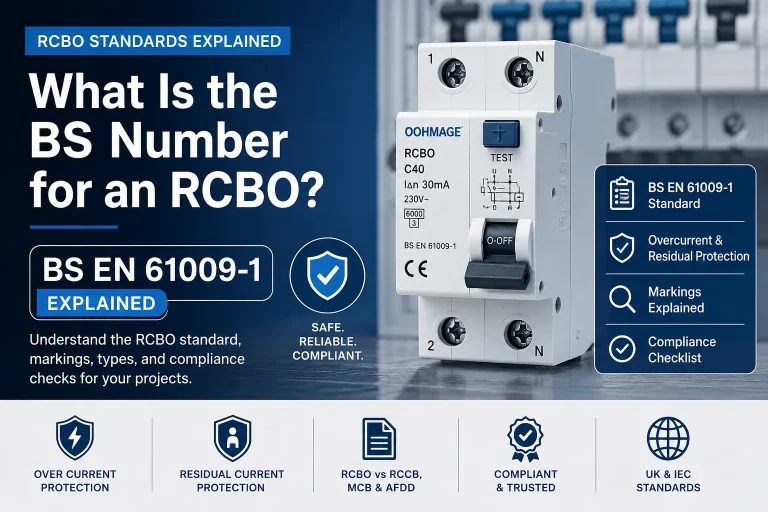
Introduction If you are searching for the RCBO BS number, the answer most commonly required in UK and IEC-based electrical procurement is BS EN 61009-1. This is the principal product standard associated with residual current circuit breakers with overcurrent protection used in residential, commercial, and similar installations. However, merely the BS number is not sufficient […]