How to Choose the Right Distribution Box for Your Home or Workshop
Published: Author: Joanna
Introduction
The distribution board functions as the absolute central nervous system of any modern electrical installation, managing the flow of power safely throughout the entire building infrastructure. It meticulously routes the massive incoming electrical power from the main utility grid directly to all the individual, smaller circuits utilized by residents and heavy machinery. Under-specifying this critical electrical enclosure in residential or light industrial settings creates severe safety hazards, including catastrophic electrical fires and debilitating, highly expensive operational downtime. This highly technical guide details the exact engineering criteria required for selecting, precisely sizing, and optimally configuring the correct enclosure for your specific electrical load profiles.
What Is a Distribution Box?
A Distribution Box serves as a fully enclosed, highly robust mechanical housing designed specifically to route electrical power safely from the main supply line to individual subsidiary circuits. It distinguishes its primary purpose by providing centralized, secure housing for sensitive protective devices like MCBs, RCCBs, and RCBOs while completely preventing accidental human contact with live internal copper busbars. These centralized distribution hubs act as the ultimate fail-safe mechanism, ensuring that any localized electrical fault trips a specific breaker without completely shutting down the entire facility’s power supply. ISO-certified manufacturers like oohmage engineer these specialized enclosures utilizing precision manufacturing techniques to guarantee maximum structural durability and absolute compliance with strict global electrical safety regulations.
The Anatomy of an Electrical Distribution Box
The Enclosure and Chassis
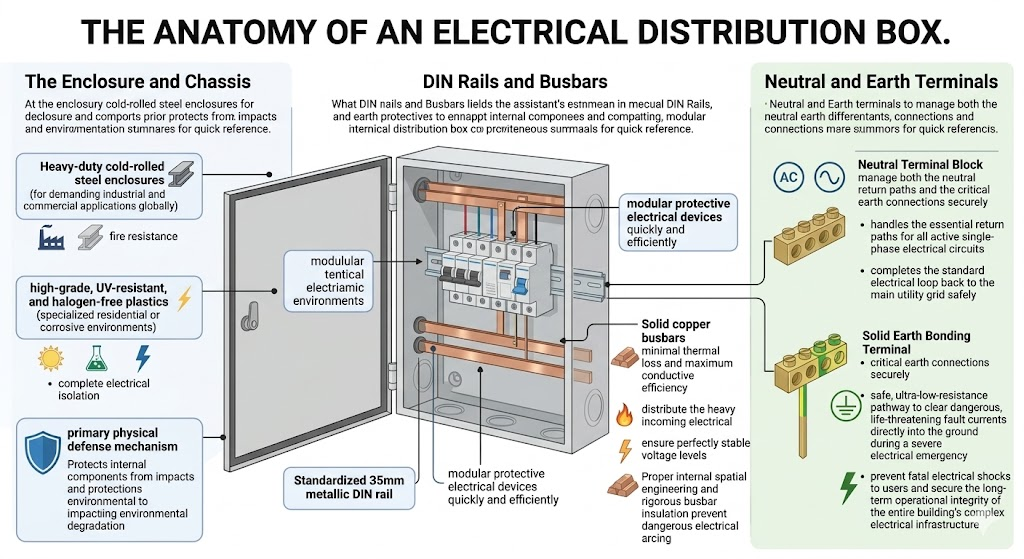
Manufacturers engineer the physical construction of these critical units using distinct, specialized materials based directly on the demanding conditions of the final installation environment. Heavy-duty cold-rolled steel enclosures provide maximum structural rigidity and unparalleled fire resistance, making them the absolute standard for demanding industrial and commercial applications globally. Conversely, high-grade, UV-resistant, and halogen-free plastics serve exceptionally well in specialized residential or corrosive environments where chemical resistance and complete electrical isolation are absolutely paramount. The solid exterior chassis acts as the primary physical defense mechanism, protecting all sensitive internal electronic components from severe physical impacts, dust accumulation, and environmental degradation over decades of use.
DIN Rails and Busbars
The standardized 35mm metallic DIN rail provides a universally accepted, highly secure mounting platform for snapping in all modular protective electrical devices quickly and efficiently. Solid copper busbars distribute the heavy incoming electrical current across all the individual circuit breakers with incredibly minimal thermal loss and maximum conductive efficiency. These precisely engineered internal busbars ensure perfectly stable voltage levels across the entire electrical distribution panel, even when the facility experiences sudden spikes in power demand. Proper internal spatial engineering and rigorous busbar insulation prevent dangerous electrical arcing between the active, live metal components during massive short-circuit events or grid anomalies.
Neutral and Earth Terminals
The enclosure contains dedicated, heavy-duty solid brass terminal bars designed specifically to manage both the neutral return paths and the critical earth connections securely. The neutral terminal block handles the essential return paths for all active single-phase electrical circuits, completing the standard electrical loop back to the main utility grid safely. Mandatory solid earth bonding provides a totally safe, ultra-low-resistance pathway to clear dangerous, life-threatening fault currents directly into the ground during a severe electrical emergency. These highly conductive terminal bars prevent fatal electrical shocks to users and secure the long-term operational integrity of the entire building’s complex electrical infrastructure.
Evaluating Power Distribution Box Variations
Flush-Mount vs. Surface-Mount
Flush-mounted units recess directly into residential drywall or commercial masonry, providing a highly aesthetic, clean architectural integration that hides the bulky hardware completely from plain sight. This recessed design keeps the electrical hardware safely out of the way in modern living spaces, significantly reducing the physical footprint in narrow hallways and tight utility closets. Surface-mounted units attach directly to the exterior surface of solid concrete walls or steel beams, serving as the preferred installation method in rugged industrial structures and heavy workshops. The surface-mount approach provides maximum utility and exceptionally easy accessibility for electricians performing frequent panel maintenance, rapid breaker upgrades, or emergency electrical troubleshooting.
Single-Phase vs. Three-Phase Configurations
Standard 240V residential setups require a single-phase power distribution box to handle everyday appliances, standard lighting, and basic wall outlets effectively.
These single-phase configurations manage the moderate power requirements of typical homes using a single alternating current waveform to deliver continuous, reliable electricity safely.
Heavy workshop loads demand robust 400V three-phase setups to power massive industrial machinery, large air compressors, and heavy-duty manufacturing equipment without experiencing debilitating voltage drops.
Three-phase units balance the massive electrical load seamlessly across three distinct incoming utility lines, providing much smoother and highly efficient power delivery for massive industrial motors.
Ingress Protection (IP) Ratings
Selecting the absolutely correct Ingress Protection rating guarantees the long-term operational survival of the electrical enclosure in highly specific and demanding environmental conditions. An IP20 rating serves perfectly for dry indoor hallways and climate-controlled residential environments where the panel faces zero exposure to hazardous dust or invasive water. Workshops exposed to heavy airborne sawdust, intense environmental moisture, and splashing chemical cutting fluids require a much stricter, highly durable IP65 rating to survive completely intact. The higher IP65 rating utilizes specialized rubber gaskets and perfectly sealed metal doors to isolate the internal electronics completely from harsh, destructive outside environmental elements.
Residential vs. Workshop Requirements
Modern Residential Load Profiles
Modern residential homes demand significantly more total electricity than properties built just twenty years ago, requiring much larger and more capable distribution panels to function safely. High-draw luxury appliances like instantaneous electric water heaters, modern induction hobs, and whole-house electric heat pumps require their own highly robust, dedicated power circuits to operate reliably. Furthermore, domestic electric vehicle charging stations draw massive, continuous electrical currents for several unbroken hours every single night, testing the ultimate thermal limits of older, outdated panels. The modern residential enclosure must handle these heavy, continuous electrical loads safely without overheating the internal copper busbars or tripping the main incoming service breaker.
Workshop and Light Industrial Loads
Workshop environments present highly specific, aggressive electrical challenges that standard residential breaker panels simply cannot handle safely or reliably over the long term. Inductive electrical loads like large CNC machining centers and heavy industrial air compressors generate massive, instantaneous inrush currents during their initial, high-torque startup phase. Heavy arc welders and plasma cutters cause severe, rapid voltage fluctuations across the local electrical network during their normal, intensive daily operation on the factory floor. The dedicated workshop enclosure requires heavy-duty internal wiring, higher-rated copper busbars, and specialized delayed-trip breakers to manage these sudden, violent power surges effectively and safely.
Selecting the Internal Protective Components
The Main Isolator Switch
Every legally compliant electrical panel requires a mandatory main isolator switch functioning as the absolute primary power gateway for the entire building installation. This heavy-duty mechanical switch provides a single, easily accessible point of total power isolation for the entire facility during a catastrophic electrical emergency or natural disaster. Professional electricians use this main isolator to disconnect all electrical power safely before performing routine panel maintenance, adding new complex circuits, or conducting major hardware upgrades. It also allows panicked residents or facility managers to perform a rapid, complete emergency power-down during a severe facility fire or massive flooding event.
RCDs, MCBs, and RCBOs
A highly robust circuit protection strategy requires extremely careful component selection to ensure both maximum human safety and completely uninterrupted daily operational convenience. Standard, budget-friendly setups traditionally use simple Miniature Circuit Breakers combined with a single, shared Residual Current Device to protect the whole electrical board simultaneously. However, outfitting the enclosure with individual RCBOs provides a far superior, technologically advanced, and highly reliable electrical configuration for protecting modern, high-value commercial properties. Individual RCBOs prevent frustrating nuisance tripping across multiple unrelated circuits, ensuring that a minor localized fault does not plunge the entire building into total darkness.
Surge Protection Devices (SPD)
Integrating Surge Protection Devices directly within the main enclosure shields incredibly expensive downstream equipment from severe external grid anomalies and highly destructive voltage spikes. These vital protective devices instantly absorb massive transient overvoltages caused by nearby catastrophic lightning strikes or massive, unpredictable utility grid switching events. SPDs protect sensitive smart home electronics, delicate computer servers, and highly expensive automated workshop machinery from instant destruction during a severe and sudden electrical storm. Modern international electrical codes increasingly mandate this specific, high-level overvoltage protection for all newly constructed commercial facilities and high-end residential installations globally.
How to Calculate Sizing and Capacity Requirements
Determining the Number of Ways (Modules)
Electrical contractors map out all required building circuits meticulously to calculate the necessary physical space required inside the metal distribution enclosure.
The electrical industry measures this internal physical space universally by counting the total number of “ways” or standard slots available on the DIN rail.
A professional contractor assigns one standard way for every basic lighting or outlet circuit requiring a standard-sized Miniature Circuit Breaker.
The contractor must assign two complete ways for every complex RCBO or heavy-duty Surge Protection Device installed within the main electrical panel.
The 20% Spare Capacity Rule
The professional electrical industry mandates a strict, non-negotiable rule to leave at least twenty to thirty percent of the enclosure completely empty upon initial installation. This vital spare capacity seamlessly accommodates future electrical expansions, such as adding a new solar power inverter or a dedicated heavy industrial workshop circuit later. Filling the distribution box completely during the initial construction phase requires a highly costly and deeply frustrating full panel replacement when electrical needs inevitably grow. Furthermore, this mandated empty internal space promotes significantly better airflow, helping to cool the active, heat-generating circuit breakers during heavy and continuous daily operation.
International Standards and Procurement
Modern electrical enclosures must adhere strictly to IEC 61439 standards governing the absolute safe construction of low-voltage switchgear and highly sophisticated controlgear assemblies. These critical global regulations guarantee the metallic enclosure withstands severe, explosive short circuits without warping, melting, or catching on fire during a massive fault. Sourcing these components directly from OEM manufacturers equipped with precision CNC machining ensures the absolute structural integrity and perfect mechanical alignment of every single unit. Automated factory assembly lines provide exact manufacturing consistency, completely preventing dangerous mechanical defects that severely compromise the final protective safety capabilities of the product.
Final Thoughts
Selecting the absolutely optimal enclosure depends entirely on accurately anticipating total electrical loads, severe environmental hazards, and inevitable future facility expansion needs. Professional contractors and property developers must never compromise on enclosure quality or material thickness, as these factors directly impact building fire safety and structural survival. A highly robust, properly sized, and expertly configured distribution panel provides several unbroken decades of perfectly safe and completely reliable electrical service. We highly advise consulting the oohmage engineering team directly for custom OEM distribution solutions, expert technical guidance, and highly secure bulk B2B procurement for large projects.
FAQs
What is the difference between a distribution board and a consumer unit?
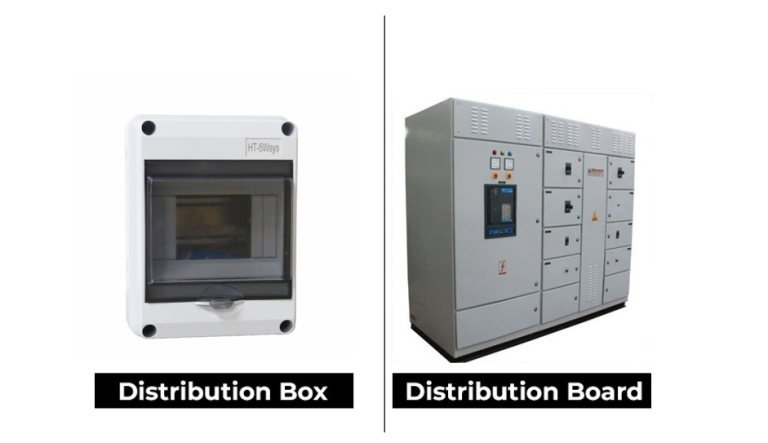
A consumer unit acts as a very specific, compact type of distribution board designed primarily for standard residential homes. It generally operates strictly on single-phase power to handle moderate domestic electrical loads like household lighting and basic kitchen appliances safely. Conversely, a distribution board encompasses a much broader, heavier category of specialized electrical safety equipment. This broader category includes massive, highly complex three-phase industrial panels used specifically to power massive commercial factories and towering skyscrapers.
Can I install a metal distribution box in a damp workshop environment?
Yes, you can absolutely install a metal electrical enclosure in a damp environment if it carries the correct, verified environmental protection rating. You must strictly ensure the metal box holds an IP65 rating or higher to block invasive environmental moisture and conductive dust completely. The heavy-duty enclosure should also feature a thickly applied galvanized or specialized powder-coated finish to prevent long-term rust and structural degradation. Failing to utilize a properly sealed and coated box in a wet environment guarantees rapid internal corrosion and massive, highly dangerous electrical short circuits.
How do I know how many “ways” my distribution box needs?
You must carefully count every single electrical circuit required for your property, including all interior lights, wall outlets, and heavy dedicated appliances. Next, you assign the correct number of DIN rail slots or “ways” for each required circuit breaker and the massive main incoming isolator. Finally, you multiply the final total number of required slots by 1.25 during the critical planning phase. This simple mathematical calculation guarantees you meet the strict 20% spare capacity rule securely for inevitable future electrical hardware upgrades.
Related Product Selection
If the required layout fits the published range, review the HT 15/18/24 way IP65 distribution box series and compare it with the other available OOHMAGE distribution-box options.
Only “solarcombiner box” in your quotation is far from sufficient. What should be connected to the box? A PV string or an inverter output? They match different jobs. The price and enclosure size can be considered at a later stage. What connects to the input is the top priority. To be more specific, a DC combiner […]
The terms distribution box and distribution board often overlap. Both can describe equipment that receives an incoming electrical supply and organizes outgoing circuits, usually with switching and protective devices. The preferred term depends on the country, applicable standard, project specification and whether the buyer needs an empty enclosure or a complete assembly. This means there […]
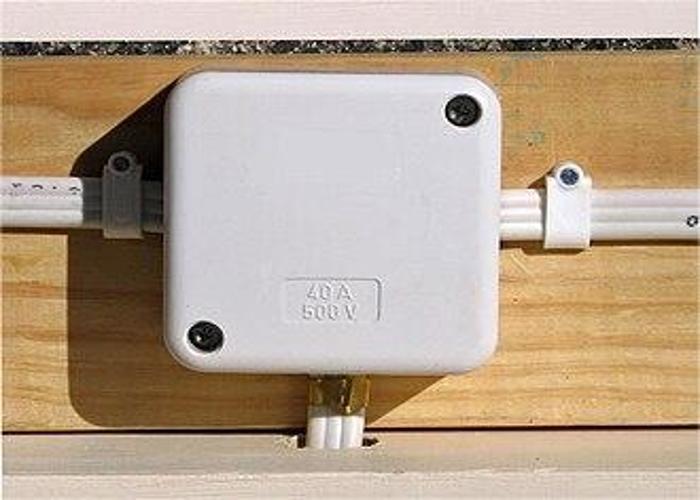
Electrical safety is never something to cut corners on—especially when circuits are exposed to rain, dust, or harsh outdoor conditions. That’s why weatherproof junction boxes are essential. Whether you’re wiring patio lights, powering irrigation systems, or managing circuits in a factory, the right enclosure ensures connections remain both safe and compliant with industry standards. In […]