Metal vs Plastic Electrical Distribution Box – Pros, Cons, and Best Applications
Published: Author: Joanna
Introduction
Selecting the appropriate enclosure material represents an important step for engineers designing a power network. This choice influences the long-term safety, environmental resilience, and overall lifespan of the entire facility. Conversely, inappropriate material choices can lead to early degradation and safety issues.
Facility managers typically weigh immediate mechanical risks against long-term environmental factors. Industrial sites naturally require different protective strategies compared to residential developments. Therefore, this technical comparison aims to guide business procurement by outlining the differences between metal and plastic enclosures.
What Is an Electrical Distribution Box?
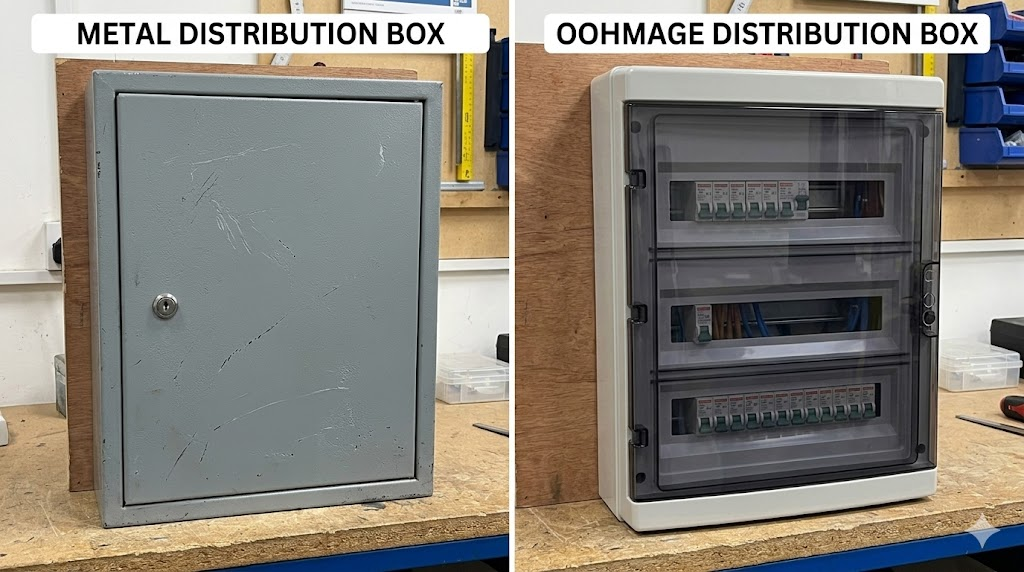
An electrical distribution box serves as the vital physical barrier housing sensitive protective devices. This heavy-duty cabinet secures components like MCBs, RCBOs, SPDs, and live copper busbars. The enclosure serves a critical dual purpose in every modern power network globally. It protects the sensitive internal electronic components from external environmental damage efficiently. Simultaneously, it protects human operators from accidental contact with lethal electrical hazards.
This dual protection forms the absolute core of building safety regulations. The selection process remains a critical engineering task for any large-scale construction project. Manufacturers like oohmage produce both metal and plastic variations to meet diverse global infrastructure demands. Engineers must evaluate the specific installation environment rigorously before finalizing their equipment selection.
Metal Distribution Box: The Heavy-Duty Standard
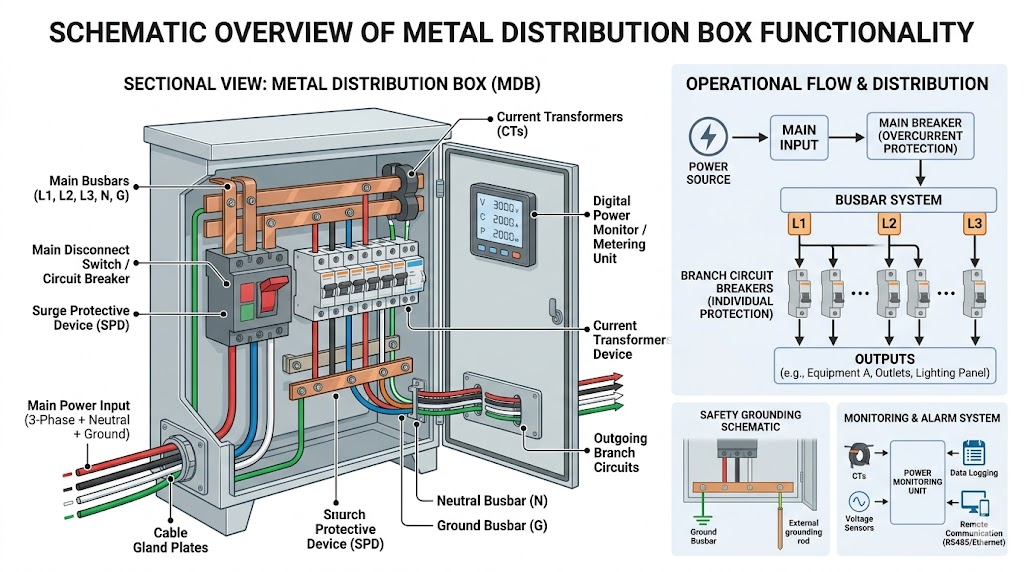
A metal Distribution Box represents the traditional, heavy-duty standard for rugged electrical infrastructure. Engineers favor this material when mechanical strength and strict fire containment remain top priorities.
The Engineering Pros of Metal
Cold-rolled steel or galvanized iron provides dependable fire containment capabilities. These enclosures effectively contain internal arcing or component combustion. Furthermore, solid steel walls keep electrical fires from spreading into the surrounding building structure. They also offer notable mechanical strength and high IK (Impact Protection) ratings.
The Engineering Cons of Metal
Metal enclosures face a risk of oxidation and rust in corrosive or coastal environments. This degradation occurs more quickly if the protective factory powder coating becomes scratched. Additionally, these highly conductive cabinets require strict earth bonding. Proper earthing prevents a live fault from creating a severe shock hazard.
Best Applications for Metal Enclosures
Planners regularly specify metal enclosures for commercial high-rises and industrial plants. Facilities adhering to strict fire-regulation codes often require non-combustible enclosures to maintain legal compliance. They also serve well in public infrastructure projects where physical vandalism poses a risk.
Plastic PowerDistribution Box: The Corrosion-Resistant Alternative
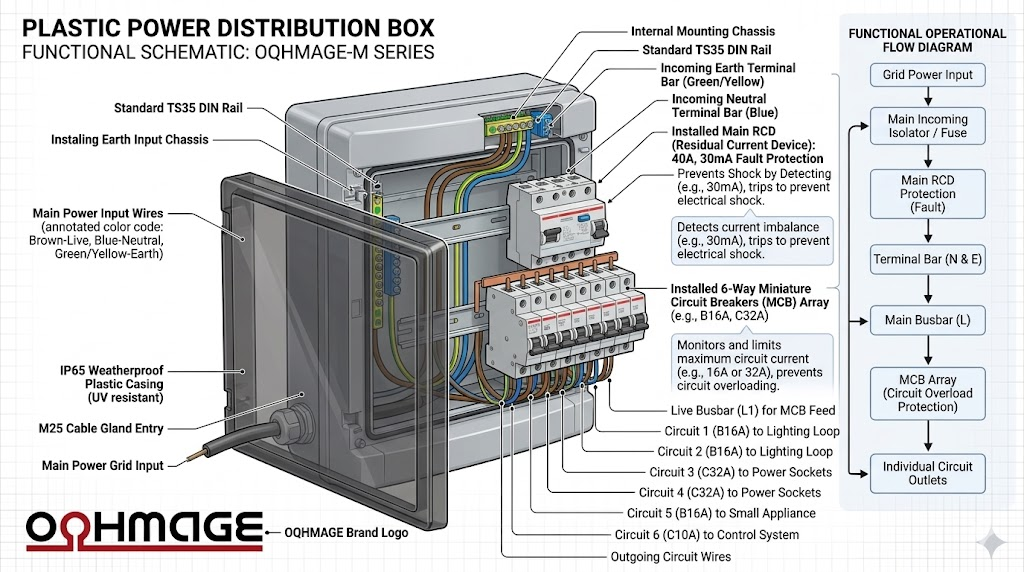
A plastic power distribution box offers a corrosion-resistant alternative to traditional steel units. Modern material science enables these polymer enclosures to meet industrial safety standards effectively.
The Engineering Pros of Plastic
High-grade polymers, such as industrial ABS or polycarbonate, provide notable manufacturing benefits. These plastics are inherently non-conductive, offering double insulation for operator safety. This characteristic eliminates the need to earth the physical chassis itself. Furthermore, plastic enclosures resist rust, airborne corrosion, and many chemical solvents.
The Engineering Cons of Plastic
Engineers should evaluate the thermal limitations associated with polymer-based enclosures. Modern plastics use halogen-free and flame-retardant materials, making them less likely to catch fire. However, they may eventually melt under sustained extreme heat because they lack solid steel’s containment properties. Installers also need to consider potential UV degradation outdoors unless the material receives UV-stabilized treatments.
Best Applications for Plastic Enclosures
Designers frequently specify plastic enclosures for deployments in smart homes and residential interiors. They perform well in agricultural environments, coastal facilities, and food processing plants. Locations experiencing high ambient moisture or chemical exposure generally benefit from this non-corrosive solution.
Head-to-Head Technical Comparison
Engineers must execute a direct, objective comparison utilizing a structured format before purchasing.
Fire Containment: Metal provides unwavering structural integrity during a severe electrical fire. Plastic offers advanced self-extinguishing properties but possesses significantly lower thermal melting points.
Environmental Resilience: Plastic totally dominates in high-humidity and heavy chemical processing areas. Powder-coated metal excels in dry, high-impact industrial zones where physical damage occurs frequently.
Earthing Complexity: Metal requires rigorous, thoroughly tested earth bonding to ensure safety. Plastic inherently simplifies the earthing architecture, reducing total installation time significantly.
Weight and Handling: Plastic offers easier, faster installation due to a significantly lighter physical footprint. Metal cabinets require heavy lifting equipment and reinforced mounting walls.
Key Factors When Procuring Enclosures for Large-Scale Projects
Purchasing agents and project managers must evaluate specific technical metrics during the procurement phase. Guessing these specifications leads to massive safety failures and rejected building inspections.
Evaluating Ingress Protection (IP Ratings)
Buyers must match the exact IP rating to the specific environmental installation conditions.
An IP20 rating suits basic indoor metal boards located in dry, climate-controlled utility rooms.
An IP65 rating provides necessary weatherproof protection for plastic units exposed to heavy rain.
IP67 ratings secure enclosures submerged temporarily in flooded industrial basements.
Strict IP evaluation prevents catastrophic water ingress and lethal short circuits.
Verifying IK Impact Ratings
Engineers evaluate the mechanical impact scale, which ranges from IK01 up to IK10. This rating determines how much physical kinetic energy the enclosure can absorb safely. Public spaces and industrial workshops often require an IK08 rating or higher. A proper rating ensures the internal breakers survive accidental collisions with machinery.
International Standards and Compliance
Property developers and EPCs face a strict requirement to procure legally compliant enclosures. The selected equipment must adhere strictly to IEC 61439-3 standards for low-voltage switchgear. These standards ensure absolute safety and operational compliance in European and global markets. Purchasing uncertified equipment creates massive legal liabilities if a facility fire occurs.
Final Thoughts
Identifying a universal best material remains unlikely when selecting an electrical enclosure. The correct choice depends on mechanical risk, specific environmental hazards, and local fire regulations. Metal provides physical strength alongside fire containment for heavy industry.
Electrical wholesalers and contractors must rigorously assess the installation site before finalizing procurement. Selecting the wrong material guarantees rapid equipment failure and severe safety hazards. Oohmage provides an expert engineering team to discuss custom OEM metal fabrication and polymer molding capabilities. This technical consultation ensures you secure the perfect enclosure for your specific infrastructure project.
FAQs
Is a metal distribution box safer than a plastic one?
Neither material is inherently safer overall; their safety depends entirely on the application. Metal provides superior fire containment and withstands heavy physical impacts in industrial zones. Plastic provides superior shock protection because it does not conduct stray electricity.
Can I use a plastic power distribution box outdoors?
Yes, but you must select a unit specifically manufactured for outdoor exposure. The plastic must feature specialized UV-stabilized treatments to prevent sunlight from degrading the polymer. The box must also carry a high IP rating (like IP65) to block heavy rain.
Do I need to earth a plastic electrical distribution box?
You do not need to ground the plastic chassis itself, as plastic is non-conductive. However, you must ground the internal metal DIN rails and all live circuitry. A dedicated internal grounding terminal block is still required inside the plastic enclosure for these connections.
Figure 1. Contactors, circuit breakers, and motor starters solve different control and protection tasks. These three devices often appear in the same motor-control panel, but they solve different problems. A contactor handles frequent, remote, or automatic switching during normal operation. A circuit breaker interrupts abnormal current within its rated capability. A motor starter normally combines […]
A single-line diagram can look simple and still be difficult to read. One line may represent a multiphase circuit, a small symbol may stand for a major protective device, and a short label may carry the information that determines what equipment belongs downstream. The most reliable way to read a single-line diagram is to follow […]
Figure 1. Three-phase SPD selection starts with system facts, not the largest kA number. A three-phase surge protector should not be selected by the largest kA number on its label. First confirm the system voltage, whether a neutral is present, the earthing arrangement, the installation point, and the required SPD type. Then compare Uc, Up, […]