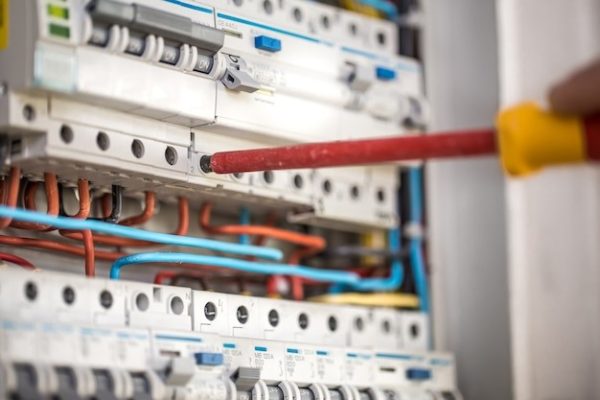
In electrical systems, safeguarding circuits from overloads and short circuits is crucial. Both fuses and circuit breakers serve this purpose, but they operate differently. A fuse, which melts when the current is too high, needs replacement after one use. In difference, a circuit breaker can be reset and reused. Understanding these differences helps select the right device for specific applications, ensuring safety and functionality. This guide explains the characteristics, advantages, and limitations of circuit breaker vs. fuse, providing a comprehensive comparison to aid in making informed decisions.
What is a Circuit Breaker?
A circuit breaker is an important device in electrical systems. It is designed to protect circuits from damage caused by overloads or short circuits. When a fault is detected, it automatically interrupts the flow of electricity, preventing potential hazards such as fires or equipment damage.
How Does a Circuit Breaker Work?
A circuit breaker operates through an electromechanical mechanism. When the current streaming through the circuit exceeds the breaker’s rated capacity, it trips the internal switch, disconnecting the electrical flow. This tripping mechanism can be triggered by a thermal or magnetic response, depending on the type of circuit breaker.
Types of Circuit Breakers
There are various types of circuit breakers, each suited for specific applications. The most common ones include:
Thermal Circuit Breakers: These use a bimetallic strip that bends and trips the switch when heated by excessive current.
Magnetic Circuit Breakers: These utilize an electromagnet that becomes stronger with higher currents, pulling the switch open when the current surpasses the safe limit.
Hybrid Circuit Breakers combine thermal and magnetic mechanisms to provide comprehensive protection.
What is a Fuse?
A fuse is a simple yet crucial instrument used in electrical circuits to control excessive current flow that can cause damage or fire. It consists of a wire or strip that melts when excessive current flows through it, damaging the circuit and stopping the electrical flow. This sacrificial component ensures the protection of the circuit by halting the current before it reaches a dangerous level.
How Does a Fuse Work?
A fuse operates based on the principle of thermal response. When the electrical current passing through the fuse exceeds its rated capacity, the heat generated by the current causes the metal wire inside the fuse to melt. This melting action interrupts the circuit, cutting off the electrical supply and preventing potential hazards. Once a fuse has blown, it must be replaced with a new one to restore the circuit.
Types of Fuses
Fuses come in various types, each designed for specific applications. Some common types include:
Cartridge Fuses: These cylindrical fuses fit into fuse holders and are commonly used in industrial and commercial applications.
Blade Fuses: Often used in automotive applications, these fuses have a plastic cover body with two metal prongs that fit into the fuse box.
Glass Tube Fuses: These have a glass body and are used in many household electrical devices.
Key Differences between Circuit Breakers and Fuses
Aspect
Circuit Breaker
Fuse
Reusability
Can be reset and used multiple times
One-time use, needs replacement
Operation Principle
Electromechanical switching mechanism
Melting of a metal wire or strip
Response Time
Slower compared to fuses
Faster response to overcurrent
Switching Action
Can be used as an ON/OFF switch
Cannot be used as a switch
Protection Coverage
Protects against both overloads and short circuits
Typically protects against overloads only
Breaking Capacity
Higher breaking capacity, suitable for high current applications
Lower breaking capacity
Cost
More expensive
Less expensive
Applications
Industrial, commercial, and residential applications requiring high reliability
Commonly used in household appliances and automotive applications
Pros and Cons of Circuit Breakers
Pros of Circuit Breakers
Reusability
One of the main benefits of circuit breakers is their reusability. Unlike fuses, which must be replaced after each use, circuit breakers can be reset and used multiple times. This feature saves money in the long run and reduces downtime in electrical systems, making them highly efficient for residential and industrial applications.
Protection Against Overloads and Short-Circuits
Circuit breakers provide robust protection against overloads and short circuits. They are developed to detect and interrupt electrical faults, preventing potential damage to the electrical system and connected devices. This dual protection ensures higher safety and reliability, particularly important in environments where electrical stability is crucial.
Can Be Used as an ON/OFF Switch
Another practical advantage of circuit breakers is their ability to function as an ON/OFF switch. This feature allows users to manually disconnect and reconnect the electrical circuit, providing added convenience and control over the electrical system. It is especially useful during maintenance and repair activities, where isolating the circuit is necessary for safety.
Higher Breaking Capacity
Circuit breakers have a higher breaking capacity compared to fuses. This means they can interrupt higher currents without being damaged. This capability makes circuit breakers suitable for high-power applications, such as industrial machinery and large-scale commercial installations.
Cons of Circuit Breakers
Higher Cost
Despite their numerous advantages, circuit breakers are more expensive than fuses. The initial investment is more significant, which can be a consideration for budget-conscious users.
Slightly Slower Response Time
Circuit breakers generally have a slightly slower response time compared to fuses. While they are still effective in protecting electrical systems, this minor delay can be critical in situations where immediate disconnection is necessary to prevent damage.
Pros and Cons of Fuses
Pros of Fuses
Faster Response Time
One key advantage of fuses is their faster response time. Fuses are designed to react almost instantly to overcurrent conditions by melting the metal wire or strip inside them. This quick response helps protect sensitive electrical components from damage, ensuring the protection and longevity of the equipment.
Lower Cost
Fuses are usually more cost-effective than circuit breakers. Their simple design and materials make them inexpensive to manufacture and purchase. This lower cost makes fuses an attractive option for applications where budget considerations are paramount, especially in household and small-scale electrical systems.
Specific Device Protection
Fuses are excellent for providing specific protection to individual devices. By placing a fuse directly in the circuit of a particular appliance or electronic device, the device is protected from any current surges or overloads.
Simplicity and Ease of Use
Fuses are simple devices with straightforward installation and replacement procedures. This simplicity makes them user-friendly and easy to manage, even for those without extensive technical knowledge. The ease of identifying a blown fuse and replacing it quickly contributes to their practicality in various settings.
Cons of Fuses
One-Time Use
A significant drawback of fuses is their one-time use nature. Once a fuse blows, it must be replaced with a new one to restore the circuit. This characteristic can increase maintenance costs and inconvenience, especially when electrical faults occur frequently.
Limited to Overload Protection
Fuses are typically limited to protecting against overloads and may not be as effective in guarding against short circuits. This limitation means that additional protective devices may be necessary to ensure comprehensive protection of the electrical system.
Cannot Be Used as an ON/OFF Switch
Unlike circuit breakers, fuses cannot function as ON/OFF switches. They are purely protective devices and do not provide the flexibility of manually disconnecting or reconnecting the electrical circuit.
Final Thoughts
For ensuring robust electrical protection, OOHMAGE stands out as a reliable supplier. They offer a complete range of products, including circuit breakers, fuses, automatic changeover switches, isolation switches, distribution boxes, and voltage protectors. Their products are prepared to meet high safety and efficiency standards, catering to various residential, commercial, and industrial needs.
Choosing OOHMAGE means opting for quality and reliability, ensuring your electrical systems are well-protected and function smoothly. With an extended product range from DC circuit breaker to DC fuse and a commitment to excellence, OOHMAGE is a trusted partner for all your electrical protection requirements.
FAQs
What is the main difference between a fuse and a circuit breaker?
The main difference is that a fuse melts and breaks the circuit when overloaded, requiring replacement, while a circuit breaker can be reused after tripping.
Which is faster in response time, a fuse or a circuit breaker?
Fuses usually have a faster response time compared to circuit breakers, providing quicker protection against overcurrent conditions.
Can circuit breakers be used as ON/OFF switches?
Yes, circuit breakers can be manually operated as ON/OFF switches, providing additional control over the electrical circuit.
Are fuses cheaper than circuit breakers?
Fuses usually are less expensive than circuit breakers, making them a cost-effective option for many applications.
What type of protection do circuit breakers offer?
Circuit breakers shield against overloads and short circuits, providing comprehensive safety for electrical systems.
Figure 1. Contactors, circuit breakers, and motor starters solve different control and protection tasks. These three devices often appear in the same motor-control panel, but they solve different problems. A contactor handles frequent, remote, or automatic switching during normal operation. A circuit breaker interrupts abnormal current within its rated capability. A motor starter normally combines […]
Introduction The concept of remote tripping is simple, but in actual operation, project teams often encounter difficulties in specifying the components. The panel factory may require circuit breakers triggered by fire alarm relays, PLC outputs, building management system instructions, or other coordinated control. At this point, “diversion tripping” is only the first step in the […]
The main types of circuit breakers used in low-voltage distribution include miniature circuit breakers (MCBs), molded case circuit breakers (MCCBs) and residual-current devices such as RCCBs and RCBOs. They are not interchangeable. MCBs and MCCBs are selected for overcurrent protection in different circuit roles, an RCCB provides residual-current protection without integral overcurrent protection, and an […]