Unveiling the Common Types of Electric Protection Devices
Published: Author: Conor
Electric protection devices play a critical role in providing the safety and reliability of electrical systems. Electrical faults, such as short circuits, excessive loads, and ground faults, can lead to severe hazards, including fires, equipment damage, and even fatal electric shocks. Protection devices like circuit breakers, fuses, and surge protectors are designed to detect and interrupt these faults, preventing potential disasters. These devices safeguard lives and property by automatically disconnecting the power during abnormal conditions, making them essential in residential, commercial, and industrial settings.
Circuit Breakers
Circuit breakers are essential electrical systems that rescue circuits from harm caused by overloads, short circuits, and ground faults. They work by automatically interrupting the flow of electricity when a fault is detected, thus preventing potential hazards like fires and equipment damage. There are various circuit breakers, each serving specific applications and offering unique benefits.
Miniature Circuit Breakers (MCB)
Miniature Circuit Breakers (MCBs) are widely used in residential and commercial electrical systems. They protect by automatically switching off electrical circuits during abnormal conditions, such as overcurrent or short circuits. MCBs are designed for low current ratings and are typically used for small electrical loads. They are known for their reliability, ease of installation, and quick response to faults, making them ideal for household and light commercial applications.
Molded Case Circuit Breakers (MCCB)
Molded Case Circuit Breakers (MCCBs) have higher current ratings than MCBs and are commonly found in industrial and large commercial settings. MCCBs offer adjustable trip settings, which can be customized for different protection requirements. They protect against overloads, short circuits, and ground faults.
Air Circuit Breakers (ACB)
Air Circuit Breakers (ACBs) are used in high-voltage applications, typically above 1,000 volts. They are designed to interrupt the flow of electricity in the event of a fault by using air as the arc extinguishing medium. ACBs are commonly used in power distribution networks and industrial plants. They protect overcurrents, short circuits, and ground faults.
Ground Fault Circuit Interrupters (GFCI)
Ground Fault Circuit Interrupters (GFCIs) were developed to save people from electric shocks caused by ground faults. They work by detecting differences in the current between the hot and neutral wires, which indicates a ground fault. GFCIs are commonly used in wet environments, such as bathrooms, kitchens, and outdoor areas.
Functions and Benefits of Different Types of Circuit Breakers
Type of Circuit Breaker
Functions
Benefits
Cost Range
Miniature Circuit Breaker (MCB)
Protects against overloads and short circuits
Quick response, easy installation, reliable
$5 – $50
Molded Case Circuit Breaker (MCCB)
Protects against overloads, short circuits, and ground faults
Adjustable trip settings, robust design, suitable for heavy machinery
$50 – $500
Air Circuit Breaker (ACB)
Protects high voltage systems from overcurrents and short circuits
Durable, handles high power capacities, essential for large systems
$500 – $5,000
Ground Fault Circuit Interrupter (GFCI)
Protects against ground faults to prevent electric shock
Provides extra protection in wet environments, reduces the risk of electric shock and fire
$10 – $100
Fuses
Fuses are fundamental protection devices used in electrical circuits to prevent damage caused by overcurrent conditions. They operate by melting a thin metal wire or strip within the fuse when the current exceeds a specific threshold, interrupting the flow of electricity and protecting the circuit. Fuses are simple, cost-effective, and essential for safeguarding electrical systems.
Glass Tube Fuses
Glass tube fuses are commonly used in electronic devices and appliances. They consist of a metal wire surrounded by a glass tube. When an overcurrent occurs, the wire heats up and melts, breaking the circuit. These transparent fuses allow easy inspection to determine if they are blown. They are commonly household appliances and electronic devices suitable for low to medium-current applications.
Ceramic Fuses
Ceramic fuses are similar to glass tube fuses but are enclosed in a ceramic tube instead of glass. The ceramic material can withstand temperatures and provides better insulation, making these fuses ideal for higher current applications. They are commonly used in automotive and industrial settings where higher levels of electrical protection are needed.
Blade Fuses
Blade fuses, also known as automotive fuses, are used in vehicles to protect electrical circuits. They have a plastic body with two metal prongs that fit into a socket. When the current exceeds the rated value, the metal strip inside the fuse melts, interrupting the circuit. Blade fuses are easily replaced and have various color-coded ratings for different current capacities.
Functions and Benefits of Different Types of Fuses
Type of Fuse
Functions
Benefits
Cost Range
Glass Tube Fuse
Protects electronic devices from overcurrent
Transparent for easy inspection, cost-effective
$0.10 – $1
Ceramic Fuse
Provides higher temperature resistance and insulation
Suitable for higher current applications, durable
$0.50 – $2
Blade Fuse
Protects automotive electrical circuits
Easy to replace, color-coded ratings
$0.20 – $1
Surge Protection Devices (SPD)
Surge Protection Devices (SPDs) are crucial components in electrical systems that protect equipment from voltage spikes. These spikes, or surges, can be caused by lightning strikes, power outages, or sudden changes in electrical load. SPDs work by diverting the excess voltage away from sensitive equipment, thereby preventing damage and ensuring the stability and longevity of the electrical system.
SPDs are installed parallel to the electrical circuit and become active when the voltage exceeds a certain threshold. They rapidly divert the excess voltage to the ground, maintaining a safe voltage level for the connected equipment. This action prevents costly damage to electronics, machinery, and other devices, making SPDs essential for residential and commercial settings.
Type 1 SPDs
Type 1 SPDs are developed to protect against high-energy surges caused by direct lightning strikes. They are commonly installed at the main electrical service entrance and can handle high surge currents. Type 1 SPDs provide the first line of defense in an electrical system, ensuring that the bulk of the surge energy is diverted before reaching the internal components. This protection is critical in areas prone to lightning strikes, as it significantly reduces the risk of severe damage.
Type 2 SPDs
Type 2 SPDs are installed downstream of the main service entrance, usually in sub-panels or distribution boards. They protect against residual surges that pass through the Type 1 SPD or are generated within the building. Type 2 SPDs are prepared to handle lower surge currents than Type 1 but provide additional protection to sensitive equipment like computers, communication systems, and home appliances. By providing a secondary layer of defense, Type 2 SPDs enhance the overall protection of the electrical system.
Functions and Benefits of Different Types of SPDs
Type of SPD
Functions
Benefits
Cost Range
Type 1 SPD
Protects against high-energy surges from lightning strikes
The first line of defense, handles high-surge currents
$100 – $500
Type 2 SPD
Protects against residual surges within the building
Residual Current Devices (RCDs) are critical safety components in electrical systems that prevent electric shocks and fire hazards. They work by observing the electrical current flow through a circuit and detecting any imbalance between the live and neutral wires. Such imbalances indicate a leakage current, potentially leading to electric shocks or electrical fires.
Residual Current Circuit Breaker (RCCB)
Residual Current Circuit Breaker (RCCB) is a type of RCD that detects leakage currents and disconnects the circuit when the current difference exceeds a predefined value. RCCBs effectively prevent electric shocks by instantly cutting off the power supply upon detecting a fault. They are commonly operated in residential, commercial, and industrial settings to enhance electrical safety, especially in areas prone to moisture, such as bathrooms and kitchens. RCCBs help safeguard human lives by preventing fatal electric shocks and reducing the risk of electrical fires caused by leakage currents.
Residual Current Breaker with Overcurrent (RCBO)
A Residual Current Breaker with Overcurrent (RCBO) combines the functions of an RCCB and a Miniature Circuit Breaker (MCB). It detects leakage currents and protects against overcurrent and short circuits. This dual functionality makes RCBOs highly versatile and suitable for comprehensive electrical protection in various applications. They are used in residential and industrial installations where both types of protection are needed. By integrating overcurrent protection with leakage detection, RCBOs ensure higher safety and reliability for electrical systems.
Functions and Benefits of Different Types of RCDs
Type of RCD
Functions
Benefits
Cost Range
RCCB
Detects leakage currents, prevents electric shocks and fires
Instant disconnection, enhances safety in wet areas
$20 – $100
RCBO
Detects leakage currents, provides overcurrent and short circuit protection
Comprehensive protection, versatile applications
$30 – $150
Final Thoughts
Ensuring the protection and reliability of electrical systems requires various protection devices, such as circuit breakers, fuses, surge protection devices, and residual current devices. Each type offers specific benefits tailored to different applications, safeguarding against potential hazards like electric shocks, fires, and equipment damage.
Safe electrical protective devices are critical for daily life. Hence, finding a reliable and professional electric equipment supplier plays an important role in protecting our safety. They provide a comprehensive range of reliable and efficient solutions tailored to meet diverse electrical safety needs. With a robust promise to quality and customer satisfaction, OOHMAGE is a trusted partner that ensures the safety and longevity of electrical installations.
FAQs
What is the main function of a circuit breaker?
Circuit breakers protect electrical circuits by interrupting the flow of electricity during overcurrent or short circuit conditions, preventing potential damage and hazards.
How does a surge protection device (SPD) work?
An SPD diverts excess voltage from surges away from sensitive equipment, maintaining a safe voltage level and protecting against damage caused by voltage spikes.
What are the benefits of using Residual Current Devices (RCDs)?
RCDs protect against electric shocks and fire hazards by detecting leakage currents and quickly disconnecting the circuit to prevent harm.
Why are fuses important in electrical systems?
Fuses prevent overcurrent damage by melting a metal strip when current exceeds safe levels, interrupting the circuit and protecting connected devices.
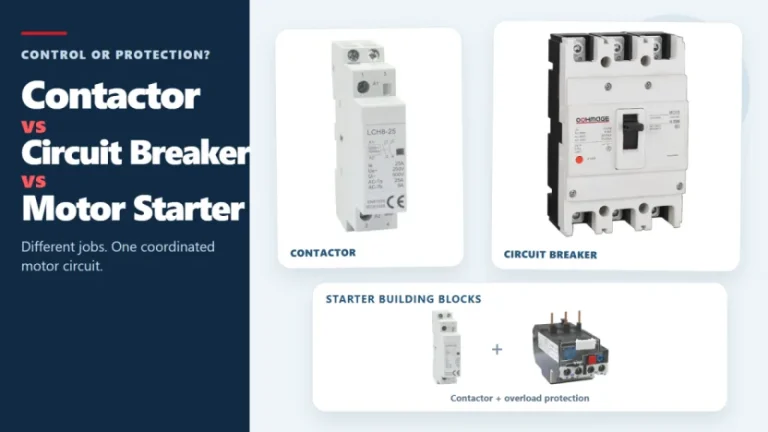
Figure 1. Contactors, circuit breakers, and motor starters solve different control and protection tasks. These three devices often appear in the same motor-control panel, but they solve different problems. A contactor handles frequent, remote, or automatic switching during normal operation. A circuit breaker interrupts abnormal current within its rated capability. A motor starter normally combines […]
Introduction The concept of remote tripping is simple, but in actual operation, project teams often encounter difficulties in specifying the components. The panel factory may require circuit breakers triggered by fire alarm relays, PLC outputs, building management system instructions, or other coordinated control. At this point, “diversion tripping” is only the first step in the […]
The main types of circuit breakers used in low-voltage distribution include miniature circuit breakers (MCBs), molded case circuit breakers (MCCBs) and residual-current devices such as RCCBs and RCBOs. They are not interchangeable. MCBs and MCCBs are selected for overcurrent protection in different circuit roles, an RCCB provides residual-current protection without integral overcurrent protection, and an […]