< img height="1" width="1" src="https://www.facebook.com/tr?id=1523171142290993&ev=PageView&noscript=1"/>
Reliable and safe electrical systems are critical, especially in renewable energy setups like solar PV systems and electric vehicle charging stations. A major issue is the potential hazard posed by direct current (DC) circuits, which can be challenging to isolate and manage. The solution lies in using DC isolator switches. These switches are specifically designed to safely disconnect DC circuits, ensuring maintenance and emergency shutdowns can be conducted without risk. Understanding their function and importance is essential for electrical system design or maintenance.

What is a DC Isolator Switch

A DC isolator switch is a device used to disconnect DC circuits from their power. Its principal function is to ensure the safe isolation of electrical circuits during maintenance or emergencies. This switch is crucial in applications involving solar power systems and electric vehicles, where safe handling of high DC voltage is essential. DC isolator switches provide a reliable means of cutting off power, preventing electrical hazards, protecting equipment, and protecting personnel working on or near the circuits. Their role in enhancing system safety and reliability makes them indispensable in various electrical setups. DC isolating switch

Key Features of DC Isolator Switches

Voltage and Current Ratings

DC isolator switches are designed to handle specific voltage and current levels, ensuring they can safely disconnect circuits under load. These switches typically have ratings indicating the maximum voltage and current they can manage. For instance, a switch rated 1000V and 32A can safely handle up to 1000 volts of direct current and 32 amperes of current. Understanding these ratings is important for selecting the appropriate switch for your application, as using a switch with insufficient ratings can lead to failure and pose safety risks.

Weather Resistance

Weather resistance is a vital feature of DC isolator switches, especially for outdoor installations such as solar PV systems. These switches are often exposed to harsh environmental conditions, including rain, dust, and extreme temperatures. A high-quality DC isolator switch will have an IP (Ingress Protection) rating, indicating its ability to withstand these conditions. For example, an IP66-rated switch is protected against dust and strong water jets, making it appropriate for challenging outdoor environments.

Ease of Installation

Another important element to consider is ease of installation. DC isolator switches should be designed for straightforward installation and maintenance. Features such as clear labeling, user-friendly terminals, and pre-drilled mounting holes can significantly reduce installation time and complexity. Some switches come with modular designs that allow for easy integration into existing systems. This simplicity saves time and minimizes the risk of installation mistakes, which can compromise system safety and performance.

AC and DC Isolating Switches

It is essential to distinguish between AC and DC isolator switches, as they serve different purposes and characteristics. Below is a table summarizing the key differences between the two:
FeatureAC Isolator SwitchDC Isolator Switch
Primary FunctionHandle constant currents flowing in one directionDisconnect DC circuits from power
ApplicationIdeal for homes and businessesSolar PV systems, EV charging stations, renewable energy setups
Power CapacityHigher voltage levels typical in AC systemsHigher current levels and maintain a constant voltage level
Switching SpeedFor the frequent change in the current direction of AC systems, offering faster switching speedFor a constant flow of current, resulting in slower switching speeds
Wiring ConfigurationA simpler wiring configuration with fewer polesMore complex wiring with at least three poles
 

Applications of DC Isolator Switches

Solar PV Systems

DC isolator switches are essential components in solar PV systems. They are set up between the solar panels and the inverter to provide a safe way to disconnect the DC power during maintenance or emergencies. This isolation is crucial for preventing electrical shocks and ensuring the safety of technicians. Moreover, they help protect the equipment from damage due to electrical faults, enhancing the overall reliability and efficiency of the solar power system.

Electric Vehicles (EV) Charging Stations

DC isolator switches play a significant role in managing high-voltage DC circuits in electric vehicle charging stations. They ensure that the charging station can be safely disconnected from the power during servicing or emergencies. This is particularly important due to the high currents involved in fast charging technologies. By providing a reliable way to isolate the circuit, these switches help prevent potential hazards and ensure the safety of both the equipment and users.

Other Renewable Energy Systems

Beyond solar PV systems, DC isolator switches are also used in various other renewable energy applications. For instance, wind energy systems isolate the DC circuits connected to the turbine’s generator. This isolation is necessary for safe maintenance and to prevent damage to the equipment during electrical faults. Similarly, in hydroelectric systems, DC isolator switches ensure the safe handling of DC circuits, contributing to the overall safety and reliability of the renewable energy installation.

Telecommunications

Telecommunications infrastructure often relies on DC power systems for uninterrupted operation. DC isolator switches in these setups provide a means to disconnect power safely for maintenance or in case of faults. This ensures the straight and reliable operation of communication networks, vital for everyday communication and emergency services.

Industrial Applications

In industrial settings, DC isolator switches manage various DC-powered machinery and equipment. They provide a safe way to disconnect power for maintenance, repairs, or during emergencies. This is crucial in industries where the safety of personnel and equipment is a priority.

Energy Storage Systems

Energy storage systems like battery banks also utilize DC isolator switches. These switches allow for safe disconnection of the storage system from the rest of the power grid. This is important for the maintenance of the batteries and for ensuring safety during electrical faults. The ability to isolate the storage system helps protect both the batteries and the connected equipment, thereby enhancing the reliability of the entire energy storage solution.

Benefits of Using DC Isolator Switches

Enhanced Safety

One of the immediate benefits of using DC isolator switches is their enhanced safety. These switches ensure electrical circuits can completely disconnect from their power during maintenance or emergencies. This isolation switch prevents electrical shocks and reduces the risk of accidents, protecting personnel and equipment.

System Protection

DC isolator switches play a crucial role in protecting electrical systems from damage. They act as a barrier that can quickly disconnect the circuit in case of faults or irregularities, such as short circuits or overvoltage conditions.

Operational Efficiency

Operational efficiency is another significant benefit of using DC isolator switches. These switches allow quick and easy disconnection and reconnection of circuits, simplifying maintenance and troubleshooting processes.

Fire Prevention

DC isolator switches also help in preventing fires in electrical systems. By enabling the safe disconnection of power, these switches can stop the current flow in faulty circuits, reducing the risk of overheating and fire hazards.

Versatility

The versatility of DC isolator switches makes them suitable for various applications. These switches provide reliable isolation and protection in renewable energy systems, industrial machinery, or telecommunications. Their capacity to handle high voltages and currents makes them ideal for various settings, enhancing the flexibility and safety of electrical installations.

Cost Savings

Using DC isolator switches can lead to significant cost savings over time. By protecting equipment from damage and reducing the risk of system failures, these switches minimize the need for costly repairs and replacements.

Choosing the Right DC Isolator Switch

A DC isolator switch

Assess System Needs

When choosing a DC isolator switch, the first step is to assess your system’s specific needs. Consider the voltage and current ratings required to safely disconnect your DC circuits. Selecting a switch that can handle the maximum load your system will encounter is essential. Evaluate the environmental conditions where the switch will be installed. For outdoor applications, ensure the switch has adequate weather resistance and an appropriate IP rating to withstand exposure to dust, water, and extreme temperatures.

Comparing Products

Once you have determined your system requirements, compare different products to find the best fit. Look at each switch’s technical specifications, including voltage and current ratings, IP ratings, and ease of installation. Look for features that enhance safety and reliability, such as robust construction and clear labeling. Consider the manufacturer’s reputation and any certifications that indicate quality and compliance with industry standards. Reading reviews and pursuing advice can also provide insights into the performance and durability of different DC isolator switches.

Final Thoughts

Selecting the right DC isolator switch is crucial for the protection and efficiency of electrical systems. OOHMAGE stands out as a professional electrical equipment supplier, offering products that meet high standards of quality and reliability. Their switches are designed to handle various environmental conditions and are suitable for diverse applications such as solar PV systems and EV charging stations. Choosing OOHMAGE ensures you get durable, efficient, and safe isolator switches, making them recommended for your DC isolation needs.

FAQs

What is the primary function of a DC isolator switch?

A DC isolator switch is designed to safely disconnect DC circuits from their power, primarily for maintenance or emergencies.

Where are DC isolator switches commonly used?

They are commonly used in solar PV systems, EV charging stations, and other renewable energy setups.

Why is weather resistance important for DC isolator switches?

Weather resistance is crucial for outdoor installations to protect the switch from environmental conditions like rain, dust, and temperature extremes.

How do DC isolator switches enhance safety?

They prevent electrical shocks and equipment damage by providing a reliable means to disconnect power during maintenance or emergencies.

What factors should be considered when choosing a DC isolator switch?

When selecting a DC isolator switch, consider the voltage and current ratings, environmental conditions, ease of installation, and product reliability.

Related Product Category

DC Isolator Switches — Compare published DC isolator configurations by voltage, poles and project requirements.

Previous Post

Elevating Connectivity and Safety: The Ultimate Guide to PV Junction Boxes and Their Role

Next Post

Solar Combiner Boxes: Enhancing Solar PV System Performance

Related Posts

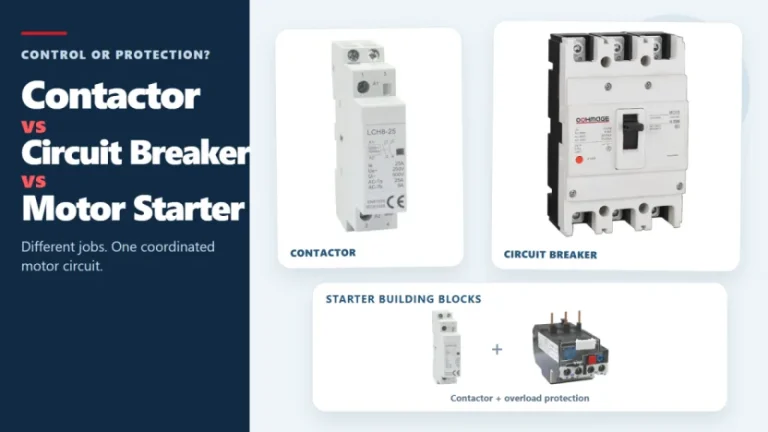
Contactor vs Circuit Breaker vs Motor Starter

Contactor vs Circuit Breaker vs Motor Starter

Figure 1. Contactors, circuit breakers, and motor starters solve different control and protection tasks. These three devices often appear in the same motor-control panel, but they solve different problems. A contactor handles frequent, remote, or automatic switching during normal operation. A circuit breaker interrupts abnormal current within its rated capability. A motor starter normally combines […]
Read More
Types of Circuit Breakers: How MCB, MCCB, RCCB and RCBO Differ

Types of Circuit Breakers: How MCB, MCCB, RCCB and RCBO Differ

The main types of circuit breakers used in low-voltage distribution include miniature circuit breakers (MCBs), molded case circuit breakers (MCCBs) and residual-current devices such as RCCBs and RCBOs. They are not interchangeable. MCBs and MCCBs are selected for overcurrent protection in different circuit roles, an RCCB provides residual-current protection without integral overcurrent protection, and an […]
Read More
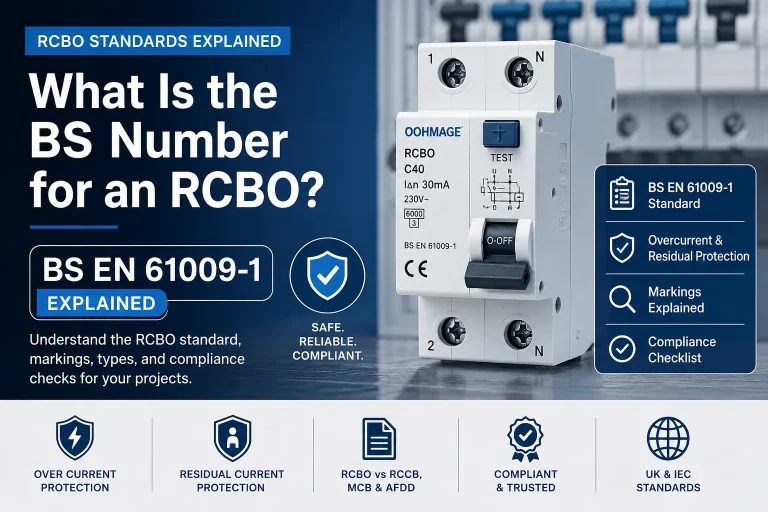
What Is the BS Number for an RCBO? BS EN 61009-1 Explained

What Is the BS Number for an RCBO? BS EN 61009-1 Explained

Introduction If you are searching for the RCBO BS number, the answer most commonly required in UK and IEC-based electrical procurement is BS EN 61009-1. This is the principal product standard associated with residual current circuit breakers with overcurrent protection used in residential, commercial, and similar installations. However, merely the BS number is not sufficient […]
Read More
+86-18757092555 Phone info@oohmage.com E-mail Chat on WhatsApp WhatsApp