Molded Case Circuit Breaker (MCCB) Maintenance: What to Do, How Often, and What to Avoid
Published: Author: Conor
MCCB maintenance is about checking what you’re allowed to touch—and knowing exactly what you should never touch. In most commercial and industrial settings, molded case circuit breakers need regular visual inspections, secure connections, and basic functional checks. What they do not need is internal adjustment, lubrication, or disassembly.
In this guide, we’ll walk you through what the molded case circuit breaker maintenance actually involves, how often it should be done, how to prepare safely, and the mistakes that turn routine inspections into serious hazards.
What Does Maintaining a Molded Case Circuit Breaker Involve?
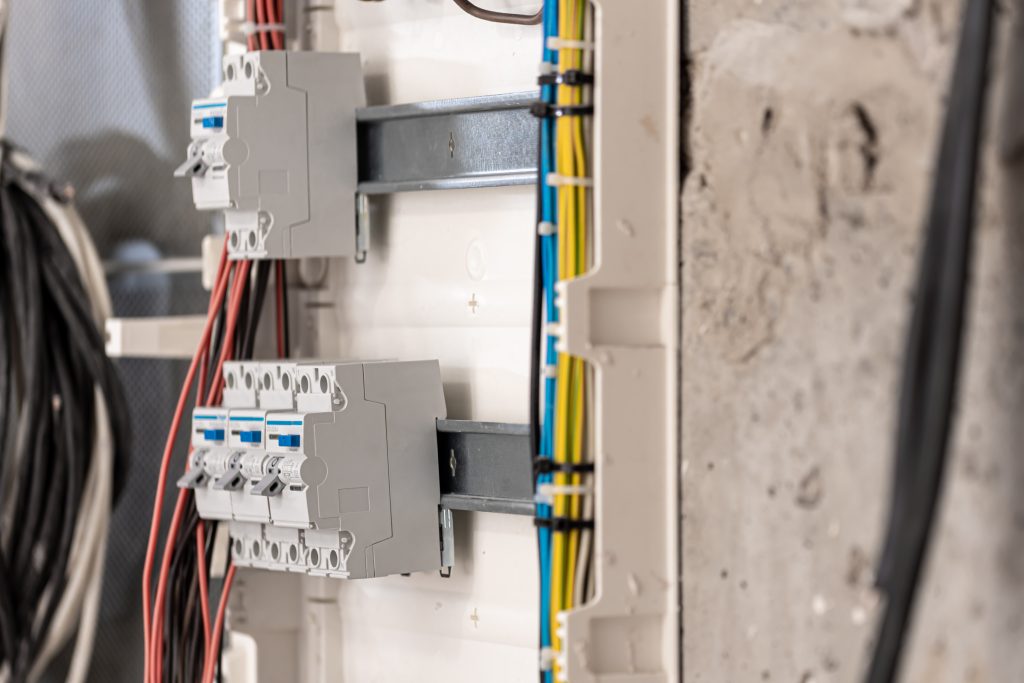
Molded case circuit breakers maintenance includes external inspection, limited observation of internal indicators, and basic functional operation—without opening the molded case.
Everything you’re allowed to do in the field fits into one of the three categories below.
External Components (Case, Terminals, Mounting)
These are the parts you can fully inspect during routine MCCB maintenance.
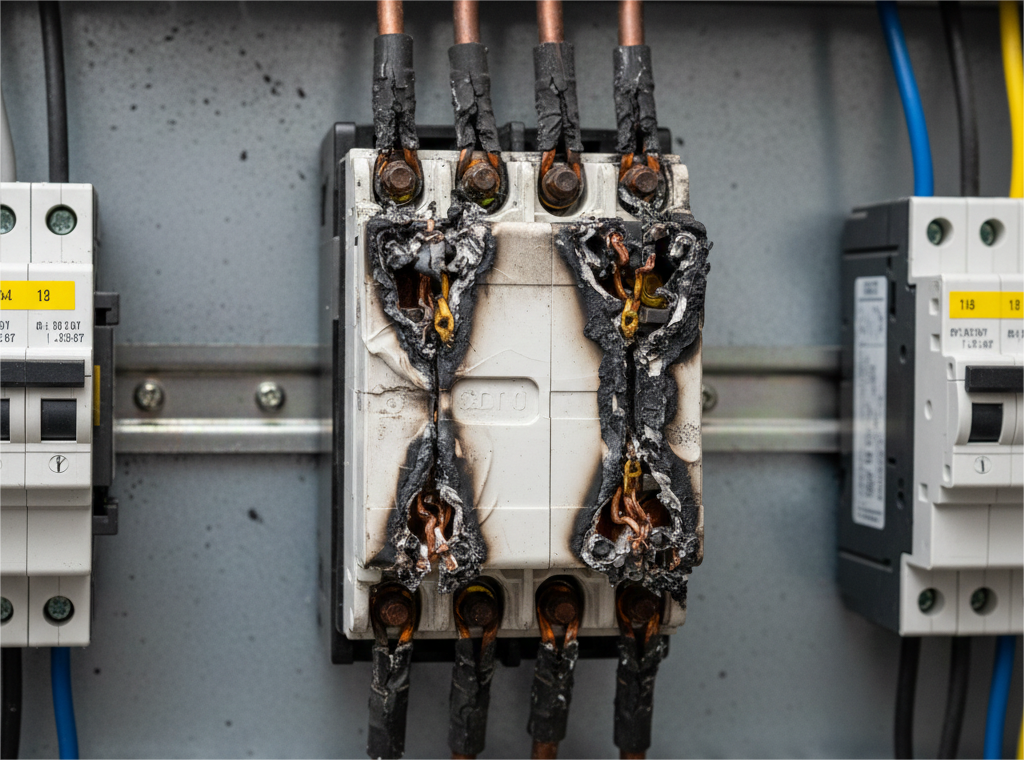
Molded Case Housing: Look for cracks, deformation, or heat discoloration. Any physical damage to the case is a red flag.
Terminal Connections: Check for corrosion, darkened copper, or signs of overheating around lugs and screws.
Mounting Hardware: Verify the breaker is securely mounted and hasn’t loosened due to vibration or thermal cycling.
If damage is visible on external components, further testing—or replacement—may be required.
Internal Mechanisms Visible Without Opening
Some internal features can be observed safely without opening the breaker.
Trip Indicator Windows: Confirm whether the breaker tripped due to a fault or manual operation.
Position Indicators: Verify ON, OFF, and TRIPPED positions are clearly shown.
Electronic Trip Unit Displays: Review LED indicators, fault history, or diagnostic codes if present.
These indicators provide valuable clues about breaker condition, but they are strictly for observation only.
Functional Operation (Handle And Trip Mechanism)
Basic functional checks confirm the MCCB can still operate mechanically as designed.
Manual Handle Operation: Move the handle through OFF, ON, and trip-to-reset positions.
Smooth Movement: The handle should move smoothly with distinct detents—no binding or hesitation.
Trip And Reset Verification: Confirm the breaker resets properly after a trip.
Functional testing checks readiness. It does not involve internal adjustment or calibration.What MCCB maintenance does not include is just as important. You should never open the molded case, adjust internal calibration, replace internal parts, or modify trip settings beyond manufacturer-approved external controls.
How Do You Safely Prepare an MCCB for Maintenance?
Safe MCCB maintenance requires complete circuit de-energization, verified lockout/tagout, appropriate PPE, and environmental assessment before any physical contact.
Start by opening the upstream disconnect or feeder breaker that supplies the MCCB. Never assume a tripped breaker is safe. Backfeeds, parallel sources, or control circuits can still energize conductors.
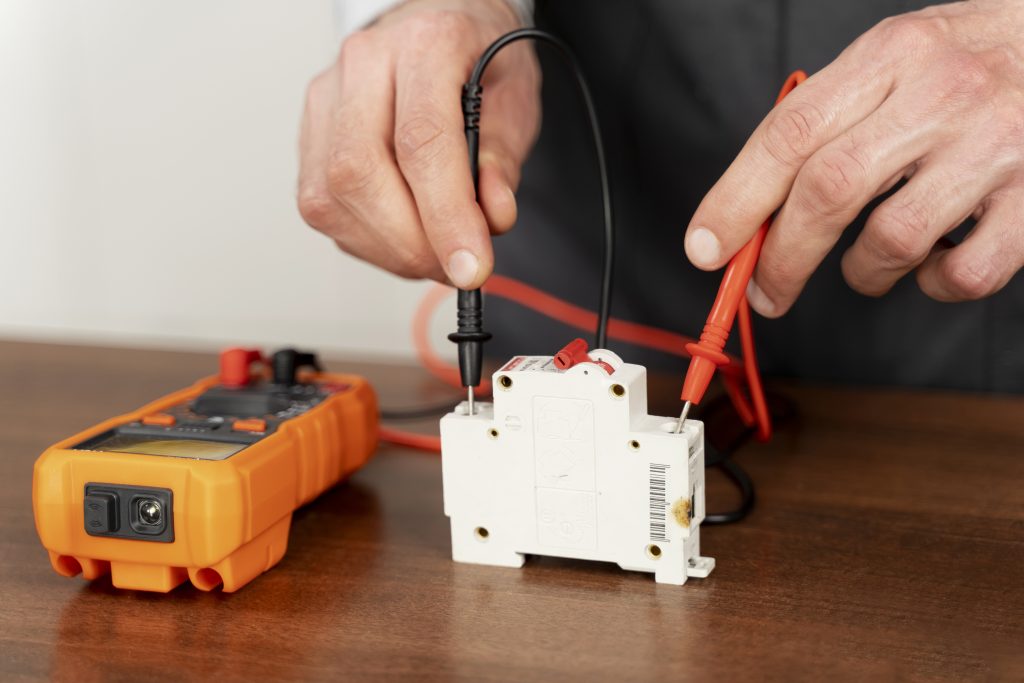
Once isolated, test for the absence of voltage using a properly rated meter or voltage detector. Check all phases to ground and phase-to-phase. Before and after testing, confirm the tester itself is working.
Only after the circuit is confirmed de-energized should any physical inspection begin.
Why Lockout/Tagout (LOTO) Is Mandatory Before MCCB Maintenance
LOTO procedures prevent accidental re-energization while personnel are exposed to electrical hazards, creating a legally enforceable barrier between workers and energy sources.
Before maintaining an MCCB, apply your personal lock and tag to the disconnecting device. If more than one person is involved, each individual must apply their own lock. No exceptions.
Required Personal Protective Equipment includes:
Insulated Gloves: Rated for the system voltage.
Eye And Face Protection: To guard against arc flash or debris.
Arc-Rated Clothing: Required if there’s any exposure to energized equipment nearby.
Hard Hat: Common in industrial and plant environments.
Many MCCB inspection accidents happen during “quick checks” without full isolation. Treat every maintenance task as requiring full safety procedures.
What Should Be Checked During a Visual Inspection of an MCCB?
Visual inspection identifies physical damage, thermal stress, contamination, and operational irregularities that indicate developing problems before they cause failures.
During MCCB maintenance, focus on conditions that change slowly over time—these are the ones that signal problems before failure occurs.
Key items to check during a visual inspection include:
Discoloration Around Terminals: Darkened metal or insulation usually indicates overheating. Bright copper or light oxidation is normal.
Case Damage: Cracks, warping, or melted plastic point to mechanical stress or severe fault events. These are replacement indicators, not maintenance issues.
Odor: A burnt plastic smell suggests overheating. An ozone-like smell often indicates internal arcing. Either requires investigation.
Conductor Insulation Near Terminations: Look for brittleness, charring, or discoloration extending beyond the lug area. Heat damage rarely stops at the connection point.
Visible Internal Indicators: Check trip windows, position indicators, and electronic status LEDs or fault codes without opening the breaker.
Photograph abnormal conditions and log them. Trending small changes over time often prevents large failures later.
How Should an MCCB Be Cleaned During Maintenance?
Clean MCCBs using dry cloths or brushes to remove dust and debris, avoiding compressed air, solvents, and any lubrication products not specifically approved by the manufacturer.
In most cases, less cleaning is better than aggressive cleaning.
Safe cleaning methods include:
Soft, Dry Cloths: Wipe dust and grime from the molded case and handle area.
Lightly Damp Cloths (Water Only): Use sparingly for stubborn dirt, then dry immediately.
Soft Brushes: Gently clear dust from ventilation openings or exterior contours.
Cleaning methods to avoid—and why:
Compressed Air: It drives dust into sealed areas where it causes long-term damage.
Solvents Or Cleaners: These attack plastic housings and insulation and may leave conductive residue.
Lubricating Sprays: They attract dust and contaminate contact areas that were never designed to be lubricated in the field.
Pressure Water Or Steam: Moisture intrusion creates insulation failure risks that visual inspections won’t catch.
If contamination cannot be removed externally, the issue is no longer a cleaning problem—it’s a replacement or factory service decision.
How Do You Inspect and Tighten MCCB Electrical Connections?
Connection inspection requires visual examination followed by systematic torque verification using calibrated tools according to manufacturer specifications.
Visual inspection identifies obvious problems before applying torque. Look for loose conductors, missing terminal screws, or signs of previous overheating.
Why Do Loose Connections Cause MCCB Overheating
Loose connections create high-resistance contact points that dissipate power as heat, leading to thermal runaway that progressively worsens until failure occurs.
Current flowing through resistance generates heat. Loose connections create measurable resistance at the conductor-terminal interface. Heat causes metal expansion, further loosening the connection. The cycle accelerates.
To prevent this, terminal screws must be tightened to manufacturer-specified torque values:
Too little torque leaves resistance in the connection.
Too much torque strips threads, cracks terminal blocks, or deforms lugs.
Use calibrated torque screwdrivers or torque wrenches. Specifications typically range from 15-50 inch-pounds for small breakers to 200+ inch-pounds for large frames.
Record torque values and tool calibration dates in maintenance logs. Incorrect torque is one of the most common—and most avoidable—causes of MCCB failure.
When Is Lubrication Required for an MCCB?
Most modern MCCBs do not require—and should not receive—field lubrication. Applying lubricant without explicit manufacturer instructions often causes more damage than the problem it’s meant to solve.
In older MCCBs, limited lubrication may have been specified for parts such as handle pivots or latch surfaces. Modern breakers, however, use sealed mechanisms or self-lubricating materials that are not accessible from the outside.
Before applying any lubricant, check the manufacturer’s maintenance manual. If lubrication is not clearly specified, assume it is not required.
Improper lubrication creates several risks:
Dust Attraction: Lubricants collect debris that accelerates mechanical wear.
Contact Contamination: Migrating lubricant increases contact resistance and heat.
Calibration Impact: Lubricant reaching internal mechanisms can alter trip behavior.
If lubrication is explicitly required, use only the exact product and amount specified by the manufacturer. More lubricant is never better.
How Often Should MCCBs Be Maintained?
MCCB maintenance frequency depends on environment, circuit criticality, and operating conditions—not a one-size-fits-all schedule.
Use the guidelines below to determine how often maintenance should occur.
Monthly Visual Checks: Recommended for critical circuits or harsh environments with dust, moisture, vibration, or high temperatures. These quick inspections catch early warning signs.
Quarterly Inspections: Suitable for moderate environments. Include visual inspection, handle operation checks, and connection verification.
Annual Inspections: Appropriate for clean, controlled environments. Perform comprehensive visual inspection, torque verification, functional testing, and record review.
Electrical Testing: Conduct annually for critical circuits and every 2–3 years for standard applications, unless manufacturer guidance specifies otherwise.
Mechanical operation checks should occur more frequently on breakers that rarely operate. Regular movement helps confirm mechanical readiness.
Always perform a post-event inspection after any fault interruption. Fault currents accelerate wear and can change breaker condition instantly.
Manufacturer maintenance schedules take priority. When environmental conditions worsen, shorten inspection intervals rather than extending them.
What Electrical Tests Are Performed During MCCB Maintenance?
Electrical testing measures insulation resistance and contact resistance to detect degradation invisible during visual inspection, providing quantitative data about breaker condition.
Visual inspections show surface conditions. Electrical tests reveal internal degradation that cannot be seen. The two primary tests used during MCCB maintenance are:
Insulation Resistance Testing: Is the Breaker Still Electrically Safe?
Insulation resistance testing measures leakage paths between live parts and ground, and between poles.
Typical test voltage: 500–1000 VDC
Common acceptable baseline: >100 MΩ (check manufacturer limits)
This test helps identify:
Moisture intrusion inside the breaker
Insulation breakdown from heat and aging
Damage caused by fault currents or flashover
How to read the results?
High and stable values: Insulation is healthy
Gradual decline over time: Aging or environmental exposure
Sudden drop: Moisture ingress or internal damage (often means replacement)
If insulation resistance falls below the manufacturer’s minimum, maintenance is no longer enough. The breaker is no longer reliable.
Contact Resistance Testing: Are the Contacts Still Doing Their Job?
Contact resistance testing measures how easily current flows through closed contacts.
Typical values: Micro-ohms to low milli-ohms
Results should always be compared to:
Manufacturer specifications
Previous test records
Rising contact resistance usually indicates:
Contact erosion
Loss of contact pressure
Heat damage from past overloads or faults
Even small increases matter. Higher resistance means more heat during normal operation, and heat accelerates wear. It’s a feedback loop you don’t want.
How Test Results Guide Maintenance vs Replacement Decisions
Electrical testing removes guesswork. Here’s how results typically translate into action:
Low insulation resistance: Replace the MCCB
High contact resistance: Internal wear—field repair isn’t possible
Poor test results plus visible damage: Replacement is the only safe option
If results trend downward over time, even if they’re still “acceptable,” plan for replacement. Waiting until failure is rarely worth the risk.
Common Electrical Testing Mistakes to Avoid
We see the same issues come up again and again:
Testing without establishing baseline values
Ignoring manufacturer minimum limits
Using test equipment that isn’t calibrated
Treating one “good” result as permanent
Electrical testing only works when results are tracked, compared, and taken seriously.
Testing Frequency And Documentation
For most installations:
Critical circuits: Test annually
Standard circuits: Test every 2–3 years
After fault interruptions: Test immediately
Test equipment should be calibrated at least once per year. Log all results with the test date, equipment serial number, and technician identification. Good records turn one-time tests into long-term reliability data.
A Quick Reminder Before You Move On
Electrical testing doesn’t fix MCCBs. It tells you whether maintenance is still enough—or if replacement is the safer choice.
If you’re unsure how to interpret results or don’t have proper testing equipment, that’s usually a sign the breaker should be evaluated by the manufacturer or replaced outright.
Why Should the Molded Case of an MCCB Never Be Opened?
The molded case of an MCCB must never be opened because it protects factory-calibrated parts that cannot be restored in the field without specialized equipment and training.
Inside the case are trip mechanisms, springs, contacts, and arc chutes that are assembled and calibrated using specialized equipment. Once disturbed, their original performance cannot be verified or recreated on site.
Opening the molded case immediately creates multiple risks:
Loss of Calibration: Trip units are set to precise values at the factory. Field reassembly cannot guarantee correct operation.
Arc Interruption Failure: Arc chutes rely on exact spacing and orientation. Small assembly errors can prevent arc extinction during faults.
Code And Listing Violations: Opening the case voids warranties and invalidates UL or equivalent listings.
Liability Exposure: If a modified breaker fails, responsibility shifts to the person who opened it. Insurance claims may be denied.
Once the case seal is broken, the MCCB is no longer a maintained device—it is an unverified modification. At that point, replacement is the only safe option.
When Should an MCCB Be Replaced Instead of Maintained?
Replace an MCCB when inspection or testing shows damage or degradation that maintenance cannot correct. MCCBs should be replaced when any of the following apply:
Visible Physical Damage: Cracked cases, deformed terminals, melted plastic, or severe discoloration are not repairable.
Repeated Fault Interruptions: Breakers that have cleared multiple high-fault events experience accelerated internal wear.
Obsolete Equipment: Units older than 20–25 years often lack replacement parts or current documentation.
Cost Threshold: When maintenance effort approaches roughly 50% of replacement cost, replacement is the safer and more economical choice.
If inspection results raise doubt, replacement removes uncertainty. A breaker that cannot be trusted should not remain in service.
How Do Manufacturer Guidelines Affect MCCB Maintenance Procedures?
Manufacturer maintenance guidelines define what is safe, acceptable, and verifiable for a specific MCCB design.
Generic maintenance rules cannot account for differences in trip mechanisms, contact materials, or terminal construction. Procedures that are safe for one MCCB model may damage another.
Manufacturer instructions control:
Torque Values: Terminal designs distribute force differently. Incorrect torque damages connections even if it “feels right.”
Cleaning And Lubrication Limits: Materials and mechanisms determine what products are safe to use—and whether lubrication is allowed at all.
Maintenance Intervals: Wear rates and aging behavior vary by design and application.
Electronic Trip Requirements: Battery replacement, self-tests, and configuration verification differ from thermal-magnetic breakers.
If manufacturer documentation is unavailable, do not improvise. For obsolete breakers without guidance, replacement is safer than guessing. In MCCB maintenance, manufacturer instructions are not suggestions—they define the boundary between maintenance and liability.
Final Thoughts
MCCB maintenance boundaries are clear: inspect externally, verify connections, test electrically, document results. Never open the sealed case, never modify internal components, never guess at specifications.
Inspect what you’re allowed to inspect. Tighten what you’re authorized to tighten. Test what can be measured. Document everything. And never cross into internal modification. When MCCB problems become visible, maintenance is often no longer enough. The goal is to catch degradation early—before safety margins disappear.
At Oohmage, our MCCBs are supported by complete technical documentation and maintenance references, helping engineers make decisions based on data—not assumptions.
FAQs
What maintenance records are most important for audits and investigations?
The most valuable records include inspection dates, observed conditions, corrective actions, torque values applied, electrical test results, test equipment calibration status, and technician identification. These records demonstrate due diligence and are often requested during safety audits, incident investigations, or insurance reviews.
Why might an MCCB trip more frequently after maintenance?
Maintenance does not correct circuit problems. Frequent tripping after maintenance usually points to downstream issues such as overloads, ground faults, or incorrect breaker sizing. In rare cases, improper torque, contamination during cleaning, or handling damage during maintenance can introduce new problems.
What’s the fastest way to decide between maintaining or replacing an MCCB?
Use test results and physical condition as the deciding factors. If insulation resistance or contact resistance falls outside acceptable limits, or if there is visible case or terminal damage, replacement is the correct decision. When results are borderline or uncertain, replacement is often safer than continued operation.
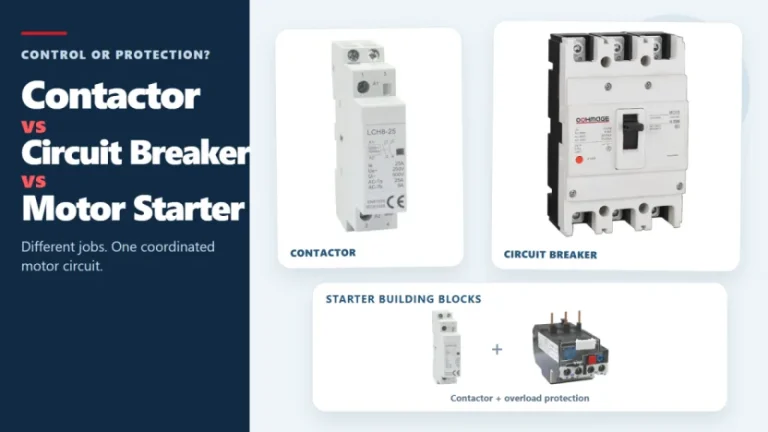
Figure 1. Contactors, circuit breakers, and motor starters solve different control and protection tasks. These three devices often appear in the same motor-control panel, but they solve different problems. A contactor handles frequent, remote, or automatic switching during normal operation. A circuit breaker interrupts abnormal current within its rated capability. A motor starter normally combines […]
Introduction The concept of remote tripping is simple, but in actual operation, project teams often encounter difficulties in specifying the components. The panel factory may require circuit breakers triggered by fire alarm relays, PLC outputs, building management system instructions, or other coordinated control. At this point, “diversion tripping” is only the first step in the […]
The main types of circuit breakers used in low-voltage distribution include miniature circuit breakers (MCBs), molded case circuit breakers (MCCBs) and residual-current devices such as RCCBs and RCBOs. They are not interchangeable. MCBs and MCCBs are selected for overcurrent protection in different circuit roles, an RCCB provides residual-current protection without integral overcurrent protection, and an […]