The Ultimate Guide to Fuse Holders – Every Distributor and User Must Have
Published: Author: Conor
Almost all electrical circuits can face unexpected overcurrent situations. Therefore, overcurrent protection circuits like fuse holders work well to handle such events. Various electrical fuses come in multiple sizes and shapes that can be put into conductive channels. These fuses serve as a strong path of the current so voltage won’t creep to other parts.
Scrolling down the blog will entertain you with in-depth knowledge of fuse holders and their purposes and types. You will also get to know about the fuse holder types and the ultimate guide to selecting electric equipment suppliers. A very few troubleshooting issues are the topic of discussion along with the applications of the product. Additionally, we made a guide to fuse holders for distributors to stock the fuse holders so they can maintain their quality deliveries.
What Is a Fuse Holder, and How Does It Work?
In every electrical system, fuse holders work as a crucial part. They are responsible for guarding against current overload and protecting the device from harm. For every AC or DC fuse, there’s a specific fuse holder, depending on the type of application. Therefore, it’s necessary to understand how the fuse holder works so you can pick the right holder for your needs.
When the electric current surpasses the fuse rating, the fuse element melts or ‘blows,’ causing an open circuit. Therefore, opening and fusing occur because the fuse holder is plugged into a series along the circuit. It maintains the overflow of current and protects the circuit.
Types of Fuse Holders
Multiple fuse holders are available in the market, so to choose the best, you need to understand your requirements and accurate information about a particular holder. Each holder comes for a specific purpose, so let’s overview a few fuse holders that will help you make your decisions.
Panel-Mount Fuse Holders
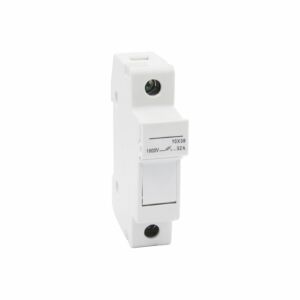
Suggesting the purpose from the name, fuse holder panel mount fixes on surfaces and panels. They are best for electrical and industrial applications as they have cylindrical and enclosed structures. The fuse is kept inside the top opening while the terminal end connects with the circuit.
In-Line Fuse Holders
Unlike panel-mount, in-line fuse holders have a wire connection. They easily connect with circuits and are best for the electronic and automotive industries.
Printed Circuit Board Fuse Holders
As the name suggests, printed circuit boards allow the fuse holders to fit into them and carry the electric current. PCB fuse holders are designed for efficient integration into circuit boards, providing compact and reliable overcurrent protection for electronic devices.
Blade Fuse Holders
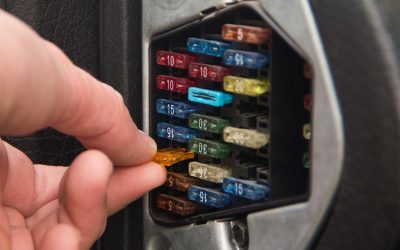
They are among the commonly known fuse holders that are found in the marine and automotive industries. Blade fuse holders offer a safe and dependable connection that easily accommodates the ATO/ATC blade fuses.
Waterproof Fuse Holders
Like the name, these fuse holders are water resistant and work best in outdoor applications. Its waterproof feature makes it fit for marine applications, too. The design of the waterproof fuse holders makes them fit to resist tough and humid weather.
How to Select the Right Fuse Holder
Selecting the right fuse holder is crucial to carrying out electrical operations securely. Therefore, you need to consider several factors to make the installation of the right fuse holder. Here’s a guide to fuse holder automotive and industrial perspective base.
1. Installation and Accessibility Ease
The first thing to consider before getting a fuse holder is its accessibility. Figure out whether it needs frequent replacements or not. Based on its replacements, opt for the fuse holder, which has easy removal and replacement access. Similarly, if you want to replace the fuse often, you can opt for the enclosed one.
Another thing to consider when replacing is easy installation. Go with the fuse holder, which fits in tight spaces and is installed easily.
2. Customer Access and Application Environment
Once you figure out the accessibility, consider whether removing or replacing the fuse holder from the user appliance is easy. If yes, then go with the easy-access holders. Otherwise, it’s preferable to limit access to the fuse holder to technicians only.
With end customer access, identify the location and placement of the fuse holder. If they are going to be fit outdoors, opt for waterproof fuse holders. Similarly, choose in-line or printed circuit board fuse holders for indoor purposes.
3. Reliance and Security
Selecting a fuse requires careful consideration of your budget for dependability and safety. Fuse holders of higher quality guarantee long-lasting reliability with protection against overcurrent. Therefore, it’s important to identify the long-term consequences of fuse failures along with their possible damage to your applications.
4. Safety and Compliance
While getting the fuse holder, make sure you know the standards of the fuse holders. There are various standards like UL-512 and IEC 60127. These fuse holder standards confirm the reliability that the holder will comply with the prerequisites of the application. Many fuse holders come with the protection features like indicators or covers. Such protective layers add safety and convenience for the user.
5. Rated Current and Power Dissipation
When the fuse holder protects the application from overcurrents, the user needs to understand the rated current and power dissipation. The fuse base can withstand the rated current without going beyond the temperature limitations. In contrast, power dissipation shows the fuse base’s capacity to distribute power in specific circumstances. Based on such factors, a selection of fuse holders should be made to meet user requirements and ensure security and application types.
Common Applications of Fuse Holder
Fuse holders protect the application from overcurrents and maintain the electric systems. Different fuse holders have different applications, which are part of the discussion below.
Residential and Commercial Buildings
Usually, the enclosed fuse holders are fit for commercial and residential usage. They protect the appliances and circuits from excess current supply. Control and circuit breaker panels are major applications of fuse holders.
Automotive and Marine Applications
The Marine and automotive industry requires potential fuse holders. They maintain the electric systems and circuits from over current. Fuse holders are found in fuse boxes, panels, and wirings in the marine and automotive industries.
Industrial Equipment
Industrial equipment also utilizes fuse holders. It includes machinery, appliances, and other control systems that require current. The main purpose of these fuse holders is to distribute current without compromising on safety.
Common Issues and Troubleshooting of Fuse Holders
Sometimes, the selection of fuse holders, even after considering the factors, can go wrong. So, we came up with some troubleshooting tips that can help you as a quick fix.
Blown Fuses
A very common issue among the fuse holders is blown fuses. It happens when the holder handles an overload current and a short circuit.
To fix this, verify the fuse rating matches the circuit requirements after a thorough investigation. The continuation of the fuse blow means a severe electrical issue came up, which needs an urgent fix.
Loose Connections
Loose or faulty connection is another issue that occurs in fuse holders. It leads to inadequate or failing power supply.
To fix loose connection issues, tighten up all the loose connections securely through a screwdriver or plier. Ensure the tight terminals for proper electric flow.
Corrosion
Old wiring or untouched fuse holders cause the terminal to catch corrosion. Ultimately, it leads to poor electric flow.
To fix corrosion, open the fuse holder safely and clean all its terminals with the help of a brush. The entire holder should contain no debris and oxidation elements. Users can also opt for corrosion-resistant fuse holders.
Faulty Fuse Holder
Manufacturing defects also lead to faulty fuse holder issues.
To fix the faulty fuse holder, have it checked by an electrician or replace it with a new one. Get yourself a high-quality fuse holder to avoid such issues.
Inventory Management for Fuse Holder Distributors
Distributors need to manage their inventory well in order to satisfy consumer requests. A well-maintained inventory will let distributors keep prices down and consistent fuse holders supply. Therefore, an easy approach for distributors is:
Identifying High-Demand Products
Customer demands must be the priority. Identify the trending or demanding fuse holders by conducting competitive market research. The trends and customer purchase history will allow distributors to gather their data. Utilize the data to stock the products based on your customer preferences to stay top-notch in the market.
Optimizing Stock Levels
Avoid overstocking and shortages of high-demand products. Maintain supply and demand chain using inventory management systems. IMS will help you track patterns of sales with future demand, along with seasonal fluctuation warnings. Your stock levels will stay in balance without compromising customer service.
Building Supplier Relationships
Market research with proper stocking of products will benefit you with a strong relationship with suppliers. Maintain relationships with credible manufacturers having certified products. It guarantees reliability and decreases the risk of stocking low-demand products for the high-demand era.
This approach will help the distributors to stock demanding products and meet their customer needs effortlessly.
Conclusion
Fuse holders are an essential part of the electric systems that protect the equipment and distribute the current flows. Multiple types of fuse holders work for multiple purposes, but to choose the right one, you need to understand a few factors.
Accessibility, safety standards, and fuse holder installation must be the factors to focus on while choosing the right fuse holder for you. As a distributor, you need to stay active on market trends and customer buying history to consistently provide the best product.
FAQs
What standards should fuse holders comply with?
UL listing ensures fuse holding manufacturing through standard UL 248-14. On the other hand, IEC (UMF) publication 257 is another standard that fuse holders should comply with.
How to choose the best fuse holder?
Understand your needs and placement of fuse holders first. Then, look for the voltage, current, and power dissipation factors to pick the best fit for your needs.
What’s the right place to install the fuse?
The ground power system is the best location to install the fuse. It will protect the appliances and conveniently connect them to the load.
Are there any fuse holder ratings?
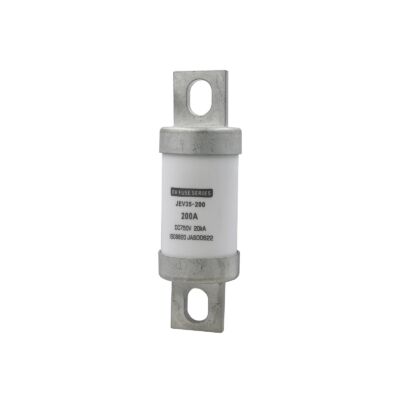
Fuse holders also come with ratings, like 30, 60, 100, and 200 amp ratings. The rating utilizes the fuse that best matches the amperage rating and below.
Why should I use Fuse Holder?
The fuse holder guards the electric system. It protects the system from over currents. Therefore, you should install it at the critical circuit points where other electrical equipment is easy to connect with.
A single-line diagram can look simple and still be difficult to read. One line may represent a multiphase circuit, a small symbol may stand for a major protective device, and a short label may carry the information that determines what equipment belongs downstream. The most reliable way to read a single-line diagram is to follow […]
Figure 1. Three-phase SPD selection starts with system facts, not the largest kA number. A three-phase surge protector should not be selected by the largest kA number on its label. First confirm the system voltage, whether a neutral is present, the earthing arrangement, the installation point, and the required SPD type. Then compare Uc, Up, […]
An AC-only miniature circuit-breaker,you cannot treat it as a DC circuit by default.Confirm before using: If the manufacturer explicitly rates the selected model for the required DC voltage, pole arrangement, polarity where applicable, fault current, and breaking capacity.Some breakers carry both AC and DC ratings, but these alone cannot reflect the actual situation. If the […]