< img height="1" width="1" src="https://www.facebook.com/tr?id=1523171142290993&ev=PageView&noscript=1"/>
Your expensive electronic equipment is a step away from being destroyed by a slight voltage fluctuation. This means that a slight change in voltage for any reason could make your top-notch product useless. However, this is a headache for those who are unfamiliar with life-saving electrical protective devices. DC surge protectors protect your electronic items from voltage irregularities. So, instead of spending thousands on electric items, spend on DC surge protection devices. This way, you will maintain your budget and appliances in one go. Here, we will cover all about DC surge protectors and how DC surges occur. Along with this, you will learn about different types of DC devices with a guide to choosing the right one.

Understanding DC Surge Protectors

A DC surge protector is a device whose purpose is to safeguard your equipment from sudden changes in voltage. They are also known as surge suppressors because your equipment will lead to the trash can without them. Firstly, let’s understand how they work. DC surge protectors absorb or divert an excessive current before letting it pass through your device. It maintains the current, thus reducing the risk of damaging equipment. On the other hand, the excessive current transfers to the ground wire in the outlet. DC surge protector installation is a smart and necessary method to save your tech stuff from voltage fluctuation.

How do DC Surges Occur?

DC power surge occurs when the electrical power goes higher than average. There are multiple reasons for the power rate increase, as it can be any internal or external forces. From one to thousands of excess volts, the electricity flows directly to the devices. Usually, the average voltage in a house is between 110 and 220 volts. When this limit is exceeded, the power line faces interruption and power surges happen. It causes harm to plug-in devices because they lack DC surge protectors. Some of the common causes of surges in DC circuits are these:

Exposed Wiring

Exposed Wiring As harmful as it is, wiring issues can also be a big reason for DC power surges. These damaged or exposed electric wires are sometimes very difficult to spot as they are hidden behind the walls. Pay close attention to burn marks, the burning smell of wires, the buzzing sound from behind the walls, and the DC circuit breaker frequently tripping. These are signs of faulty wiring, hinting you should install the DC surge protector.

Lightning Impact

Sometimes, the voltage doesn’t increase a bit, but it reaches 1000s because of the lightning strikes. It happens rarely, but when it does, it directly strikes the power line and produces high voltage. It would be smart to unplug electronics during a severe storm when you don’t own a DC surge protection device.

Electrical Outage

Electrical Outage Power surges do not only happen in the absence of power. Sometimes, the voltage also fluctuates during the power restoration after the electrical outage or blackout. Sudden power restoration after the outage causes a quick jump in current. Therefore, appliances without DC surge protectors get shocked and damage their electric system.

Types of DC Surge Protectors

Based on protection capabilities, surge protection devices fall under three categories.

Type 1 DC SPD

The main power entry of the building gets the installation of a Type 1 DC surge protection device. It handles large surges and protects the whole system against high-energy strikes or significant electrical faults.

Type 2 DC SPD

Type 2 DC SPD Within the building, there are separate junction boxes or sub-distribution panels. In those panels, the Type 2 DC surge protection devices get complete installation. It works as the second line of defense and protects the appliances from overvoltages.

Type 3 DC SPD

Type 3 DC surge protection devices work well for individual equipment or sensitive devices. It provides local protection at the device level and shields the equipment from slight surges that might reach them.

Important Points Before Bulking Up the DC Surge Protector for Your System

There are some crucial points to consider before selecting and bulking up the DC surges. In this way, they would be profitable for you and valuable to the consumer.

Solar DC SPDs

Solar DC SPDs Those who use solar panels for electricity also face transient spikes. However, Solar DC surge protector devices will save the solar panels and the equipment from such solar surges. The shunt protects the system from harm by excessing voltage to the ground.

Voltage values

The highest voltage PV value a photovoltaic (solar power) can handle ranges from DC 500V to 1500V. Depending on the specific system, these are the common voltage values for any solar power setup. Residential systems can easily run on an average of 1000 V or even lower. Devices for commercial or public use will require a voltage of a higher rating that exceeds the limit of 1000 V.

The Voltage Protection Level (VP)

The process of measuring the capacity of SPD to handle voltage fluctuation is known as the voltage protection level. It tells the maximum amount of voltage the device allows to pass through during a spike in voltage.

Response Time

Make sure that the SPD has a quick response time so that it can immediately limit the voltage surges that damage your equipment.

Compliance and certification

It is essential that the DC SPD you are choosing is certified. It should also meet the standards of the relevant industry. Specific safety and protection standards ensure that your device meets the applicable industry standard. It would be better to look for certifications such as UL 1449, IEC 61643-31, or EN 50539-11.

Surge Current Rating

During a spike, the maximum current rate that the device can handle is the Surge current rating. The usual ratings are 10kA, 20kA, 40kA, or 60kA. However, it is important to choose a device that should be enough to manage the potential surges in the system.

Warranty and lifetime

A more extended warranty usually shows confidence in the lifetime and the quality of the product. So, make sure to check the warranty before purchasing it in bulk. The longer the warranty of the device, the better it will work in the future, too. Besides all the points you need to keep in check, a little discussion with the professional PV installer or electrician about the surge protector device is never a bad idea. They can give you detailed guidelines about the specifications of the system and which device would be suitable for that.

Common Applications of DC Surge Protectors

Renewable Energy Systems

It is crucial to install surge protector devices in renewable energy systems like solar power setups because they protect not only the solar panels but also the inverters and batteries from sudden power surges. Whether it is due to the lightning or because of the fluctuation in the power grid, your appliances will always be safe from these unwanted voltage issues.

Electric Vehicles (EVs)

Electric Vehicles (EVs) These surge protectors aren’t just limited to protecting home appliances but can also safeguard your electric vehicle from getting unnecessarily damaged from a voltage as they preserve the charging system from the battery pack. Sometimes, while charging or driving, there are sudden voltage spikes that can cause expensive damage or reduce the battery life, but the DC surge protector devices take care of the reliability and performance of your electronic vehicles.

Industrial and Telecommunications Equipment

In industrial and telecommunications settings, without DC surge protectors, equipment like servers, communication devices, and control systems can be at risk of extreme damage due to fluctuations in voltage. Where it can be costly, it can also lead to system malfunction, data loss, or even complete failure of critical operations. But this is only for those who aren’t smart enough to install DC SPDs, which can reduce the risk of such unexpected voltage spikes to 0%

Final Thoughts

It is very common for electronic items to get damaged when an excess amount of current passes because of fluctuations in voltage. However, using DC surge protector devices from reliable electric equipment suppliers can save expensive equipment effectively. There are various DC protectors that can be used to absorb and divert the excess voltage, whether you want them for the whole building, for a limited section, or just for any one piece of equipment. It is quite a need of almost everyone, but before thinking of stocking it in bulk, it is important to consider its few aspects, like the voltage value, response time, compliance and certification, surge current rating, and warranty.

FAQs

How can I choose a good surge protector for building appliances and power tools?

An ideal surge protector device should have a minimum rating between 1000 and 2000 J that can cover up cellphones, laptops, other building appliances, and even power tools as well.

What is necessary to choose the right DC surge protector for my system?

Before stocking DC surge protectors, it is important to consider the voltage rating, surge current rating, and response time. Make sure that it matches the requirements of the system and has a better quality and lifetime.

Can a DC surge protector be used separately for sensitive equipment?

Yes, the type 3 DC surge protectors can be used individually for a single device that controls the voltage and gives protection from slight fluctuations in power.

Why is DC surge protector important?

DC surge protectors are essential for solar panels, inverters, or other electronic equipment because they control the voltage, whether it is a lightning strike from a storm or the restoration right after the blackout. It saves the device from irregular voltage irregularities.

Does the capacitor do the same job as the surge protectors?

No, a capacitor cannot suppress voltage surges, nor can it control the flow of voltage in every electronic equipment.
Previous Post

The Ultimate Guide to Fuse Holders - Every Distributor and User Must Have

Next Post

Using AC Circuit Breakers in DC Circuits: Risks & Alternatives

Related Posts

3 Phase Surge Protector: 7 Checks Before Buying

3 Phase Surge Protector: 7 Checks Before Buying

Figure 1. Three-phase SPD selection starts with system facts, not the largest kA number. A three-phase surge protector should not be selected by the largest kA number on its label. First confirm the system voltage, whether a neutral is present, the earthing arrangement, the installation point, and the required SPD type. Then compare Uc, Up, […]
Read More
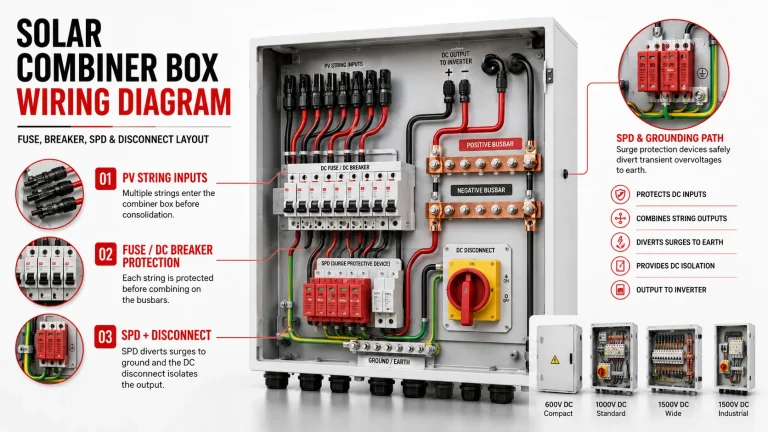
Solar Combiner Box Wiring Diagram: Fuses, Breakers, SPD & Disconnect Layout

Solar Combiner Box Wiring Diagram: Fuses, Breakers, SPD & Disconnect Layout

Introduction The wiring diagram of the solar energy combiner box shows how multiple photovoltaic strings enter the combiner box, pass through the string protection device, connect to the positive and negative busbars, ground the surge protection device, and connect to the inverter through the DC circuit breaker. In other words, this diagram not only indicates […]
Read More
Voltage Protector vs. Surge Protector: Key Differences and Applications

Voltage Protector vs. Surge Protector: Key Differences and Applications

Sudden power problems do not damage electrical equipment in the same way. Some failures come from long-term voltage instability, while others happen in a split second due to high-energy surges. That’s exactly why a voltage protector and a surge protector serve different purposes—and why using the wrong one can still leave your equipment exposed. In […]
Read More
+86-18757092555 Phone info@oohmage.com E-mail Chat on WhatsApp WhatsApp