Safety Switches vs. Circuit Breakers: Choosing the Right Protector
Published: Author: Conor
Electrical safety is essential for any sector. The two main electrical devices are the talk of the town: circuit breakers vs. safety switches. They both serve different purposes but have their own priorities and usage in the residential and commercial sectors.
A safety switch protects the human body through the circuit. Meanwhile, circuit breakers serve the overall wiring and electric system by detecting overloads. The question is, how do you choose?
What Are Safety Switches?
Safety switches are devices that detect alternation of current flowing in wiring. In any event of a fault, people might get a chance to encounter an electric shock due to an imbalance in electricity. Here, safety switches like RCD come to the rescue to protect people from such electric shocks.
The purpose of safety switches is to monitor the flow of electricity. These safety switches automatically shut off the circuit if they detect any imbalance, such as electricity leakage from the ground. The response time of the switch trip is less than 0.03 sec.
Safety Switch Types
Safety switches detect electricity imbalance through the circuit. Every switch saves lives according to its installation. Here are three main types of safety switches that work in different sectors.
Portable Safety Switches
You can connect portable safety switches directly from appliances. It can work for power tools, lawnmowers, or any other electrical equipment you need to use in workshops or on job sites. They are actually external safety devices that will work with every piece of equipment.
Portable safety switches offer temporary protection for your equipment. They are handy and detect any electrical fault to immediately cut off the power and save people from unwanted electrical shocks.
Fixed Safety Switches
The permanent protection solution from electric shocks is “fixed safety switches.” These switches get permanent fixation in the switchboards to protect multiple circuits in your home or building. It’s better to install fixed safety switches in areas like the kitchen or bathroom where there is more risk of electric shock.
These safety switches monitor the electric flow of the entire circuit. Upon detecting an electricity imbalance, it trips and protects the whole building from sudden power surges.
Socket Outlet Safety Switches
Many devices are plugged into the outlet. The socket outlet safety switch protects by cutting off power from the outlet and is safe from any electric shocks. It works directly with the specific power outlets.
Socket outlet safety switches are useful in areas with higher risks of electrical accidents, like outdoors or near water plants. The built-in protection of these switches makes them convenient because you won’t need multiple portable safety devices to protect yourself from any incident.
What are Circuit Breakers?
Circuit breakers protect your devices from damage done by overloading and short circuits. They are important to keep appliances safe from power surges. Circuit breakers work by immediately detecting a high load or electric flow in a single circuit. Once it detects, it cuts off the electrical flow.
Circuit breakers are resettable, meaning you can manually reset them after a trip to resolve the issue. It prevents hazards like overheating, electrical fires, or damage to your equipment and wiring.
Circuit Breaker Types
Circuit breakers come in multiple varieties, such as DC circuit breaker and miniature circuit breaker. Usually, the installation location of circuit breakers is switch boxes so that they are protected from overheating and fire hazards. Here are the main circuit breakers for the longevity of your appliances.
Single Pole Circuit Breakers
They are the standard circuit breakers, mostly common in residential areas. It has one wire that deals with current and trips on small current overloads. A single pole breaker deals with 15 to 30-amp current and sends 120 volts towards the circuit.
Double Pole Circuit Breakers
They are also a standard circuit breaker dealing with heavy electric appliances. It deals with two wires and is easily recognizable through interlink and side-by-side wiring design. If any wire senses the current overload, the breaker trips. Double pole circuit breaker deals with 15-200 amps and transfers the 240 or 120/240 volts towards the circuit.
Ground Fault Circuit Interrupters (GFCIs)
Also called RCD or Residual Current Circuit Breaker (RCCB), GFCIs work best in areas with higher electrical shock risks, like bathrooms, kitchens, and outdoor outlets. It protects from electric shocks by detecting imbalances like electricity leaks from the circuit path. The electricity leakage source can be a wet floor or a faulty appliance, which makes the GFCI quickly shut off the power system.
Arc Fault Circuit Interrupters (AFCIs)
AFCIs can detect the electrical arcs when the wiring gets harmed and worn down, even if they are small sparks. They usually focus on preventing electrical fires. Without AFCIs, the arcs could create heat and light up the nearby materials as they can quickly catch fire. However, single and double-circuit breakers can’t detect arcs like AFCIs and shut down.
Safety Switch vs Circuit Breakers – Key Differences
Circuit breaker vs safety switch is not a long debate. They both protect the electrical system and have different usages. However, the purpose of both of them is quite different. The major difference is their protection level.
Safety switches have a basic job to protect people from electrical hazards. On the other hand, circuit breakers protect the equipment instead of the people.
Safety switches monitor the flow of electricity, such as an electric shock risk or current leakage. On the other hand, circuit breakers monitor the electrical system, like wiring and appliances, to prevent them from getting damaged.
When safety switches detect any fault in electricity, they instantly cut off the power to save people from any incident. Meanwhile, the circuit breaker trips off all the power to prevent overheating, fires, or damage to the wiring. You can switch on circuit breakers again upon power balance.
Following are some clear comparisons, so let’s overview the safety switch vs the circuit breaker.
Feature
Safety Switch (RCD)
Circuit Breaker
Response
Detects electrical imbalance
Detects high current or short circuits
Primary Use
For personal safety
To protect equipment and circuit
Speed of Action
Instant power cut-off upon detecting a fault
Cuts power when overload is detected
Usage Areas
Often used in homes, workplaces, and areas with high-risk electrical exposure
Common in residential and commercial electrical panels
Maintenance
Can be maintained with simple testing and resetting
It requires occasional resetting or even replacement
Whom to Choose – Circuit Breaker vs. Safety Switch
Depending on several factors, you can compare the circuit breaker vs safety switch depending on your needs. The following are some important points to help you better understand which electrical safety setup is required for you.
Application
Safety switches protect humans; therefore, they are preferable to those in the industrial sector. It protects the machinery and workers there. Meanwhile, circuit breakers protect the electrical system wiring, so they are quite common in the residential and commercial sectors.
If human safety is your target, you should use the safety switch. However, if you need to protect your expensive appliances and their wiring, a circuit breaker would be a more suitable option.
Cost-Effectiveness
If we compare the cost of safety switches vs. circuit breakers, safety switches are more cost-effective and affordable than circuit breakers. The prices may vary depending on the type of safety switch and features you need. Safety switches are still less expensive than circuit breakers.
Easy Installation
Safety switches and circuit breakers are easy for any professional electrician to install. Both devices are installed in the main electric panel or within the area of a specific circuit. However, its maintenance is necessary.
Integration of Both Devices
When it comes to adding electrical safety to your existing setup, safety switches are always easy to integrate. You wouldn’t need any significant modification to add that to your setup. On the other hand, circuit breakers are important parts of the electrical system that you need to build into your home or business.
Regular Maintenance
Whether it is a safety switch or a circuit breaker, a regular maintenance check is necessary for both. Only then will they function properly. You will need to test safety switches frequently to see if they respond to faults. Additionally, circuit breaker maintenance is easy when you reset it, switch it again, or replace it after a slight power load detection.
Keeping in view the points above, it is clear that both of these devices are important for your protection and your equipment. Depending on your needs, you can choose from a circuit breaker or a safety switch.
Final Thoughts
It is clear that the purpose of both the safety switch and circuit breaker is to protect from electrical imbalance. However, the functions of both are different. Safety switches are valuable as they protect people from any harm caused by electricity. A circuit breaker protects your device from any damage.
A professional recommendation is that they both be installed according to needs to avoid any issues with electricity. Each of them has different types; therefore, based on your requirements and usage, you can opt for the device. Since both of them are easy to install, so it is a smart choice to use a safety switch and circuit breaker to create a safer environment.
FAQs
Can I use both safety switch and circuit breakers at the same time?
Yes, if you need to protect both your device and yourself from any electrical hazards, you can install them simultaneously.
How often should I test the safety switches?
You should check the safety switch every six months to make sure that they are working properly.
Is it easy to install a circuit breaker by myself?
Installation of the circuit breaker is easy. However, it is dangerous to come in contact with wires and currents. Therefore, hiring an electric professional to install the circuits would be great.
Is it expensive to install a safety switch at home?
Safety switches are affordable compared to circuit breakers, and you can easily get them installed at home without spending too much.
Where are these electrical safety devices installed?
Both safety switches and circuit breakers are installed in the switchboards.
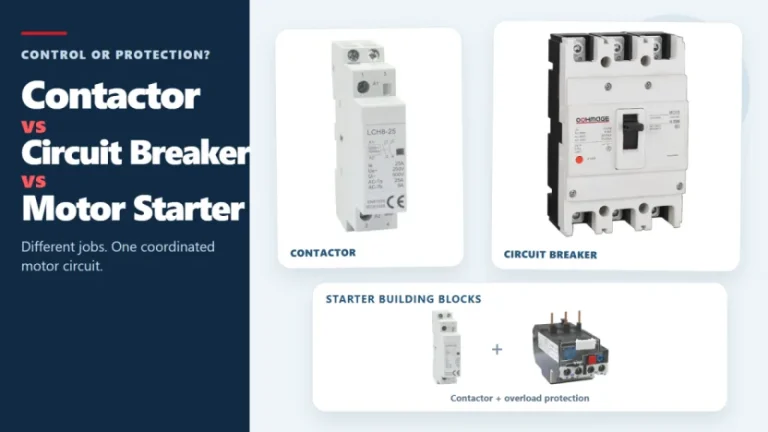
Figure 1. Contactors, circuit breakers, and motor starters solve different control and protection tasks. These three devices often appear in the same motor-control panel, but they solve different problems. A contactor handles frequent, remote, or automatic switching during normal operation. A circuit breaker interrupts abnormal current within its rated capability. A motor starter normally combines […]
The main types of circuit breakers used in low-voltage distribution include miniature circuit breakers (MCBs), molded case circuit breakers (MCCBs) and residual-current devices such as RCCBs and RCBOs. They are not interchangeable. MCBs and MCCBs are selected for overcurrent protection in different circuit roles, an RCCB provides residual-current protection without integral overcurrent protection, and an […]
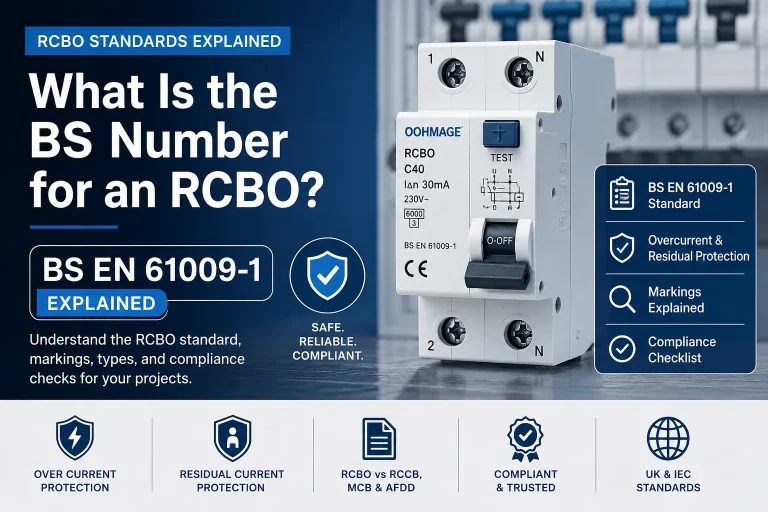
Introduction If you are searching for the RCBO BS number, the answer most commonly required in UK and IEC-based electrical procurement is BS EN 61009-1. This is the principal product standard associated with residual current circuit breakers with overcurrent protection used in residential, commercial, and similar installations. However, merely the BS number is not sufficient […]