A breaker box, also a consumer unit in the UK, is the center of a home’s electrical system. It receives electricity from the utility grid or alternative sources (e.g., solar panels) and distributes it to various circuits throughout the house.
Its primary functions are to:
Distribute Power: Allocate electricity to lighting, appliances, and outlets.
Protect Against Hazards: Use circuit breakers, fuses, or advanced safety devices like Ground Fault Circuit Interrupters (GFCIs) or Residual Current Devices (RCDs) to prevent overloads, short circuits, and electrical shocks.
Ensure Compliance: Adhere to safety standards, such as the National Electrical Code (NEC) or BS 7671 Wiring Regulations.
Technical Specifications
US Breaker Box: Typically contains 20–40 circuit breakers, rated at 15–50 amps for standard circuits and up to 100–200 amps for the main breaker. Modern panels often include Arc Fault Circuit Interrupters (AFCIs) to detect dangerous electrical arcs.
UK Consumer Unit: Features 6–16 ways (circuits), with RCDs protecting high-risk areas (e.g., bathrooms) and Miniature Circuit Breakers (MCBs) for individual circuits. Newer units may include Arc Fault Detection Devices (AFDDs).
Capacity: In the US, homes commonly use 100–200-amp panels, while UK homes typically have 60–100-amp consumer units, depending on the property size and electrical demand.
A Short Answer: Nearly all homes connected to the electrical grid have a breaker box or an older fuse box to manage electricity distribution and ensure safety.
However, exceptions exist due to unique circumstances or non-standard setups.
1. Off-Grid Homes:
Homes in remote areas may operate off-grid using solar panels, wind turbines, or generators.
Instead of a breaker box, these homes use charge controllers, inverters, or battery management systems to regulate power.
These setups prioritize simplicity and may lack the centralized distribution of a breaker box.
2. Temporary or Mobile Structures:
Mobile homes, tiny houses, or seasonal cabins (common in the US) may not have a permanent breaker box. Instead, they might rely on:
RV-style power hookups (30–50 amps in the US).
Portable generators or solar kits with basic circuit protection.
Temporary structures like festival glamping pods may use portable breaker boxes with minimal circuits.
3. Non-Compliant or Outdated Wiring:
Rare cases involve older homes (pre-1940s in the US or UK) with illegal or makeshift electrical setups, such as direct wiring without a panel. These are hazardous and violate modern codes.
Regional Differences
Region
Standard Panel
Older Alternative
Regulations
US
Breaker Box
Fuse Box
NEC, Local Codes
UK
Consumer Unit
Fuse Box
BS 7671, Part P
Canada
Breaker Panel
Fuse Box
CEC
Australia
Switchboard
Fuse Box
AS/NZS 3000
India
Distribution Board
None (in some cases)
IS 732 (varies)
Breaker Boxes vs Fuse Boxes: Key Differences
Both breaker boxes and fuse boxes manage electrical distribution, but their design, safety, and functionality differ significantly.
US: Circuit breakers trip automatically during overloads or faults and can be reset with a switch. GFCIs protect against shocks, and AFCIs prevent fires from arcing faults.
UK: RCDs detect earth faults, while MCBs handle overloads. AFDDs are increasingly used for arc detection.
Compliance: Meets NEC (US) or BS 7671 (UK) for new installations.
Convenience: Breakers are resettable, reducing downtime and maintenance costs.
Fuse Boxes
Limitations:
Use rewirable fuses (UK) or plug fuses (US) that burn out during faults, requiring replacement.
Lack of advanced safety features like GFCIs or RCDs, increasing shock and fire risks.
Prone to misuse (e.g., inserting a higher-rated fuse wire in the UK, bypassing protection).
Upgrades Needed: Fuse boxes often fail modern safety standards and must be replaced for insurance or resale purposes.
Practical Example
Breaker Box: If a kitchen circuit overloads (e.g., running a microwave and toaster simultaneously), the breaker trips, and you reset it in seconds.
Fuse Box: In the same scenario, a fuse box’s rewirable fuse burns out, requiring you to replace the fuse wire, which is time-consuming and risky.
Modern Breaker Boxes: Features and Innovations
Enhanced Safety
United States:
AFCIs: Required by the NEC for bedrooms, living rooms, and other areas to prevent fires from faulty wiring or appliances.
GFCIs: Mandatory in wet areas (e.g., bathrooms, kitchens) to protect against electric shocks.
Tamper-Resistant Breakers: Prevent unauthorized access, common in commercial-grade panels.
United Kingdom:
RCDs: Protect against earth faults and are required for circuits in high-risk areas (e.g., bathrooms, gardens).
AFDDs: Detect arc faults, increasingly recommended for fire-prone areas like bedrooms.
Surge Protection Devices (SPDs): Protect sensitive electronics from voltage spikes, mandated in some BS 7671 updates.
Eco-Friendly Options
Solar Integration: Modern panels support bi-directional meters and inverters for solar panels, common in both the US and UK for net-zero homes.
EV Charging: Dedicated high-amp circuits (e.g., 40–50 amps in the US) for electric vehicle chargers.
Battery Storage: Some electrical panels integrate with home battery systems for energy independence.
How to Locate a Breaker Box
Locating your breaker box or consumer unit is essential for troubleshooting electrical issues or preparing for emergencies.
For those in the United States
Common locations are:
Garage: Often near the main electrical meter or service entrance.
Basement: Mounted on a wall or in a utility area.
Exterior Wall: Common in warmer climates (e.g., California, Florida) for easy utility access.
Utility Room: Near HVAC systems or water heaters.
Older Homes: Check closets, laundry rooms, or basements for fuse boxes, often hidden behind panels or furniture.
Tip: Look for a metal or plastic box (12–36 inches wide) with a hinged cover and breaker switches visible inside.
For those in the United Kingdom
The location of a breaker box is usually in:
Utility Room: Often near the gas or water meter.
Under Stairs: A compact space commonly used in terraced homes.
Garage: Especially in newer builds.
External Meter Box: Some modern homes have consumer units in weatherproof enclosures outside.
Older Homes: Look in cupboards, hallways, or near the front door for fuse boxes, often small and metallic.
Tip: Consumer units are typically plastic or metal boxes (10–20 inches wide) with a transparent cover showing MCBs and RCDs.
When to Upgrade a Breaker Box
Outdated Fuse Box: Common in pre-1960s US homes or pre-1980s UK homes.
Insufficient Capacity: Older 60–100-amp panels (US) or 40–60-amp consumer units (UK) may struggle with high-demand devices.
Non-Compliance: Panels that don’t meet NEC or BS 7671 standards require upgrades.
Frequent Tripping: Indicates an overloaded or faulty panel needing replacement.
Final Thoughts
Virtually all grid-connected homes worldwide have a breaker box or an older fuse box to manage electricity safely and comply with local regulations.
Exceptions include off-grid homes, temporary structures, or rare non-compliant setups, which may use alternative systems or unsafe wiring. To ensure safety, efficiency, and compliance, inspect your breaker box regularly with a licensed electrician (US) or Part P-certified electrician (UK).
About OOHMAGE
OOHMAGE is one of the reputed manufacturers in the electrical component industry, dedicated to producing quality and reliable isolator switches. With safety, durability, and performance as the main focus, our fuses are well-trusted among professionals across all industries.
We provide a wide range of electrical products for different DC and AC applications. Each model is designed to meet specific industry needs, ensuring optimal performance and safety across different applications.
FAQs About Breaker Boxes
Can a home have no breaker box?
Rarely, off-grid homes (e.g., solar-powered cabins) or non-compliant setups (e.g., illegal wiring in old properties) may lack a breaker box. These rely on alternative systems or unsafe wiring, posing risks.
Are fuse boxes still legal?
Yes, in both the US and UK, existing fuse boxes are legal but outdated. They don’t meet modern safety standards (NEC or BS 7671) and should be upgraded for safety and compliance.
How do I know if my breaker box is safe?
US: Check for AFCIs and GFCIs in high-risk areas. Look for signs of damage (e.g., burn marks, rust). Hire a licensed electrician for a panel inspection every 5–10 years.
UK: Ensure RCDs and MCBs are present and functional. Verify compliance with BS 7671 via a Part P electrician’s inspection.
General: Schedule a professional inspection if the panel is over 25 years old or shows issues like frequent tripping.
What’s the difference between a breaker box and a distribution board?
A breaker box (or consumer unit) serves residential homes, managing 6–40 circuits. A distribution board is used in larger buildings (e.g., offices, factories) with higher capacity and more complex circuit arrangements.
Can I install a breaker box myself?
No, installing or upgrading a breaker box requires a licensed electrician (US) or Part P-certified electrician (UK) to ensure safety and compliance. DIY attempts risk shocks, fires, or legal penalties.
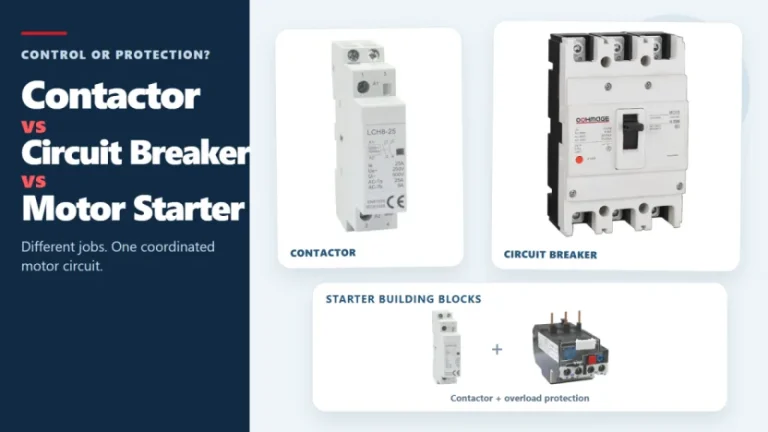
Figure 1. Contactors, circuit breakers, and motor starters solve different control and protection tasks. These three devices often appear in the same motor-control panel, but they solve different problems. A contactor handles frequent, remote, or automatic switching during normal operation. A circuit breaker interrupts abnormal current within its rated capability. A motor starter normally combines […]
The main types of circuit breakers used in low-voltage distribution include miniature circuit breakers (MCBs), molded case circuit breakers (MCCBs) and residual-current devices such as RCCBs and RCBOs. They are not interchangeable. MCBs and MCCBs are selected for overcurrent protection in different circuit roles, an RCCB provides residual-current protection without integral overcurrent protection, and an […]
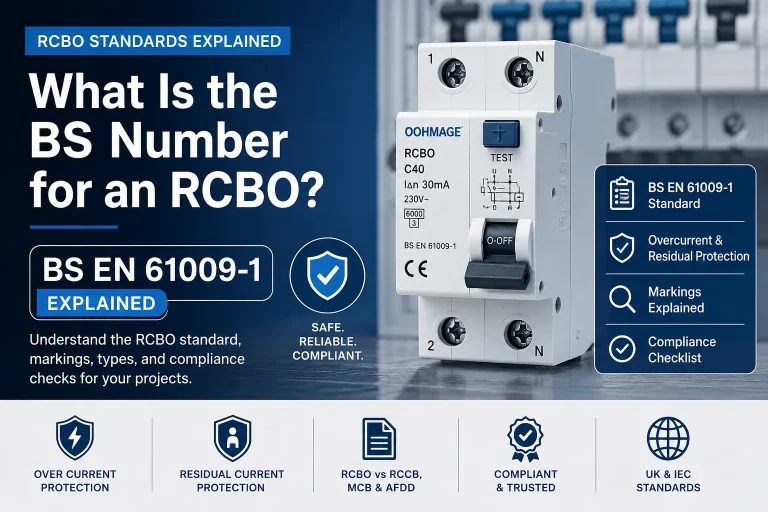
Introduction If you are searching for the RCBO BS number, the answer most commonly required in UK and IEC-based electrical procurement is BS EN 61009-1. This is the principal product standard associated with residual current circuit breakers with overcurrent protection used in residential, commercial, and similar installations. However, merely the BS number is not sufficient […]