Changeover Switch vs ATS vs Isolator vs Circuit Breaker: Backup Power Switching Guide
Published: Author: Joanna
Introduction
When a small factory experiences a power outage during production, the backup generator immediately starts up; at this point, the electrical team needs to perform load switching, while also ensuring that no reverse power supply (reverse feed) is sent to the grid and that maintenance personnel do not come into contact with live equipment. In the solar backup power system, the same practical problem appears in a different form: which device is responsible for load switching? Which device isolates the inverter? And which device executes the trip action during a fault?
This is precisely where many buyers feel confused. Circuit breakers, automatic transfer switches (ATS), disconnectors, and switches may all be installed in the same distribution box or low-voltage cabinet. From an appearance perspective, they all seem to be similar “switching equipment” components; however, in actual electrical design, they each undertake different functions.
This guide explains from a practical application perspective how to select transfer switches and automatic transfer switches (ATS), and compares them with disconnect switches and circuit breakers. Our aim is not to select the absolutely best product, but to assist contractors, solar installers, panel manufacturers, purchasing teams, and homeowners interested in technology, etc. in choosing the appropriate combination scheme to meet the needs of using backup power, generator switching, solar/inverter systems, as well as equipment maintenance isolation and fault protection in emergency situations.
What Is a Changeover Switch?
A transfer switch is a type of switch device used to switch the load between two power sources. Typical power combinations include mains power and generator, grid and inverter, main power and backup power, or solar/inverter output and another AC power source.
In the basic backup power system, users switch the load from normal power supply to backup power supply through the generator switch. In small stores, this might simply be a manually operated switch installed near the distribution box; while in large commercial or industrial facilities, the same switching function might be carried out by complex electric devices or controlled components.
The term “manual and automatic conversion switch” usually refers to the triggering method of the conversion action. The manual conversion switch requires the operator to manually operate the handle or control mechanism; while the automatic system uses monitoring and control logic to detect power failures, and its advantage lies in automatically completing the conversion operation without the need for manual intervention.
The transfer switch is mainly used for power selection and cannot automatically replace the functions of overload or short-circuit protection. Unless the equipment is part of a larger protected component, it should be used in conjunction with circuit breakers, fuses, or other protective devices.
This distinction is of crucial importance during the procurement process. When choosing a generator transfer switch, one often needs to consider upstream and downstream protection, appropriate enclosure protection class, pole configuration, and cable inlet design. If the entire distribution box cannot control fault currents, provide maintenance access, or meet installation conditions, relying solely on the power transfer switch is not sufficient.
The transfer switch is usually only part of an overall solution and is commonly applied in various power systems such as households, stores, telecommunications rooms, small factories, backup solar systems and low-voltage distribution panels.
What Is an ATS?
ATS is an Automatic Transfer Switch. It monitors the normal power supply and switches the load to the backup power supply when the normal power supply fails or the voltage exceeds the acceptable range.
The automatic transfer switch is commonly used in generator backup systems, commercial buildings, critical loads, communication sites, water pumping stations, and in applications where manual operation is inconvenient or where rapid response is required. Depending on the specific system design, it may also be applied in inverter or battery backup systems.
A typical automatic transfer switch does not simply “jump” between power sources. Instead, it switches according to voltage monitoring, time, power availability, and return conditions, following a pre-defined sequence. In a generator system, the ATS may also send a start signal to the generator before switching the load.
Basic ATS operating sequence:
Monitor the normal power source.
Detect voltage loss, under-voltage, or abnormal supply.
Start or connect the backup power source.
Transfer the load to backup power.
Return the load to the normal source when stable power is restored.
After this procedure, depending on the controller and project requirements, ATS may reserve a period of cooling or delay before the generator stops. The specific behavior depends on the model, control logic, generator interface and local electrical standards.
When comparing manual transfer switches with automatic transfer switches (ATS), the most obvious difference lies in the operation method: manual transfer switches rely on manual operation, while ATSs operate based on sensing and control logic. When making a choice, one should consider the importance of the load, the acceptable power outage duration, the on-site personnel configuration, the budget, and the complexity of the backup power system comprehensively.
What Is an Isolator Switch?
The isolating switch is used to disconnect the circuit from the power supply, allowing for maintenance, inspection or repair work. Its primary purpose is not to switch the power supply, but to achieve a reliable disconnection.
For instance, before conducting maintenance on the pump control cabinet in a small industrial factory, technicians may need to disconnect the external power supply of the equipment. The isolating switch provides a clear disconnect point, thereby ensuring that the circuit can be cut off before opening the cabinet or operating the internal components.
In solar photovoltaic systems, isolators are commonly used in inverter circuits, photovoltaic arrays, or the DC/AC sections to facilitate maintenance personnel to obtain clear disconnect points at these locations. In HVAC systems and mechanical control panels, the use of isolators enables the shutdown or isolation of specific equipment while keeping the entire large power distribution system running.
The design purpose of the isolating switch is not to replace the fault protection function. Although it may have the ability to perform switching operations under certain conditions, in general, it is not a device used to cut off abnormal short-circuit currents; according to the specific circuit design, this task should be accomplished by appropriate circuit breakers or fuses.
What Is a Circuit Breaker?
A circuit breaker is a protective device designed to interrupt current during overload or short-circuit conditions. In a distribution board, it helps protect cables, loads, and downstream equipment from currents above the safe operating range.
The circuit breaker responds to fault currents or overload conditions based on its tripping characteristics and rated interrupting capacity. Consider a simple generator backup system. Take a simple generator backup system as an example: During normal operation, the transfer switch will switch the building loads from grid power supply to generator power supply. If a short circuit occurs in the downstream branch, the circuit breaker should act and trip to cut off the fault; the transfer switch itself does not provide such fault protection function.
There are various types of circuit breakers. Miniature circuit breakers (MCB) are mainly used in small power distribution circuits; molded case circuit breakers (MCCB) are commonly found in large current commercial or industrial distribution panels; while DC circuit breakers are used in DC systems such as photovoltaic circuits, battery systems and DC control applications. The arc characteristics and voltage conditions in different scenarios differ from those in AC circuits, so the circuit breakers suitable for each scenario are also different.
Therefore, comparing circuit breakers with disconnectors becomes particularly important. Circuit breakers are used to prevent overloading and short circuits; while disconnectors are used to cut off the connection between the equipment and the power supply, ensuring the safety of maintenance work. In many distribution systems, these two functions are different, and they need to work together, neither of which can be lacking.
Changeover Switch vs ATS vs Isolator vs Circuit Breaker
The comparison in the following text demonstrates why these devices should not be regarded as interchangeable; each device is designed to address different electrical system issues.
Feature
Changeover Switch
Automatic Transfer Switch (ATS)
Disconnector (Isolator)
Circuit Breaker
Primary Function
Manually selects between two power sources
Automatically transfers load between power sources
Provides visible electrical isolation for maintenance
Protects circuits from faults and controls power flow
Operation
Manual
Automatic (motorized/electronic control)
Manual or motor-operated
Manual and/or automatic trip mechanism
Can Switch Under Load?
Yes (load transfer type)
Yes
No (must be operated when current is zero or negligible)
Yes
Provides Fault Protection?
No
No (unless integrated with breakers)
No
Yes
Detects Power Failure?
No
Yes
No
Some advanced models can monitor system conditions
Interrupts Short Circuits?
No
No
No
Yes
Interrupts Overload Current?
No
No
No
Yes
Visible Isolation Gap?
Usually No
No
Yes (main purpose)
Usually No
Typical Installation Location
Generator panels, backup power systems
Critical facilities with standby generators
Substations, switchgear, maintenance points
Everywhere in power distribution systems
Control Method
Operator action required
Automatic controller
Maintenance personnel
Operator and protective relays
Main Safety Purpose
Source selection
Continuous power supply
Safe equipment maintenance
Equipment and personnel protection
Typical Voltage Range
Low and medium voltage
Low and medium voltage
Medium and high voltage
Low, medium, and high voltage
The comparison between the transfer switch and the automatic transfer switch (ATS) mainly focuses on the difference between manual transfer and automatic transfer; the comparison between the circuit breaker and the disconnect switch focuses on the circuit interruption function during circuit protection and maintenance. By comparing these four devices together, a clearer understanding of the situation can be achieved: The standby power system requires switches, isolation, and protection, rather than just a single component.
For small backup distribution panels, if manual operation is feasible, then using a manual generator transfer switch might be sufficient to achieve power switching. However, for commercial buildings with critical lighting, water pumps, or refrigeration equipment, it is more recommended to use an automatic transfer switch. It is worth noting that regardless of the choice, circuit breakers and disconnect switches are usually still required to be installed around the switching equipment.
How to Choose the Right Device for Backup Power and Electrical Safety
Firstly, clearly define the functions that the equipment needs to perform. If the system needs to switch between two power sources, a switch or an ATS (Automatic Transfer Switch) can be considered; if the system needs to automatically operate after a power outage, an automatic transfer switch should be evaluated; if the system needs to safely disconnect the power for maintenance, the requirements of the isolating switch should be considered; if the system needs overload and short-circuit protection, a suitable circuit breaker should be selected.
Selection factors:
Power source arrangement: grid, generator, inverter, solar, or battery system
Required switching method: manual or automatic
Load type and current rating
Voltage level and number of poles
Need for overload and short-circuit protection
Maintenance isolation requirements
Installation environment: indoor, outdoor, residential, commercial, or industrial
Compliance with local electrical standards
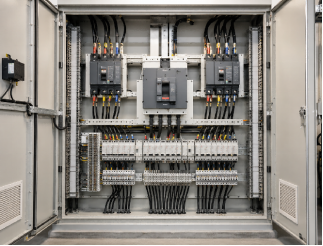
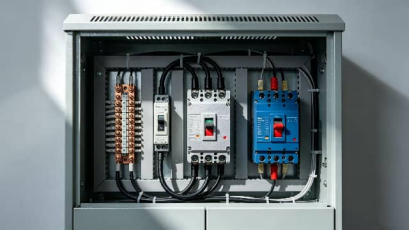
In practical applications of the system, multiple devices often need to work together. For instance, the generator backup system may use an automatic transfer switch (ATS) for automatic switching, employ circuit breakers for protection, and utilize disconnect switches to ensure maintenance safety. While the solar photovoltaic backup system may include DC disconnect switches, DC circuit breakers, surge protection devices, AC circuit breakers, and switching devices. The specific configuration depends on the interaction mode between the inverter, the power grid, and the backup load.
For small commercial buildings, the distribution box may be equipped with grid input, generator input, conversion device, outgoing circuit breaker and surge protection device. The correct design depends on the rated current, single-phase or three-phase configuration, enclosure environment, cable wiring and applicable installation specifications.
Common Application Scenarios
Home and Small Commercial Backup Power
In residences, small shops, clinics or offices, backup power is usually provided by generators or inverters. If there are conditions where operators can manually switch the power supply during a power outage, choosing manual switching switches can simplify the design and control the cost.
When automatic load recovery is required or there are no trained personnel on site, ATS is more suitable. For example, in scenarios such as refrigerated warehouses, water pumps, telecommunications rooms, security systems, and some commercial lighting circuits.
When choosing whether to equip a generator with a manual switching switch or an automatic transfer switch, one should also consider factors such as the frequency of power outages, the speed required for load restoration, and whether the generator needs preheating or startup control.
Solar PV and Inverter Systems
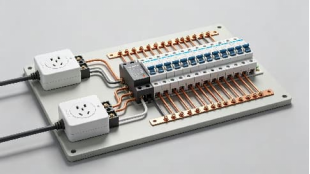
Solar photovoltaic systems typically integrate multiple equipment functions. DC disconnect switches can be used to break the connection at the photovoltaic string side; if the design requires it, DC circuit breakers can protect some DC circuits; surge protection devices help reduce the risk of damage caused by transient overvoltages; AC circuit breakers and disconnect switches may be installed at the inverter output or near the distribution box.
When it is necessary to switch the load between grid power supply and the backup output of the inverter, a transfer switch can be used. In more advanced systems, the automatic switching logic can be integrated into the inverter or an external cabinet.The equipment selection depends on the system voltage, current, AC/DC configuration, grounding method, inverter type, and local electrical regulations.
Industrial Distribution Panels
Industrial distribution panels usually require a layered design. The distribution panels in factories may include incoming circuit breakers, main disconnect switches, busbar systems, conversion devices, outgoing circuits, motor protection devices, surge protection devices, and independent control circuits.
In this context, the selection between a manual transfer switch and an automatic transfer switch (ATS) hinges on three key factors: allowable production downtime, process-related risk exposure, and the operational and labor costs associated with human intervention. Manual transfer solutions may be appropriate for non-critical loads; however, for loads whose interruption could compromise safety, incur significant product loss, or disrupt core operations, an ATS represents a technically justified and operationally prudent solution.
Industrial buyers should also check the enclosure protection level, mechanical durability, wiring space, heat dissipation performance, rated current, the breaking capacity of the protection device, as well as the coordination between the upper and lower level protections.
Maintenance and Emergency Shutdown
Maintain a simple shutdown operation. The power team needs a clear method to cut off the power supply of the equipment before conducting maintenance. Therefore, disconnect switches and circuit breakers are usually installed near the machine, in the distribution panel, or at the equipment maintenance opening.
For emergency control, depending on the specific equipment and relevant standards, the design scheme may require the use of circuit breakers, disconnect switches, contactors, emergency stop circuits or other devices. These terms should not be confused randomly. The selected devices must meet electrical functions, rated currents, operating conditions and safety requirements.
Final Thoughts
A changeover switch, ATS, isolator switch, and circuit breaker are not interchangeable. A changeover switch transfers between power sources. An automatic transfer switch performs source transfer automatically. An isolator switch supports maintenance disconnection. A circuit breaker interrupts overload and short-circuit current.
For emergency control, depending on the specific equipment and relevant standards, the design scheme may require the use of circuit breakers, disconnect switches, contactors, emergency stop circuits or other devices. These terms should not be confused randomly. The selected devices must meet electrical functions, rated currents, operating conditions and safety requirements.
OOHMAGE can support project-specific selection for distribution boxes, changeover switches, circuit breakers, isolator switches, DC breakers, SPDs, and PV combiner boxes. The right solution should be evaluated according to voltage, current, pole configuration, installation environment, protection design, and local standards.
For buyers who are comparing various products, the actual issues they need to consider are not merely “Which device should I purchase?” A more appropriate question would be: “What functions must this electrical system safely perform? And which devices are needed to achieve each of these functions?”
FAQs
What is the difference between a changeover switch and an ATS?
The transfer switch is used to switch the load between two power sources. The automatic transfer switch (ATS) will automatically perform the switching operation upon detecting a power failure or abnormal power supply condition.
Can a changeover switch replace a circuit breaker?
No. The transfer switch is mainly used for power switching, while the circuit breaker is used for overload and short-circuit protection.
Is an isolator the same as a circuit breaker?
No. The isolating switch is used to disconnect the circuit for maintenance purposes; while the circuit breaker cuts off the fault current and overload current based on its rated parameters and trip design.
Do I need an ATS for generator backup power?
If it is necessary to automatically switch the load in case of a normal power failure, an automatic transfer switch (ATS) should be used; if manual operation is acceptable, then a generator transfer switch might be more suitable.
What device should be used for solar inverter isolation?
According to the system design and local regulations, the solar inverter system may need to be equipped with DC disconnect switches, AC disconnect switches, DC circuit breakers, AC circuit breakers, and surge protection devices.
Can one distribution box include a changeover switch, isolator, and circuit breaker?
Yes. Many practical distribution boxes integrate switching functions, maintenance isolation, and circuit protection in a coordinated unit.
Figure 1. Contactors, circuit breakers, and motor starters solve different control and protection tasks. These three devices often appear in the same motor-control panel, but they solve different problems. A contactor handles frequent, remote, or automatic switching during normal operation. A circuit breaker interrupts abnormal current within its rated capability. A motor starter normally combines […]
The main types of circuit breakers used in low-voltage distribution include miniature circuit breakers (MCBs), molded case circuit breakers (MCCBs) and residual-current devices such as RCCBs and RCBOs. They are not interchangeable. MCBs and MCCBs are selected for overcurrent protection in different circuit roles, an RCCB provides residual-current protection without integral overcurrent protection, and an […]
Introduction If you are searching for the RCBO BS number, the answer most commonly required in UK and IEC-based electrical procurement is BS EN 61009-1. This is the principal product standard associated with residual current circuit breakers with overcurrent protection used in residential, commercial, and similar installations. However, merely the BS number is not sufficient […]