How to Safely Reset a Tripped Molded Case Circuit Breaker?
Published: Author: Conor
To safely reset a tripped molded case circuit breaker, you must first move the handle fully to OFF, identify why it tripped, and only then switch it back to ON.
If the breaker trips again right away, stop. Repeated reset attempts can damage the breaker, harm connected equipment, and create serious safety risks.
In this guide, we show you how to recognize a tripped molded case breaker, locate the correct panel, reset it the right way, and test the circuit afterward. We’ll also explain what immediate re-tripping usually means and when it’s time to stop and investigate instead of resetting again.
What Does It Mean When a Molded Case Breaker Has Tripped
A molded case breaker trips when it detects abnormal current and opens the circuit to protect the system. In simple terms, the breaker shuts itself off because something downstream isn’t right. This can happen due to an overload, a short circuit, or a ground fault. The breaker isn’t failing — it’s doing exactly what it’s designed to do.
Molded case circuit breakers monitor current using either thermal-magnetic elements or electronic trip units. If current exceeds safe limits — either suddenly or over time — the trip mechanism activates and disconnects power. This action prevents conductor overheating, equipment damage, and fire.
You can usually spot a tripped breaker by looking at the handle position.
Instead of sitting firmly at ON or OFF, the handle rests somewhere in the middle. It often feels loose or springy when touched.
The table below helps you quickly identify breaker status and decide what to do next.
Breaker State
Handle Position
What It Means
What to Do Next
ON
Fully in ON position
Circuit energized and operating normally
No action needed
OFF (Manual)
Fully in OFF position
Breaker intentionally switched off
Safe to keep off or reset when ready
Tripped
Middle position between ON and OFF
Breaker opened due to fault or overload
Identify cause before resetting
Will Not Reset
Moves to OFF but won’t stay ON
Active fault or internal damage
Stop resetting and investigate
Many breakers also include visual indicators. Some show a red or orange trip window, while electronic models may use LEDs or digital displays to indicate trip status and fault type.
This middle position is important. You cannot reset a tripped breaker by pushing it straight to ON. The handle must first be moved fully to OFF before it can latch back into the ON position. The key takeaway is this: a trip is a warning, not a defect. Your job isn’t to force power back on, but to understand why the breaker opened in the first place.
Case Example
During a facility expansion, a 100A molded case breaker repeatedly moved to the middle position each time new equipment started up. Visual inspection confirmed a true trip, not a manual shutdown. Further investigation showed that the VFD startup current exceeded the breaker’s magnetic trip setting.
The solution wasn’t replacing the breaker. It required revising the coordination study and adjusting protection settings to match the actual load behavior.
Where Is the Molded Case Breaker Panel Usually Located
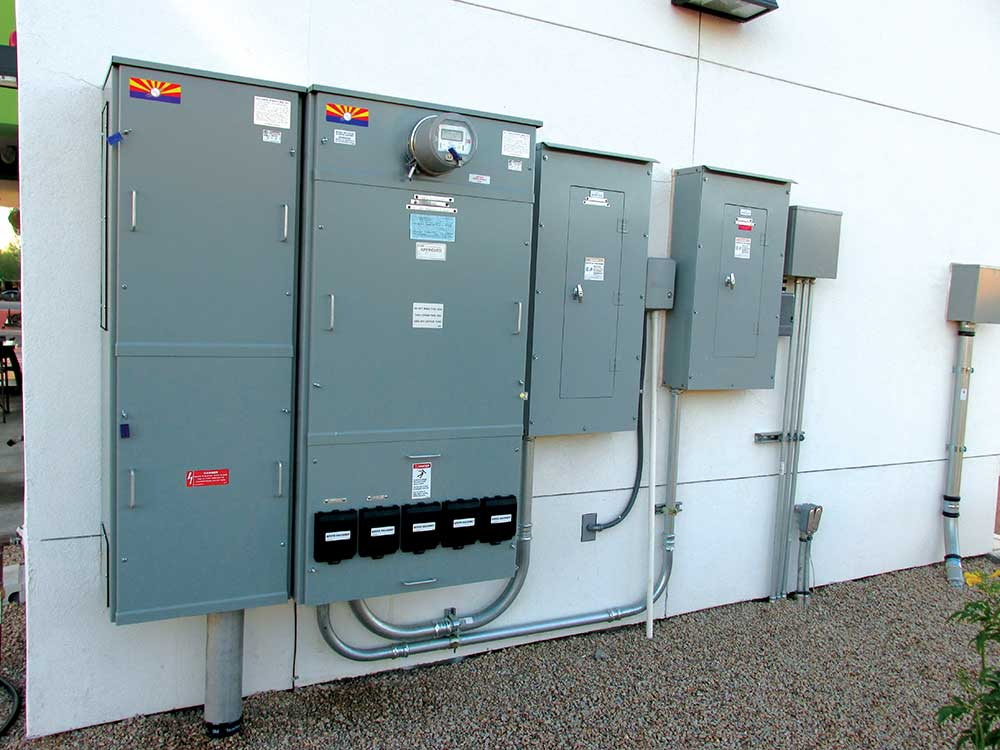
Molded case breaker panels are usually installed in electrical rooms, equipment closets, or dedicated enclosures close to the loads they protect.
In commercial buildings, you’ll often find breaker panels in electrical rooms on each floor, commonly near stairwells or elevator cores for accessibility. Industrial facilities typically place panels near production equipment, but inside designated electrical spaces that separate energized components from active manufacturing areas. OEM machinery often includes its own integrated breaker panel mounted directly on or next to the equipment.
Panel placement isn’t arbitrary. Electrical codes require clear, safe access so breakers can be operated during faults or emergencies. The National Electrical Code (NEC) specifies minimum working clearances, including about 36 inches of open space in front of the panel, adequate headroom, and proper lighting. Panels are not allowed in bathrooms, clothes closets, or locations where physical damage is likely.
Finding the correct panel matters just as much as finding a panel. In large facilities, dozens—or even hundreds—of breakers may look similar at a glance. Resetting the wrong one wastes time at best. At worst, it can re-energize a circuit that someone believed was safely shut down.
Before resetting anything, confirm that the breaker you’re standing in front of actually feeds the tripped circuit. Check panel schedules, circuit directories, and labeling. In older installations, these records are often outdated or incomplete. When there’s any doubt, verify circuit identity with proper voltage testing before proceeding.
During a production line shutdown, a project manager reset several breakers in nearby panels without confirming circuit identification. One of those breakers energized a motor that was still under repair, injuring a technician. The incident wasn’t caused by a faulty breaker — it happened because the wrong panel was used. Proper panel identification and verification would have prevented the injury entirely.
How Should You Test the Circuit After Resetting the Breaker
After resetting a breaker, don’t assume the job is finished once the handle stays in the ON position. You need to confirm that power is restored correctly and that connected equipment behaves normally under load.
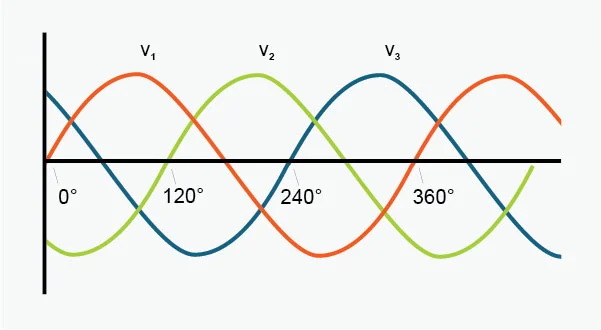
Start by verifying voltage at the load using a voltage tester or multimeter. For three-phase systems, test each phase to ground and phase-to-phase.
A missing phase or significant imbalance usually points to an upstream issue, not a breaker problem.
Confirm power restoration by checking the following:
Voltage At Utilization Equipment: Within about 5% of nominal rating
All Phases Energized: Required for three-phase loads
No Abnormal Sounds: Buzzing, arcing, or humming from the panel
Breaker Handle Position: Firmly latched in the ON position
No Visible Damage: Discoloration, heat marks, or insulation damage
Normal Equipment Operation: No fault codes or abnormal behavior during startup
Once voltage checks out, watch the equipment through its first operating cycle. Motors should start smoothly without excessive noise or vibration. Lighting should come on steadily without flicker. Control systems should complete their startup sequence without alarms or faults.
For critical or high-load circuits, verify current draw as well. A clamp-on ammeter lets you measure load current without disconnecting conductors. Compare readings against equipment nameplates and known operating values. Current that’s significantly higher or lower than expected is often the first sign of a hidden problem.
Case Example
After resetting a 200A feeder breaker, an engineer confirmed 480V three-phase at the panel and initially assumed the circuit was healthy. When a production machine failed to start, further testing revealed one phase had low voltage caused by a loose upstream connection. Because voltage, phase balance, and equipment behavior were all checked, the issue was identified before motor damage occurred.
What Should You Do If the Molded Case Breaker Trips Again Immediately
If a molded case breaker trips again as soon as you reset it, treat that as a hard stop — not a temporary nuisance. Immediate re-tripping means an active fault is still present and must be resolved before any further reset attempts.
Do not keep cycling the breaker. Repeated resets under fault conditions damage internal contacts, increase arc flash risk, and turn a manageable electrical issue into equipment failure. At this point, the breaker is doing its job by refusing to stay on.
Shift from resetting to troubleshooting. Start isolating the fault in a controlled way: disconnect loads one at a time to see which circuit causes the trip. On branch circuits, unplug or disconnect individual pieces of equipment. On feeders, open downstream breakers to segment the system. Restore power incrementally until the fault condition becomes clear.
As you troubleshoot, document what you disconnect, what you test, and what you observe. These notes help engineering teams identify repeat issues, speed up repairs, and prevent the same failure from happening again.
What Does Immediate Re-Tripping Usually Indicate?
Immediate re-tripping almost always points to a serious downstream problem, not a defective breaker. The most common causes include short circuits, ground faults, and severe overloads that remain present after the reset.
Short circuits create near-zero resistance paths that draw extremely high current the moment power is restored. The magnetic trip element responds within milliseconds. Typical causes include damaged conductors, failed components, water intrusion, or wiring errors.
Ground faults allow current to flow through grounding paths or building structures instead of intended conductors. Breakers with ground fault protection trip quickly when they detect current imbalance. Damaged insulation, crushed cables, or compromised equipment enclosures are common sources.
Severe overloads occur when connected load exceeds the breaker’s rating. This often happens after equipment additions or modifications rather than in long-standing installations. In these cases, the thermal trip element may activate within seconds of reset.
Do not assume the breaker itself is faulty. True breaker failures are rare. In almost every immediate re-trip scenario, the root cause is somewhere downstream in the protected circuit.
Case Example
A facility manager reset a tripped 60A breaker serving HVAC equipment three times before calling for support. The breaker tripped immediately each time. Investigation later revealed a compressor with shorted windings. The repeated reset attempts welded the breaker contacts together, turning a single equipment failure into a breaker replacement and extended downtime — a preventable escalation caused by ignoring immediate re-tripping.
How Many Times Can a Circuit Breaker Be Reset
A molded case circuit breaker can be switched ON and OFF thousands of times during normal operation, but it can only interrupt major fault currents a limited number of times. In most cases, breakers are rated for about 3 to 5 significant fault interruptions before inspection or replacement is recommended.
Normal operation has very little impact on breaker life. Manually turning a breaker ON or OFF for routine switching does not cause meaningful wear. High-quality molded case breakers often withstand 10,000 or more normal operating cycles without performance loss.
The table below highlights why normal operation and fault interruption are treated very differently in breaker life calculations.
Type of Operation
Typical Frequency
Impact on Breaker Life
Counts as Major Wear?
Normal ON/OFF switching
Thousands of times
Minimal
No
Overload / Inrush trip
Occasional
Low to moderate
Usually no
Short circuit interruption
Very limited (≈3–5 times)
Severe
Yes
Immediate repeated re-tripping
Abnormal
Accelerated damage
Yes
Fault interruptions are different. When a breaker clears a short circuit or severe fault, intense arcing and mechanical forces occur inside the device. Each of these events erodes contacts, stresses internal components, and permanently consumes part of the breaker’s service life. After several major fault interruptions, a breaker may still reset — but it may no longer be able to interrupt the next fault safely.
Because of this, manufacturers publish fault interruption limits and testing requirements in their technical documentation. In critical systems, facilities often adopt replacement policies after confirmed fault trips rather than waiting for visible failure.
Not every trip counts the same. Trips caused by motor starting, inrush current, or brief transients usually occur in the overload region rather than the instantaneous short-circuit region. These nuisance trips cause far less damage and typically do not count as major fault interruptions, although they still add to cumulative wear over time.
For important circuits, track breaker trip history as part of routine maintenance. Logging trip events, reset dates, and fault causes helps maintenance teams decide when a breaker should be tested, monitored more closely, or replaced before it becomes a liability.
What Safety Precautions Must Be Followed When Resetting a Molded Case Breaker
Before resetting a molded case breaker, confirm that you are authorized to do so and that energizing the circuit will not put anyone at risk. Never assume a circuit is clear just because equipment appears idle.
Lockout/tagout procedures always come first. Do not reset a breaker that has an active lock or tag applied. A lock or tag means someone is working on that circuit, and bypassing it can cause serious injury or death. If a lock or tag is present, follow proper clearance procedures before taking any action.
Next, verify the circuit’s status. Make sure no maintenance work is in progress, no equipment is being serviced, and restoring power will not create a hazard. In facilities that use work permits, confirm the permit for the affected circuit is closed or cleared before proceeding.
Personal protective equipment depends on the arc flash hazard and site rules. Resetting a breaker in a closed, intact panel often presents low arc flash risk, but many facilities still require specific PPE. Always follow your site’s electrical safety rules, even if the task seems routine.
Pay attention to environmental conditions. Wet floors, standing water, or high humidity increase shock risk. If the panel is damaged, conductors are exposed, or there are signs of overheating or previous faults, stop and have the equipment evaluated before attempting a reset.
Never try to defeat a breaker to keep it ON. Using wire ties, tape, wedges, or any other method to hold a breaker closed removes its protective function and creates a serious fire and life safety hazard. If a breaker will not stay on, the correct response is investigation — not force.
What Common Mistakes Should Be Avoided When Resetting a Tripped Breaker
The most dangerous mistakes during breaker reset are all variations of the same behavior: trying to restore power without understanding why it was lost. These errors turn a protective device into a failure point.
One common mistake is forcing the breaker handle toward ON without first moving it fully to OFF. This will not reset the breaker. The internal latch cannot engage, and forcing the handle only stresses components that are not designed for that motion. If a breaker refuses to reset, that resistance is a warning — not a challenge.
Another serious mistake is repeatedly resetting a breaker without investigating the cause of the trip. Each immediate re-trip is telling you that a fault is still present. Continuing to reset does not “give it another chance.” It accelerates damage inside the breaker and increases the risk of equipment failure or fire.
Ignoring safety procedures is one of the fastest ways to turn a routine task into a life-threatening event. Skipping lockout/tagout verification, energizing circuits under maintenance, or resetting breakers without proper authorization puts other people at risk — often without your knowledge.
Using tools to operate breakers is another red flag. Molded case breakers are designed for hand operation only. If someone reaches for a hammer, pry bar, or other tool, the breaker is not the problem-solving target — it is already telling you it should be replaced or investigated.
Why Are Repeated Reset Attempts Dangerous?
Every time a breaker interrupts fault current, an electrical arc forms inside the device. Repeated arcing erodes contacts, weakens springs, and carbonizes insulation. With each attempt, the breaker becomes less capable of safely clearing the next fault. Eventually, it may fail to interrupt current at all, leading to fire or equipment damage.
Repeated resets also reflect a human factor problem: frustration replacing judgment. When power does not stay on, the correct response is investigation, not persistence. Pushing harder never removes the fault — it only increases the consequences.
Case Example
A maintenance technician reset a lighting circuit breaker six times over two hours, with the breaker tripping immediately each time. The underlying issue was a damaged ballast causing an intermittent short. On the sixth attempt, internal breaker damage occurred, resulting in panel failure. What could have been a simple ballast replacement escalated into a panel rebuild and extended downtime because the warning signs were ignored.
Final Thoughts
Resetting a tripped molded case breaker is mechanically simple, but knowing when not to reset is what keeps systems and people safe. A breaker that trips is providing information, not failing — and repeated or immediate re-tripping is a signal to stop and investigate, not to try again.
If breaker trips become frequent, unpredictable, or difficult to diagnose, basic reset procedures are no longer enough. Load changes, coordination issues, and intermittent faults require proper evaluation before equipment damage or downtime escalates.
For facilities that depend on reliable power and safe operation, working with experienced manufacturers or technical partners who can support breaker selection, coordination, and troubleshooting is the most effective next step.
FAQs
What are the safe steps to reset a tripped molded case breaker?
Resetting a tripped molded case breaker follows a simple safety framework: first confirm authorization and ensure no one is working on the circuit, then move the handle fully to OFF before resetting it to ON. After reset, verify proper operation and monitor the circuit under load. If the breaker trips again immediately, stop resetting and investigate the underlying fault. Repeated reset attempts do not resolve the problem and can create serious safety risks.
Should I unplug everything before resetting the breaker?
Not always. For branch circuits that serve multiple devices, unplugging loads can help isolate the problem if the breaker trips again immediately. For dedicated equipment or feeder circuits, disconnecting loads may not be practical. Start with a single reset attempt, then begin isolating loads only if re-tripping occurs.
Figure 1. Contactors, circuit breakers, and motor starters solve different control and protection tasks. These three devices often appear in the same motor-control panel, but they solve different problems. A contactor handles frequent, remote, or automatic switching during normal operation. A circuit breaker interrupts abnormal current within its rated capability. A motor starter normally combines […]
Introduction The concept of remote tripping is simple, but in actual operation, project teams often encounter difficulties in specifying the components. The panel factory may require circuit breakers triggered by fire alarm relays, PLC outputs, building management system instructions, or other coordinated control. At this point, “diversion tripping” is only the first step in the […]
The main types of circuit breakers used in low-voltage distribution include miniature circuit breakers (MCBs), molded case circuit breakers (MCCBs) and residual-current devices such as RCCBs and RCBOs. They are not interchangeable. MCBs and MCCBs are selected for overcurrent protection in different circuit roles, an RCCB provides residual-current protection without integral overcurrent protection, and an […]