Distribution Boards: Types, Components & Applications
Published: Author: Conor
An electrical distribution board receives an incoming electrical supply and organizes power distribution to outgoing circuits. Depending on the design, it may contain a main switching device, busbars, circuit breakers, residual-current protection, terminals, internal wiring and labels inside a suitable enclosure.
The terms distribution board, distribution box, consumer unit and panelboard are not used identically in every country. Product selection should follow the project specification, applicable local rules and the confirmed scope of supply—not the product name alone.
A distribution board connects an incoming supply to multiple outgoing circuits through a controlled arrangement of conductors, switching devices and protective devices.
The basic sequence is:
The incoming supply reaches the board through the specified incoming connection or device.
Busbars or distribution blocks route power to the outgoing ways.
Each outgoing circuit uses the protective and switching arrangement defined by the electrical design.
Neutral and protective-earth conductors terminate at the specified bars or terminals.
Labels and circuit schedules identify the circuits for operation, inspection and maintenance.
Protective devices must be selected for the actual system and coordinated with the installation design. A distribution board does not make an installation safe by itself; correct design, assembly, installation, testing and maintenance are all required.
Main Components of a Distribution Board
Enclosure
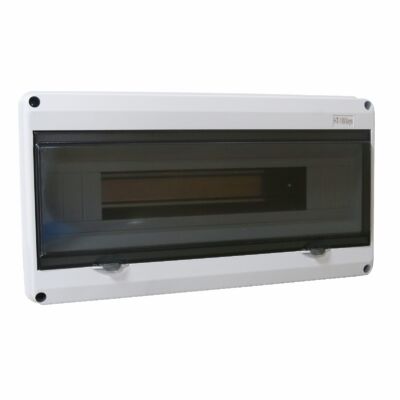
The enclosure houses the internal components and provides the specified degree of protection for the installation environment. Confirm material, mounting method, dimensions, cable entry and required IP classification for the exact product.
Incoming device
The incoming arrangement may use a main switch, isolator or protective device, depending on the design. Confirm the system voltage, phase arrangement, rated current and project requirements.
Busbars or distribution blocks
These components distribute power from the incoming side to the outgoing circuits. Their ratings and arrangement must match the complete assembly design.
Outgoing protective devices
Outgoing ways may use MCB, RCCB, RCBO or other specified devices. The correct combination depends on the circuit, fault-protection requirements, local rules and coordination study.
Neutral and protective-earth terminals
Terminal capacity and conductor arrangement should match the circuit schedule and wiring design. Do not assume that every empty enclosure includes the same terminal configuration.
Internal wiring and identification
For populated assemblies, confirm conductor specifications, routing, labels, circuit schedules and included accessories in the BOM or quotation.
Common Distribution Board Configurations
Distribution boards are better compared by configuration than by broad marketing labels.
Empty enclosure and populated assembly
An empty enclosure is supplied for separately selected internal devices. A populated or assembled board may include selected breakers, busbars, terminals, wiring and labels. The order must clearly state what is included.
Surface-mounted and flush-mounted boards
Surface-mounted enclosures are fixed onto the installation surface. Flush-mounted products are installed into a prepared recess. Confirm wall construction, dimensions, cable entry and access before selection.
Indoor and outdoor boards
Outdoor or exposed installations require an enclosure suited to the actual environment. Confirm the IP classification, seals, cable entries, mounting method, temperature conditions and installation instructions for the selected model. An IP rating should not be expanded into claims beyond its defined enclosure protection.
Single-phase and three-phase systems
The board layout and internal components must match the system phase arrangement, voltage, incoming supply and outgoing circuit design. These requirements should be provided before a populated board is quoted.
Way-count configurations
Way count indicates the number of available modular positions or circuits represented by the product configuration, but it does not replace an internal layout check. Device width, terminals, wiring space and future requirements can affect the final selection.
Where Distribution Boards Are Used
Distribution boards are used in residential, commercial and project-based electrical installations to organize outgoing circuits. The board configuration changes with the electrical design and installation environment.
Examples include:
residential and apartment circuit distribution;
shops, offices and other commercial premises;
workshops and light-industrial installations;
equipment rooms and project sub-distribution;
electrical panels that require specified MCB, RCCB, RCBO or SPD arrangements.
These examples describe possible application contexts, not automatic approval for a particular model. Final selection must follow the project ratings and local requirements.
How to Select a Distribution Board
Use the following project fields to compare products:
Selection field
What to confirm
Supply
AC or DC, nominal voltage and phase arrangement
Incoming side
Device type, rated current and connection requirements
Outgoing circuits
Number of circuits, protective-device types and ratings
Assembly scope
Empty enclosure or populated board; required BOM
Way count
Current circuit requirement plus design-approved spare capacity
Internal layout
Device dimensions, busbars, terminals and wiring space
Installation
Surface or flush mounting; cable-entry direction
Environment
Indoor/outdoor conditions and required enclosure protection
Documentation
Drawings, specifications and certification documents required for the confirmed model
Commercial details
Quantity, labeling, packaging and destination market
A panel schedule, BOM or single-line diagram helps the supplier confirm the assembly scope and avoid quoting an enclosure that does not fit the selected components.
OOHMAGE HA and HT Distribution Box Series
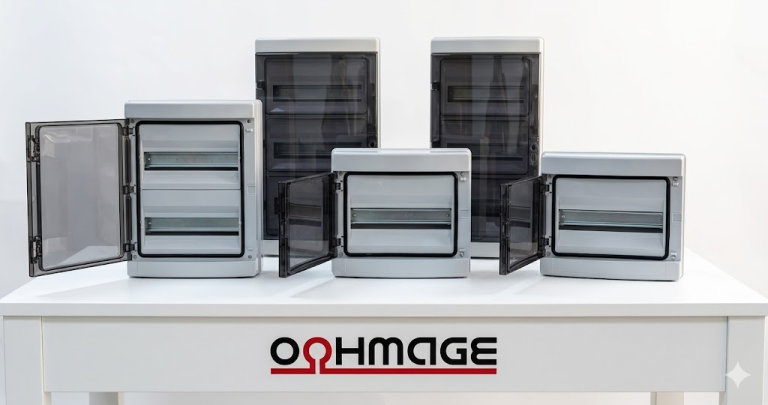
OOHMAGE manufactures distribution boxes for overseas distributors, project buyers and professional electrical customers. The current published product range includes:
The suitable series depends on way count, usable internal space, mounting, cable entry, required components and installation environment. Confirm whether the request is for an empty enclosure or a populated assembly before quotation.
OOHMAGE has two distribution-box production lines. Outgoing inspection can be arranged before shipment according to the product category and order requirements. Certification and technical document support, factory-audit communication and warranty terms can be confirmed for the selected product series and order.
Inspection and Maintenance
Inspection and maintenance intervals should not be fixed by a universal “every 6 or 12 months” rule. They depend on the equipment, installation environment, duty, manufacturer instructions, previous inspection results and applicable local requirements.
Checks should be planned by competent personnel and may include enclosure condition, signs of overheating or contamination, connection condition, protective-device operation, labels and accessibility. Isolate the installation and follow the applicable safe-working procedure before work is performed.
Frequently Asked Questions
What is the purpose of a distribution board?
It organizes an incoming electrical supply into outgoing circuits and provides positions for the switching, protection, terminals and identification required by the design.
Is a distribution board the same as a distribution box?
The terms can overlap. Usage varies by market and project. Confirm whether the required product is an empty enclosure or a complete assembly and provide the circuit and rating requirements.
What is a way in a distribution board?
A way represents an available outgoing circuit position or modular position in the product configuration. Confirm the exact device widths and internal layout because way count alone does not prove that every component will fit.
Does every distribution board include MCBs or RCD protection?
No. Included components depend on the product and quotation scope. Specify the incoming device, outgoing MCB/RCCB/RCBO arrangement, SPD requirement, busbars, terminals and wiring when requesting a populated board.
How often should a distribution board be inspected?
The interval should be based on risk, environment, duty, manufacturer guidance, inspection history and local rules. Outdoor, dusty, damp or heavily used installations may require a different schedule from protected indoor installations.
What information is needed for a quotation?
Send the system voltage and phase, way count, incoming and outgoing device requirements, empty or populated scope, mounting method, environment, quantity, destination market and required documents. Add a panel schedule, single-line diagram or BOM when available.
Only “solarcombiner box” in your quotation is far from sufficient. What should be connected to the box? A PV string or an inverter output? They match different jobs. The price and enclosure size can be considered at a later stage. What connects to the input is the top priority. To be more specific, a DC combiner […]
Learn how to choose the right distribution box for your home or workshop. Discover sizing rules, component selection, and strict electrical safety standards.
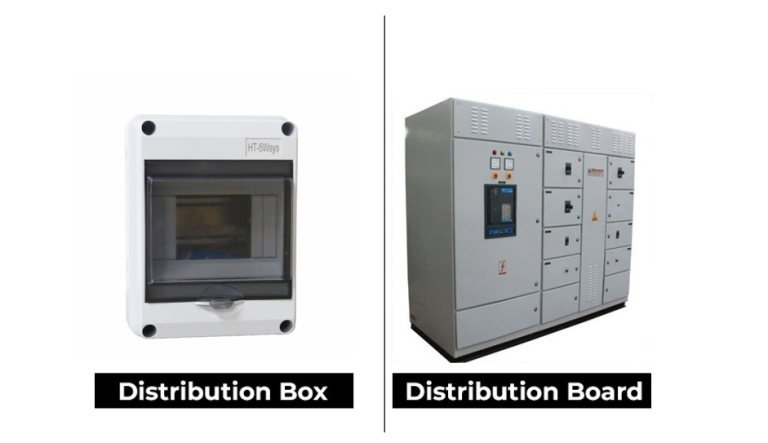
The terms distribution box and distribution board often overlap. Both can describe equipment that receives an incoming electrical supply and organizes outgoing circuits, usually with switching and protective devices. The preferred term depends on the country, applicable standard, project specification and whether the buyer needs an empty enclosure or a complete assembly. This means there […]