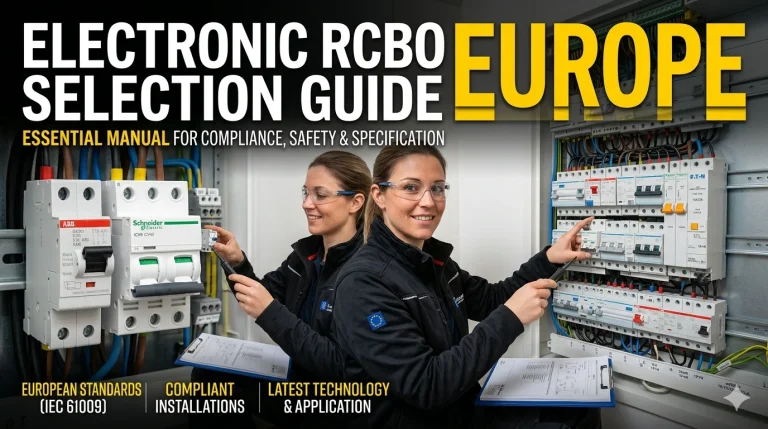
Discover why modern European infrastructure requires electronic RCBOs (FI/LS). Learn about Type A sensitivities, IEC 61009-1 compliance, and AFDD integration.
MCB, MCCB, ACB, and VCB are all circuit breakers — but they are not interchangeable. Each type is designed for a specific voltage range, current level, and application environment. Selecting the wrong breaker can result in inadequate fault protection, reduced reliability, or unnecessary cost. In practice, the selection process is straightforward once you focus on […]
A standard molded case circuit breaker (MCCB) contains five essential internal systems: a current-carrying assembly, a trip mechanism, an arc-extinguishing system, an operating mechanism, and an insulated housing. Each component plays a specific role. Together, they detect abnormal current, interrupt fault conditions, and protect cables and equipment from damage. Understanding these internal parts helps engineers […]
Choosing the right molded case circuit breaker (MCCB) means matching the breaker’s protection characteristics to your system’s voltage, load profile, and available fault current — not just picking a rated current value. An undersized breaker risks nuisance trips and overheating. An oversized one may fail to protect cables during a fault. The right selection balances: […]
GFCI and RCBO both prevent electric shock — but they are not the same device. A GFCI protects against ground faults only. An RCBO protects against ground faults, overloads, and short circuits in one unit. That single difference determines where each device belongs. If you’re working in the United States or Canada, you’ll usually install […]
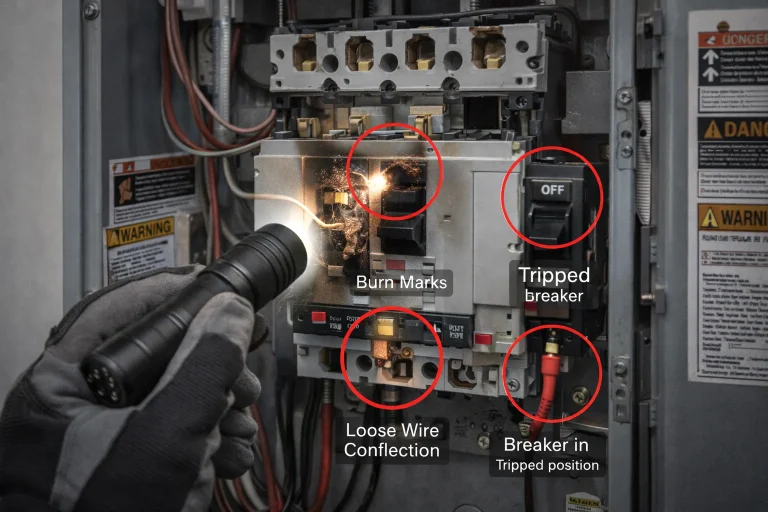
How to tell if a circuit breaker has gone bad, start with this: a bad breaker often trips under normal loads, won’t reset, feels hot, smells burnt, shows discoloration/melted plastic, or makes buzzing/crackling noises. The catch is that a breaker can also trip because of a real overload, short, or wiring issue—so guessing can waste […]