Power surges can damage electronics like TVs, computers, and appliances in seconds. Clamping voltage is the key to protecting these devices with a surge protection device. We will explain what is clamping voltage and how to choose the right surge protector.
What Is Clamping Voltage?
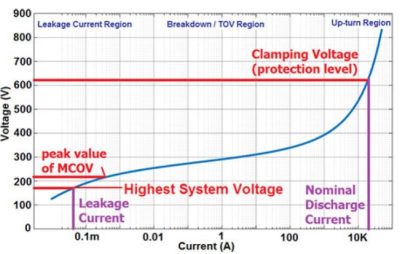
Clamping voltage is the maximum voltage a surge protector allows to pass to connected devices during a power surge. When a surge occurs—say, a 6,000V spike from lightning—the surge protector “clamps” the voltage to a safe level, such as 330V, diverting excess energy.
This level, often called the Voltage Protection Rating (VPR), is a critical specification for surge protectors.
Clamping voltages typically range from 330V to 600V, depending on the device and application. For example, a 400V clamping voltage ensures that a surge is reduced to 400V, protecting sensitive circuits. Industry standards test surge protectors with high-voltage surges (e.g., 6,000V at 3,000A) to verify their clamping performance.
Why Is Clamping Voltage Used?
Why is clamp voltage used in surge protection? It safeguards electronics from overvoltage events, such as lightning, power grid fluctuations, or electrical faults. These can cause fires, data loss, or hardware failure. Clamping voltage defines the threshold at which a surge protector activates, ensuring only safe voltage reaches the devices.
Surge protectors use components like Metal Oxide Varistors (MOVs) to absorb surge energy and redirect it as heat or to ground. For instance, during a 10,000V surge, a 400V clamping voltage limits the output to 400V, protecting a home theater system.
Clamping voltage is especially critical in regions prone to frequent storms or unstable power grids, where surges are common. It plays an important role in outdoor surge protector.
How Clamping Voltage Works on Surge Protectors
What is the clamping voltage of a surge protector from a technical perspective? Surge protectors rely on specialized components to manage voltage spikes:
Metal Oxide Varistors (MOVs): Absorb surge energy and convert it to heat, clamping voltage within nanoseconds. MOVs are versatile, handling surges from 1,000V to over 10,000V.
Transient Voltage Suppression (TVS) Diodes: Provide precise, fast-acting clamping for low-voltage applications, ideal for sensitive electronics like smartphones or IoT devices.
Gas Discharge Tubes (GDTs): Manage high-energy surges in industrial or telecommunications systems, complementing MOVs for robust protection.
Silicon Avalanche Diodes (SADs): Used in high-speed circuits, offering ultra-fast response times for data centers or automotive electronics.
When a surge exceeds the clamping voltage (e.g., 400V), these components activate, diverting excess energy.
For example, a 220V surge in a standard household system triggers an MOV to clamp the output to 330V, protecting connected devices. The response time ensures minimal exposure to harmful voltage. However, repeated surges can degrade MOVs, reducing their lifespan, especially with low clamping voltages.
Testing involves simulating surges (e.g., 6,000V/3,000A) to measure clamping performance. Advanced surge protectors combine multiple components (e.g., MOVs and TVS diodes) for layered protection, ensuring reliability across diverse applications. Some high capacity surge protectors even have a remote signaling option for remote monitoring.
The comparison of clamping voltage vs breakdown voltage is key to understanding surge protection:
Breakdown Voltage: The voltage at which a component (e.g., MOV or TVS diode) begins to conduct electricity, initiating the clamping process. It’s typically 5–10% lower than the clamping voltage.
Clamping Voltage: The peak voltage allowed to pass to connected devices after the surge is diverted.
For instance, an MOV with a 300V breakdown voltage starts conducting at 300V but clamps the surge at 330V. This difference arises because clamping voltage accounts for the component’s resistance and energy dissipation.
In practice, a lower breakdown voltage enables faster response, but the clamping voltage determines the final protection level. For sensitive applications (e.g., medical imaging equipment), a surge protector with a low breakdown and clamping voltage is critical to prevent micro-damage to circuits.
Another important distinction is clamping voltage vs let-through voltage:
Let-Through Voltage: Often synonymous with clamping voltage, it’s the maximum voltage a surge protector allows to reach devices. Industry standards use this term to define VPR.
Clamping Voltage: The same concept, commonly used in product specifications.
Typical let-through voltages range from 330V to 600V. For example, a 330V let-through voltage offers superior protection for a gaming console, while a 500V rating may suffice for a refrigerator.
The choice depends on the device’s voltage tolerance and surge exposure risk. In high-precision environments (e.g., laboratories), a 330V let-through voltage minimizes risk, while industrial settings may tolerate higher values for cost efficiency.
Testing ensures consistency, with surge protectors subjected to standardized pulses (e.g., 6,000V/3,000A). Some advanced models dynamically adjust clamping based on surge intensity, enhancing durability.
Key Surge Protector Metrics Beyond Clamping Voltage
Clamping voltage is critical, but other metrics ensure comprehensive protection:
Joule Rating: Measures energy absorption capacity, expressed in joules. A 1,000-joule rating handles moderate surges, while 3,000 joules suits high-risk areas (e.g., storm-prone regions). Higher ratings extend lifespan but increase size and cost.
Response Time: The speed of activation, typically under 1 nanosecond. TVS diodes offer sub-nanosecond response for data lines, while MOVs suffice for power lines.
Maximum Surge Current: The peak current the device can withstand (e.g., 20,000A for lightning surges). Industrial applications may require 100,000A ratings.
Clamping Time: The duration the surge protector sustains clamping, critical for prolonged surges (e.g., grid faults lasting milliseconds).
Trade-offs are key: a 330V clamping voltage protects better but stresses components, reducing lifespan. A 500V model lasts longer but allows higher voltage, risking sensitive devices. For example, a 400V, 2,000-joule surge protector balances protection and durability for home offices.
How to Choose a Surge Protector Based on Clamping Voltage
Selecting a surge protector requires balancing clamping voltage with other factors.
Follow these steps:
Evaluate Clamping Voltage: Choose 330V–400V for sensitive electronics (e.g., computers, medical devices) and 400V–600V for less critical devices (e.g., lighting). Lower values offer better protection but may wear out faster.
Check Industry Certification: Ensure the surge protector meets international standards (e.g., IEC 61643-11 or equivalent) for reliable clamping performance.
Assess Device Sensitivity: High-end audio systems or servers need 330V clamping, while appliances like washers tolerate 500V.
Verify Joule Rating: Opt for 1,000–3,000 joules for household use, higher for industrial or storm-prone areas.
Consider Response Time: Sub-nanosecond response is ideal for data centers or telecom equipment.
Look for Additional Features: Indicators for protection status, multiple outlets, or USB ports enhance utility.
Final Thoughts
Clamping voltage is the heart of surge protection, ensuring electronics survive power surges from lightning or grid faults.
By choosing a surge protector with the right clamping voltage, robust joule rating, and fast response time, one can protect everything from smartphones to industrial equipment. Understanding clamping voltage, breakdown voltage, and let-through voltage helps you make informed choices.
Why Choose OOHMAGE as Your Surge Protector Supplier?
Global Standards: Products comply with international standards of safety and quality; they are durable and perform with longevity.
Expert Support: We have experts who can consult on the selection, installation, and maintenance of the product.
With OOHMAGE, you have the confidence to equip your power systems for even the most demanding applications.
FAQs
What is clamping voltage on a surge protector?
Clamping voltage, or Voltage Protection Rating (VPR), is the maximum voltage a surge protector allows during a surge, e.g., reducing a 6,000V spike to 330V.
Why is a lower clamping voltage better?
Lower clamping voltages (e.g., 330V) limit voltage closer to normal levels, offering better protection for sensitive devices but potentially reducing component lifespan.
How is clamping voltage tested?
Industry standards simulate surges (e.g., 6,000V/3,000A) to measure clamping voltage, ensuring consistent performance across applications.
What’s the difference between clamping and breakdown voltage?
Breakdown voltage (e.g., 300V) is when a component starts conducting, while clamping voltage (e.g., 330V) is the peak voltage allowed to pass.
Can clamping voltage affect surge protector lifespan?
Yes, lower clamping voltages trigger more frequent activation, wearing out components like MOVs faster. Higher joule ratings can mitigate this.
Figure 1. Three-phase SPD selection starts with system facts, not the largest kA number. A three-phase surge protector should not be selected by the largest kA number on its label. First confirm the system voltage, whether a neutral is present, the earthing arrangement, the installation point, and the required SPD type. Then compare Uc, Up, […]
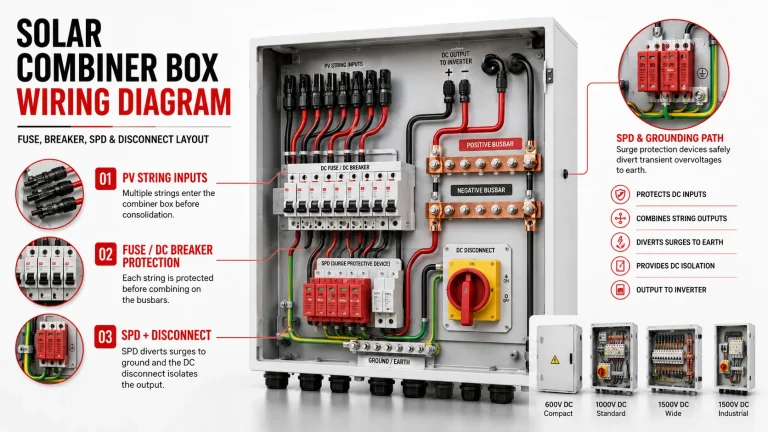
Introduction The wiring diagram of the solar energy combiner box shows how multiple photovoltaic strings enter the combiner box, pass through the string protection device, connect to the positive and negative busbars, ground the surge protection device, and connect to the inverter through the DC circuit breaker. In other words, this diagram not only indicates […]
Sudden power problems do not damage electrical equipment in the same way. Some failures come from long-term voltage instability, while others happen in a split second due to high-energy surges. That’s exactly why a voltage protector and a surge protector serve different purposes—and why using the wrong one can still leave your equipment exposed. In […]