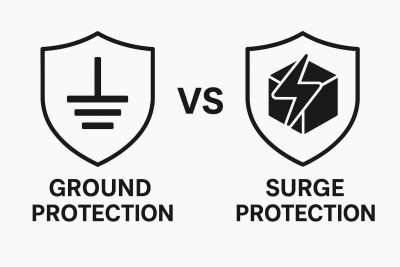
Imagine a lightning strike hitting your neighborhood, threatening your expensive electronics, or a faulty wire putting your family at risk of electrical shock. Understanding ground protection vs surge protection is crucial for safeguarding homes and devices.
Ground Protection: The Basics
What is Grounding in Electrical Systems?
Ground protection, commonly known as grounding or earthing, is a critical safety mechanism in electrical systems.
It directs excess or stray electricity, such as from a fault or lightning strike, into the earth, preventing electrical shocks, fires, and equipment damage. Grounding is a non-negotiable requirement under some regional standards.
Grounding serves as the backbone of electrical safety, ensuring that any unintended electrical current has a safe, low-resistance path to dissipate, protecting both people and property.
How Grounding Protects Us
Grounding protects by creating a controlled path for fault currents. If a wire becomes loose or an appliance malfunctions, the excess electricity flows through the grounding system to the earth, triggering a DC circuit breaker or fuse to shut off the power. This rapid response prevents:
Electrical Shocks: By redirecting current away from people touching faulty equipment.
Fires: By stopping dangerous currents that could ignite flammable materials.
Equipment Damage: By stabilizing voltage and reducing stress on electrical components.
Without grounding, stray currents could energize metal surfaces (e.g., appliance casings), posing serious risks.
A grounding system consists of several key components:
Grounding Rod: A metal rod (typically copper or galvanized steel) driven deep into the earth to establish a connection with the ground.
Grounding Wires: Copper wires that connect the electrical system (e.g., outlets, panels) to the grounding rod.
Electrical Panel Connection: The grounding system ties into the main service panel, ensuring all circuits are protected.
Grounding Electrodes: Additional components like water pipes or concrete-encased electrodes may supplement the system.
The system’s effectiveness depends on low electrical resistance, ideally less than 25 ohms for residential setups. Low resistance ensures that fault currents flow easily to the earth, minimizing risks. Periodic testing with tools like a ground resistance meter is essential to verify performance.
Grounding Standards and Testing
The NEC outlines strict guidelines for grounding, including proper rod depth (at least 8 feet) and wire sizing (based on system capacity).
Grounding systems must be tested every 1–3 years by a licensed electrician to ensure compliance and functionality. Testing involves measuring resistance and inspecting connections for corrosion or wear, especially in areas with high soil resistivity (e.g., rocky or dry regions).
Surge protection refers to surge protection devices or systems to shield electronics and appliances from voltage spikes—sudden increases in electrical voltage that can damage or destroy sensitive equipment. (For more information on surge protection devices, read another blog: Everything about Surge Protection Devices.)
These spikes can result from:
Lightning Strikes: Direct or nearby strikes can send thousands of volts through power lines.
Power Grid Fluctuations: Switching operations or outages can cause surges.
Internal Sources: Large appliances (e.g., HVAC systems) cycling on/off can create smaller surges.
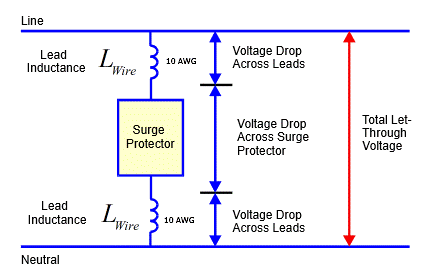
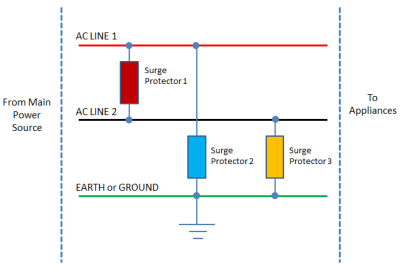
Surge protectors work by either absorbing excess voltage or diverting it to the grounding system, ensuring that only safe voltage levels reach the devices.
Types of Surge Protectors
Surge protectors come in various forms, each suited to specific needs:
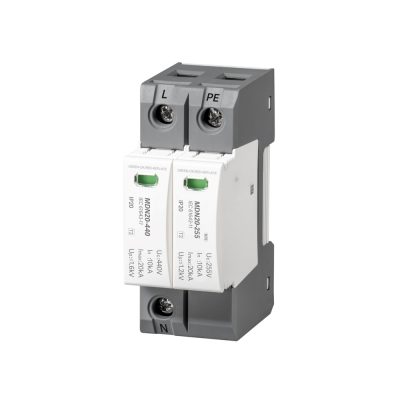
Whole-House Surge Protectors: Installed at the main electrical panel, these protect all circuits in a building. They’re ideal for comprehensive protection, especially in lightning-prone areas.
Point-of-Use Surge Protectors: Plug-in devices, such as power strips or outlet adapters, protect individual appliances (e.g., computers, TVs, or gaming consoles).
Specialty Surge Protectors: Integrated into equipment or designed for highly sensitive devices (e.g., medical equipment, telecommunications systems).
Each type serves a unique role, and combining them often provides the best protection.
Key Specifications to Understand
When evaluating surge protectors, consider these technical specifications:
Joule Rating: Measures the amount of energy a surge protector can absorb before failing. Higher joule ratings indicate better protection and longer lifespan.
Clamping Voltage: The voltage level at which the protector begins to divert excess voltage. Lower clamping voltages (e.g., 330V) offer better protection by activating sooner.
Response Time: How quickly the protector reacts to a surge. Faster response times (e.g., less than 1 nanosecond) minimize exposure to damaging voltage.
UL 1449 Compliance: A safety standard that ensures the protector meets rigorous performance and safety criteria.
Maximum Surge Current: Indicates the largest surge the device can handle, measured in amperes (e.g., 50,000A or higher for whole-house protectors).
Understanding these specs helps you select a surge protector that matches your needs, whether for a single device or an entire building.
Ground Protection vs Surge Protection
Aspect
Ground Protection
Surge Protection
Purpose
Prevents electrical shocks and ensures human safety
Protects electronics and appliances from voltage spikes
Mechanism
Redirects fault or excess electricity to the earth via grounding rods and wires
Absorbs or diverts excess voltage to prevent damage to devices
Installation
Requires professional setup, including grounding rods, wires, and panel connections
Ranges from plug-and-play (point-of-use) to professional installation (whole-house)
Maintenance
Periodic testing every 1–3 years to ensure low resistance and NEC compliance
Replacement every 2–5 years or after significant surge events
Use Cases
Mandatory for all electrical systems to meet safety codes
Optional but critical for protecting valuable electronics, especially in high-risk areas
Dependency
Provides the foundation for surge protectors
Relies on a proper grounding system to divert excess voltage safely
Surge protectors depend on a properly installed grounding system to function effectively. When a surge occurs, the protector diverts excess voltage to the ground wire, which channels it safely to the earth.
Without grounding, a surge protector cannot redirect this voltage, leaving your electronics vulnerable to damage. This dependency debunks the myth that surge protectors work equally well in ungrounded systems.
Are both of them necessary?
Grounding is non-negotiable—it’s required by electrical codes to ensure safety and prevent hazards. Surge protection, while optional, is highly recommended for anyone with valuable electronics or in areas prone to lightning or power fluctuations. The two systems complement each other:
Grounding: Protects people and ensures system stability by handling fault currents.
Surge Protection: Protects equipment by mitigating voltage spikes that grounding alone cannot address.
Where Ground and Surge Protection Matter Most
Grounding and surge protection are vital across various settings, each with unique requirements.
Grounding: Ensures safety by preventing shocks from faulty appliances or wiring. Essential for code compliance and protecting residents.
Surge Protection: Guards TVs, computers, gaming consoles, and smart home devices. Whole-house surge protectors are ideal for comprehensive coverage, especially in lightning-prone regions.
Commercial Facilities:
Grounding: Critical for offices and data centers to protect employees and ensure the reliable operation of servers and networking equipment.
Surge Protection: Whole-house surge protectors prevent costly downtime and damage to sensitive equipment like servers, routers, and workstations.
Industrial Settings:
Grounding: Specialized systems are needed for heavy machinery, ensuring worker safety and preventing faults in high-power environments.
Surge Protection: Protects control systems, motors, and automation equipment from surges that could halt production.
Lightning-Prone Areas:
Both Systems: Essential to mitigate risks from frequent storms. Lightning can cause catastrophic surges, making whole-house surge protectors and robust grounding critical.
How to Choose Between Ground and Surge Protection
Assess Your Needs
Selecting the right system depends on your specific circumstances:
Home or Facility Size: Larger properties with multiple circuits benefit from whole-house surge protectors to cover all devices efficiently.
Value of Electronics: High-end equipment (e.g., home theater systems, gaming PCs, or server racks) justifies investment in quality surge protectors.
Lightning Risk: Use weather data or lightning strike maps to assess your area’s risk. Regions with frequent storms require both robust grounding and surge protection.
Existing Electrical Setup: Older homes may need grounding upgrades to meet modern NEC standards, while newer homes may already have adequate grounding.
Key Considerations
Grounding: A one-time investment that ensures safety and code compliance. It requires professional installation and periodic maintenance, but provides long-term reliability.
Surge Protection: Offers flexible options (point-of-use or whole-house) but requires periodic replacement due to wear from surge events. Budget for replacements every 2–5 years.
Risk Tolerance: If you rely on critical electronics (e.g., for work-from-home setups or business operations), surge protection is a wise investment to avoid costly replacements.
Steps to Get Started
Inspect Your Grounding System: Hire an electrician to test your home’s grounding resistance and verify NEC compliance.
Evaluate Surge Protection Needs: Identify critical devices (e.g., computers, appliances) and decide between point-of-use or whole-house protectors.
Consult a Professional: For grounding upgrades or whole-house surge protectors, get quotes from licensed electricians.
Monitor and Maintain: Schedule regular grounding tests (every 1–3 years) and replace surge protectors as needed.
OOHMAGE Electrical Equipment: Protect Home and Electronics
Ground protection is the foundation of electrical safety, preventing shocks and ensuring compliance with safety codes. Surge protection builds on this foundation, safeguarding valuable electronics from damaging voltage spikes. Together, they create a comprehensive defense against electrical hazards, from lightning strikes to faulty wiring.
For trusted and reliable electrical equipment, come to OOHMAGE and choose the right equipment for project success.
FAQs
Do surge protectors work without grounding?
Surge protectors rely on a grounding system to divert excess voltage safely. Without proper grounding, their ability to protect electronics is significantly reduced, leaving devices at risk of damage from surges.
Is it necessary to have a whole-house surge protector?
Whole-house surge protectors are recommended for homes in lightning-prone areas or with valuable electronics. They protect all circuits, complementing point-of-use surge protectors for critical devices, and provide comprehensive coverage against surges.
How often should grounding systems be tested?
Grounding systems should be tested every 1–3 years by a licensed electrician to ensure compliance with NEC standards and maintain safety. Testing is especially important in areas with corrosive soil or high electrical activity.
Can a beginner install surge protectors on his own?
Point-of-use surge protectors are plug-and-play and DIY-friendly, requiring no special skills. Whole-house surge protectors, however, require professional installation by an electrician to ensure safe integration with your electrical panel.
What’s the difference between grounding and bonding?
Grounding connects the electrical system to the earth to prevent shocks, while bonding connects metal parts (e.g., pipes, panels) to ensure they share the same electrical potential, reducing the risk of shocks from voltage differences. Both are critical for safety.
Can grounding eliminate all electrical risks?
Grounding reduces risks like shocks and fires by providing a safe path for fault currents, but it doesn’t protect against voltage spikes that can damage electronics. Surge protectors are needed to address these spikes.
Can surge protectors last forever?
Surge protectors wear out after absorbing multiple surges or a single large event. Most need replacement every 2–5 years, and many include indicator lights to signal when they’re no longer effective.
Are all surge protectors the same?
Surge protectors vary widely in quality and performance. Key differences include joule ratings, clamping voltage, and UL 1449 compliance. Choosing a high-quality protector ensures better protection for devices.
Figure 1. Three-phase SPD selection starts with system facts, not the largest kA number. A three-phase surge protector should not be selected by the largest kA number on its label. First confirm the system voltage, whether a neutral is present, the earthing arrangement, the installation point, and the required SPD type. Then compare Uc, Up, […]
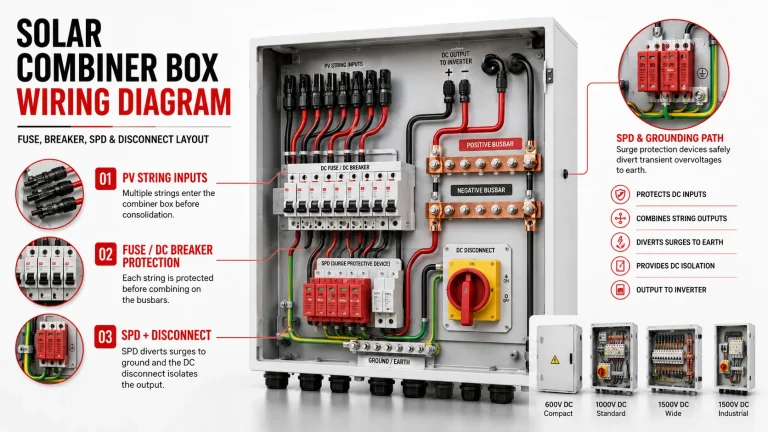
Introduction The wiring diagram of the solar energy combiner box shows how multiple photovoltaic strings enter the combiner box, pass through the string protection device, connect to the positive and negative busbars, ground the surge protection device, and connect to the inverter through the DC circuit breaker. In other words, this diagram not only indicates […]
Sudden power problems do not damage electrical equipment in the same way. Some failures come from long-term voltage instability, while others happen in a split second due to high-energy surges. That’s exactly why a voltage protector and a surge protector serve different purposes—and why using the wrong one can still leave your equipment exposed. In […]