Surge Protection Devices (SPDs) safeguard appliances and systems against voltage surges caused by external sources such as lightning, or internally generated as a result of power switching.
Like any protective device, however, being able to test and maintain your SPD ensures that it functions as intended. How to test SPD devices effectively? Read this article to find the answer! It has covered the testing equipment and the troubleshooting processes.
What Are Surge Protection Devices (SPDs)?
A Surge Protection Device (SPD) is a protective device that protects sensitive electrical equipment from power surge damage. It works by diverting excess voltage to the ground, preventing electrical systems compromise.
Read this article to learn more about surge protection devices:
Type 1: Main service entrance, protection against direct lightning and large surges.
Type 2: Used in distribution panels, offering protection from residual surges that may arise in the cabling.
Type 3: Small units installed at sensitive equipment, providing end-level protection against residual voltage spikes.
For outdoor Type 2 SPD replacement or specification checks, compare OMDN40 outdoor Type 2 SPD and OMDN60 outdoor Type 2 SPD options against the installation environment and project rating requirements.
How SPDs Work
SPDs control the voltage levels in electricity circuits and act when they sense a surge. When sensing a high level of voltage, the SPD reroutes a built-in component such as Metal Oxide Varistors (MOVs) or Gas Discharge Tubes (GDTs), which redirect the surge to the ground, hence, not reaching devices it is wired to.
These devices remain in standby condition under normal operating conditions, hence the protection is still effective once a surge has been detected. When the voltage returns to a safe level, the SPD self-clears and resumes monitoring automatically.
Signs that an SPD Needs Testing
When to Test an SPD?
SPDs should be tested at regular intervals to ensure they function. They need to be tested under the following conditions:
After a Lightning Storm or Extreme Weather: Lightning surges can overwhelm an SPD. Testing after a storm is essential to check if the SPD has functioned properly.
After Power Outages or Electrical Faults: If a building experiences a power outage, brownout, or circuit breaker tripping, it’s advisable to test the SPD to ensure that it hasn’t been damaged by the surge.
Scheduled Maintenance: Regular examination, particularly within industrial and corporate settings, sees to it that your SPD continues to be operational and offers protection as required.
Symptoms of a Faulty SPD
There are clear-cut symptoms of a faulty SPD. Some of these common symptoms include:
Light Indications: Red light in most situations indicates failure, especially with equipment with thermodynamic controls or LED status indication.
Unstable Power Supply: Where there are temporary power drops or spikes in the equipment that is connected, it can be a reflection of a deficient SPD.
Overheating: Overheating of the SPD housing may indicate internal failure in case the equipment has been subjected to repeated power surges.
How to Test a SPD Device Step-by-Step
Visual Inspection
Start with a physical inspection of the SPD for cosmetic damage. Check for cracks, discoloration, or burning of the exterior casing. The status indicator LED should be lighted green, which indicates the device is properly operating. Red or there is no illumination, could indicate a fault. In this case, additional testing needs to be done.
Using a Multimeter for Basic Voltage Tests
A multimeter is an easy-to-use tool for performing basic tests on your SPD. Here’s how:
Set the Multimeter: Set your multimeter to the AC voltage mode.
Measure Voltage: Measure the voltage at the input and output terminals of the SPD. The input terminal should show a normal supply voltage, while the output terminal should show the same voltage if the SPD is functioning correctly.
Interpret Results: If the voltage readings are higher or lower than normal, it may be a sign of failure in the SPD.
Conducting an Insulation Resistance Test
An insulation resistance test is conducted to verify whether the internal components of the SPD have deteriorated, something that occurs over time.
Connect the Tester: Use an insulation resistance tester and attach the leads to the input and output terminals of the SPD.
Test Resistance: Conduct the test and document resistance readings.
Interpret the Results: An indication lower than the manufacturer’s specification will provide a reading to show diminishing insulation performance and the possibility of replacing the SPD.
Professional SPD Tester for Comprehensive Testing
Professional SPD testers are utilized to measure the dynamic performance of an SPD. The testers simulate real surge conditions, allowing you to confirm how effectively the SPD performs under high-voltage events. The testers provide a thorough analysis of the protection capability of the SPD by testing the MOV, GDT, or spark gap for proper function.
What is the Right Tool to Check a Surge Protector?
SPDs must be tested using dedicated tools that will cause the device to function under various conditions. The main tools used to test SPDs are:
Multimeters: For basic voltage and continuity tests.
Insulation Resistance Testers: For testing the internal insulation of SPDs.
SPD Testers: Professional-level testers that simulate surge voltage to test the dynamic response of the SPD.
Choosing the Right Testing Tool for Different Needs
For Homeowners: A multimeter will be adequate for routine checks and voltage readings.
For Professionals and Large-Scale Installations: SPD testers and insulation resistance testers are needed for thorough testing, mainly in commercial and industrial environments.
How Often to Test the SPD Devices?
Recommended Testing Frequency
Residential: In a house, it is recommended that you test your SPD every 12 months or following extreme weather events.
Commercial and Industrial: For more hazardous spaces, testing must be carried out every 3–6 months, particularly if the space is subject to frequent lightning or power spikes.
Factors That Affect Testing Frequency
There are five factors that determine how frequently an SPD is tested:
Environmental Conditions: Spaces vulnerable to lightning or electrical interference should be tested more frequently.
SPD Age: Older SPDs tend to degrade and must be checked more often.
Application: SPDs to critical systems have to be examined regularly so that there is never a lapse in service.
Troubleshooting and Maintenance Tips for SPDs
Typical Failures of SPDs and Fixes
Abnormal Indicator Lights: Red showing or lack of indication on any lamp may denote internal failure. The SPD tends to have to be replaced under such conditions.
Overheating: When the SPD casing gets very hot, this can be a symptom of failure of internal components. Turn off the power supply immediately and inspect the device.
Extending the Life of a SPD
Regular Visual Checks: Check cables and connections for signs of wear and tear.
Remote Monitoring: Some high-end SPDs have remote monitoring capabilities that allow you to check their operation without visual inspection.
When to Replace Your SPD
End of Life: Once an SPD has experienced its surge capacity, it should be replaced. An average quality SPD can handle up to 20 surge incidents.
Frequent Activation: When the SPD continuously activates for power surges frequently, it is time to consider a replacement.
Closing Words
Testing your SPD device is a critical part of maintaining the integrity and safety of your electrical system. By maintaining regular inspections of SPDs and using the correct test equipment, you can ensure that the devices remain in use and continue protecting your equipment from power surges.
OOHMAGE Surge Protection Devices
In the selection of SPDs, consider voltage rating, response time, and electrical system compatibility.
OOHMAGE offers an array of quality surge protection devices for a wide range of applications. The company designed products to provide stable protection against transient voltage surges, ensuring your electrical devices’ safety and long lifespan. For more information about OOHMAGE surge protection devices, visit our official website and contact us!
FAQs
What is the best SPD testing tool for bulk orders?
For bulk orders, use SPD testers that allow simultaneous testing of multiple devices. Those with surge voltage simulation and multi-phase test facilities are ideal for large-scale users and distributors.
How can bulk buyers ensure the SPDs they purchase are of the highest quality?
Bulk buyers need to look for certifications like IEC 61643 and UL marking. They also need to evaluate the reputation of the manufacturer and warranty programs to ensure the quality and longevity of the SPD.
Can I test SPDs in commercial installations myself, or should hire a professional?
For commercial use or other large applications, it is recommended to hire a professional to test and maintain SPDs. Professionals ensure conformity with local regulations and can make use of advanced testing equipment.
How do distributors manage SPD stock for large projects?
Distributors must maintain stock of various types of SPDs, focusing on best-selling models. Collaboration with manufacturers to acquire bulk prices and customized solutions is critical for large-scale projects.
What are the key regulations for testing and installing SPDs in commercial projects?
Regulations such as BS EN 62305 and the 18th Edition of the UK Wiring Regulations (Regulation 443 and 534) provide guidelines for SPD installation and testing. B2B buyers need to ensure that these standards are met for all works.
Figure 1. Three-phase SPD selection starts with system facts, not the largest kA number. A three-phase surge protector should not be selected by the largest kA number on its label. First confirm the system voltage, whether a neutral is present, the earthing arrangement, the installation point, and the required SPD type. Then compare Uc, Up, […]
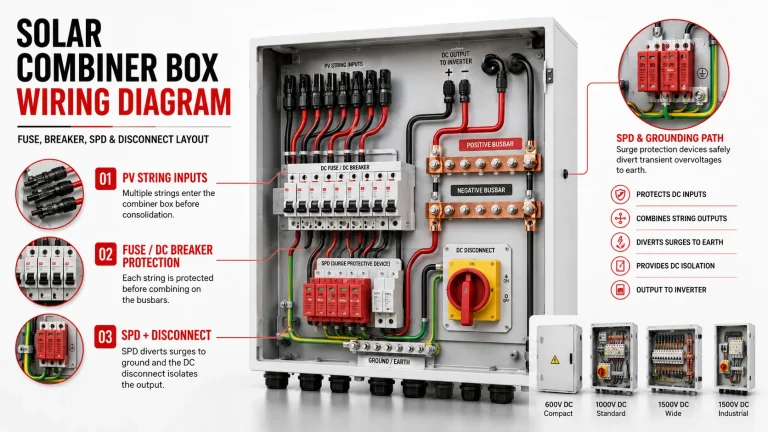
Introduction The wiring diagram of the solar energy combiner box shows how multiple photovoltaic strings enter the combiner box, pass through the string protection device, connect to the positive and negative busbars, ground the surge protection device, and connect to the inverter through the DC circuit breaker. In other words, this diagram not only indicates […]
Sudden power problems do not damage electrical equipment in the same way. Some failures come from long-term voltage instability, while others happen in a split second due to high-energy surges. That’s exactly why a voltage protector and a surge protector serve different purposes—and why using the wrong one can still leave your equipment exposed. In […]