The Evolution of Combiner Boxes in Solar Energy Systems
Published: Author: Conor
As the solar photovoltaic industry has grown and matured, so too have the components comprising the systems within a PV installation. Of all the components crucial to a PV system, few are as integral to proper operation as the PV combiner box. What used to be a straightforward component, specifically designed to aggregate DC source circuits with overcurrent protection, has now become a multi-tasking component-supporting system safety, performance, and profitability.
In this article, we’ll explore the evolution of the combiner box, examining how advancements in its design and functionality have propelled its role in solar energy systems and the broader PV industry.
The Original Role of Combiner Boxes in PV Systems
Combiner boxes have long played a crucial role in PV systems, combining multiple DC source circuits into one outgoing circuit. The design of traditional combiner boxes has included simple elements such as fuse holders and a bus to connect the load side of each fuse holder.
This basic configuration worked well for small PV systems, as it provided fundamental overcurrent protection and combined the outputs of the various circuits for the inverter.
However, as PV systems increased in size, the first generation of this design revealed several limitations. The conventional combiner box provided no disconnect for service or safety, and system diagnostics or arc fault detection were unavailable. This called for improvements in the design to respond to both safety and performance challenges.
Innovations in Combiner Box Design
Enhanced Safety Features
Amidst the growth in PV installations, the combiner box safety feature attracted more importance. The NEC of the US had a new update in 2011, which brought about a twist on the design of the combiner box.
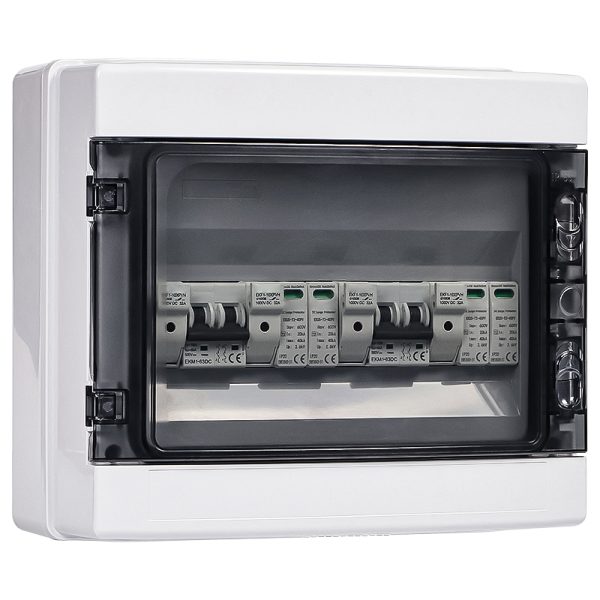
Among such changes was the introduction of disconnect switches closer to the fuse holders, allowing operators to safely isolate the circuits for maintenance.
Disconnect switches added to combiner boxes provide several functionalities: it could provide operators with the opportunity to ‘break’ the circuit and then safely open the fuse holder with no risk of exposure to a live voltage source.
It also allowed for the introduction of lock-out, and tag-out (LOTO), adding further safety for personnel that will be working on or near the combiner box.
Arc Fault Protection (AFCI) Integration
Another important development in combiner boxes has been the integration of arc fault protection. Arc faults, a dangerous electrical discharge when there is a breakdown in a conductor, present a major fire hazard in PV systems.
While arc fault protection has been a requirement in residential codes since 1999, the 2011 NEC update reflected the growing need for safety.
AFCI can be located at the central inverter, at the module level, or in the combiner box. The placement of AFCI devices at the central inverter is cost-effective, though it is difficult to locate a fault precisely in large installations.
Conversely, AFCI devices located at the module level are capable of providing specific fault locations. However, they have higher costs and may pose practicality issues for large-scale systems.
Now the industry has progressively moved to incorporating AFCI within combiner boxes. This setup has the added advantage of fault isolation at the string level and offers a good balance between cost and functionality.
Advancements in Diagnostics and Monitoring
Performance Monitoring at the Combiner Box Level
The performance of a PV system usually deteriorates with time due to various losses. These losses relate directly to energy production and affect the financial returns from PV installations. PV operators therefore depend on performance diagnosis in order to ensure proactive detection and resolution.
Historically, diagnostics were done at the central inverter. This will provide some performance data, but not always detailed enough to identify the problem. Module-level monitoring can certainly provide accurate data, but it can be prohibitively expensive for larger installations.
Combiner boxes present a practical compromise, giving the operator visibility into system performance. While the data from combiner boxes will not be as granular, it is valuable in understanding system performance and allows operators to understand where issues might be affecting energy output.
New Diagnostic Technologies
These combiner boxes are digital and include a series of diagnostic tools that can enable an operator to monitor the output in real time.
With these new technologies, the dividends from identifying and resolving underperformance could save millions. Digital monitoring also enables remote diagnostics such that operators can identify and address issues without visiting the site.
Streamlined Installation and Cost-Saving Innovations
Lower installation cost is another priority in PV systems, given the desire of the industry to reach grid parity. In view of this demand, some manufacturers designed combiner boxes with installation-friendly features to reduce time and thus labor costs.
Examples of such innovations are quick-connect boxes, pre-punched enclosures, and even pre-installed cable whips that simplify installation. While these products may have higher material costs, they do save considerable time in labor, hence allowing economy on large projects where time and installation costs can mount up very quickly.
Simplified designs decrease installation complexity and installation time, which reduces up-front costs and allows a PV developer to devote resources to other important aspects of the installation.
The Future of Combiner Boxes in Solar Energy Systems
Trends Driving Combiner Box Design
From the dawn of digital monitoring and diagnostics, the next generation of combiner boxes is likely to have more intelligent and connected technologies. This could include advanced IoT integration for predictive maintenance, whereby issues may well be anticipated by operators before they affect performance.
Combiner boxes may also include AI-driven diagnostics that would be able to analyze real time performance data, detect patterns, and predict at what time maintenance is required. These changes will contribute to the better performance of systems, decrease the costs of maintenance, and extend system life, making PV sustainable and furthering grid parity.
Compliance and Standards Development
With the growth of PV installations across the world, regulations and standards that concern combiner boxes will no doubt continue to change. As large-scale PV installations become more common, new requirements for combiner box safety, diagnostics, and monitoring are expected from regulatory bodies.
Combiner box manufacturers play a crucial role in helping meet these standards through the utilization of their extensive resources and R&D capabilities in developing compliant, innovative solutions.
Conclusion
The combiner box has come a long way from its inception as a simple fuse holder in PV systems. It is now a multi-functional component integral to the safety, performance, and cost-efficiency of today’s solar installations.
Innovations in safety, diagnostics, and optimization have created combiner boxes that are assisting the PV industry in reaching its goals of grid parity and the widespread adoption of solar energy.
Moving forward, combiner boxes will play an even greater role in the future with their designs, incorporating advanced technologies to perform their jobs better.
In that respect, combiner boxes from reliable electric equipment suppliers are bound to continue being a very important part of any solar installation in the times to come by constantly changing to meet the demands of an evolving PV landscape.
FAQ
What is the primary function of a combiner box in a solar PV system?
A combiner box combines several DC source circuits into one circuit and provides overcurrent protection needed to safely manage energy within PV systems.
How has the role of the combiner box changed in recent years?
Initially, combiner boxes were simple enclosures with basic fuse holders, but they have evolved to include features like arc fault protection, integrated disconnect switches, and monitoring capabilities that enhance safety and performance.
What is arc fault protection (AFCI), and why is it important in combiner boxes?
Arc fault protection helps in the detection and isolation of possibly hazardous electrical arcs. With AFCI inclusion in combiner boxes, it could avoid fire risks and enhance fault detection in PV systems.
Can combiner boxes improve the overall performance of a solar system?
Yes, combiner boxes with monitoring and diagnostic features allow operators to track system performance more closely, identify issues sooner, and optimise energy output.
How do diagnostic features in combiner boxes benefit PV system owners?
Diagnostic features allow for real time performance monitoring that helps identify issues, such as soiling or shading, which can impact energy production. This, in turn, allows the owner to initiate quicker maintenance responses and reduce potential energy losses.
Is there a standard location for placing arc fault protection in a PV system?
There is no universally standardised location. But placing arc fault protection at the string level within the combiner box due to cost savings and practical fault isolation benefit for arc fault protection generally is preferred.
What advancements are expected in future combiner box designs?
Future boxes may provide intelligent solutions, using IoT and AI capabilities for predictive maintenance, thereby enhancing remote monitoring and safety in large-scale PV systems.
Only “solarcombiner box” in your quotation is far from sufficient. What should be connected to the box? A PV string or an inverter output? They match different jobs. The price and enclosure size can be considered at a later stage. What connects to the input is the top priority. To be more specific, a DC combiner […]
What is a Solar Combiner Box? In PV systems, a solar combiner box brings selected photovoltaic (PV) string circuits into a defined output arrangement and can house protection, isolation or monitoring equipment. Whether a separate box is needed depends on the inverter inputs and the project design. For buyers, a clear combiner box drawing makes […]
What is a combiner box? In solar power systems, a PV combiner box plays a critical role. It simplifies the connection of multiple solar panel arrays to the inverter. It guarantees efficient power management, safety, and scalability. To choose the right PV combiner box supplier, you should have a basic idea of the product. Follow […]