A power surge can damage your electronics or even start a fire if left unchecked. Knowing what are signs of power surge in home is crucial to protect your appliances, save on repair costs, and ensure safety. We explore related information and cover the common signs, causes, prevention tips, and steps to take after a surge, applicable whether you’re in a 120V region like the US or a 230V region like Europe or Asia.
What is a Power Surge?
What is a power surge? A power surge is a sudden spike in electrical voltage beyond the standard level—120V in North America or 230V in Europe, Asia, and Australia.
This spike can overwhelm appliances, causing damage or failure. Surges can stem from external events like lightning or internal issues like faulty wiring.
Causes of Power Surges
External Causes: Lightning strikes, power outages, or utility grid switching.
Internal Causes: Faulty wiring, overloaded circuits, or defective appliances.
Impact: Fried electronics, appliance malfunctions, or fire hazards.
Common Signs of a Power Surge in Your Home
Recognizing power surge symptoms can save your devices and prevent costly damage. Below are eight universal signs to watch for, with examples to guide you.
8 Key Signs of Power Surge
Flickering or Dimming Lights: Lights flicker or dim briefly, especially when a high-power appliance like a refrigerator starts. This may indicate a voltage spike.
Tripped Circuit Breakers or Blown Fuses: The breaker panel trips frequently, or fuses blow, cutting power to parts of your home.
Scorched or Discolored Outlets: Brown or black marks around outlets or plugs signal overheating from a surge.
Burning Smells: A smell of burning plastic or wiring near outlets or appliances is a serious warning.
Buzzing or Crackling Sounds: Unusual noises from outlets, breaker panels, or appliances may indicate arcing caused by a surge.
Malfunctioning or Damaged Devices: Appliances reset, shut off, or fail—like a TV that won’t power on or a computer that reboots.
Warm or Hot Outlets: Outlets that feel warm to the touch suggest wiring damage or overload.
Frayed or Damaged Wiring: Visible wear on cords or exposed wires post-surge indicates potential damage.
These signs apply globally, though higher-voltage systems (230V) may show more pronounced outlet damage. If you notice any, act quickly.
How to Confirm a Power Surge
Not every flickering light means a surge. Follow these steps to confirm a power surge and avoid misdiagnosis.
Verification Steps
Check Breaker Panel or Fuse Box: Look for tripped breakers (like MCCB circuit breaker in home) or blown fuses. Reset cautiously, but repeated tripping requires professional attention.
Inspect Outlets: Check for discoloration, warmth, or burn marks. Never touch a hot or damaged outlet.
Test Appliances: Plug devices into different outlets to rule out device-specific issues.
Monitor Patterns: Note if signs occur during storms, outages, or when high-power appliances run.
If you suspect a surge, contact a licensed electrician—certified by standards like the NEC in the US, NICEIC in the UK, or equivalent in your region.
Causes of Power Surges in Homes
Power surges stem from various sources. Understanding these helps you prevent future incidents.
External Causes
Lightning Strikes: Common in storm-prone areas, sending massive voltage spikes through power lines.
Power Outages or Grid Switching: Utility repairs or outages can cause surges when power is restored.
Internal Causes
Faulty or Outdated Wiring: Common in older homes, especially pre-1970s in the US or pre-1980s in Europe.
Overloaded Circuits: Running multiple high-power devices (e.g., air conditioners, heaters) on one circuit.
Defective Appliances: Malfunctioning devices or low-quality extension cords can trigger surges.
Regional factors, like aging electrical grids or frequent storms, can increase surge risks.
Preventing power surges saves your electronics and reduces fire risks. Here are five actionable strategies.
Prevention Strategies
Install Surge Protectors: Use plug-in surge protectors for sensitive devices like TVs and computers. Choose models compatible with your region’s plug type.
Whole-Home Surge Protection: Install a surge protection device (SPD) at your main electrical panel, with electrician guidance.
Regular Electrical Inspections: Schedule inspections every 5–10 years, following local codes (e.g., NEC in the US, BS 7671 in the UK).
Upgrade Wiring: Rewire older homes with outdated systems to handle modern electrical loads.
Avoid Overloading Circuits: Spread high-power appliances across multiple circuits.
These steps work globally, with variations based on local electrical standards.
What to Do After a Power Surge
If you suspect a surge, act quickly to minimize damage and ensure safety. Here are the post-surge steps. Prompt action can prevent further damage and streamline insurance claims.
Unplug Devices: Disconnect all electronics to prevent further damage.
Inspect Damage: Check appliances, outlets, and wiring for signs of harm.
Contact an Electrician: Hire a licensed professional for repairs or inspections, certified by local standards.
File an Insurance Claim: Review your home insurance policy for surge damage coverage. Lightning-related damage is often covered, but faulty wiring may not be.
Final Thoughts
Power surges can strike any home, damaging electronics or posing fire risks. Watch for signs like flickering lights, scorched outlets, or malfunctioning devices.
Prevent surges with surge protectors, regular inspections, and updated wiring. If a surge occurs, unplug devices, inspect for damage, and contact a licensed electrician. Take action: install a surge protector or schedule an inspection to safeguard electrical systems.
Frequently Asked Questions
What are the first signs of a power surge at home?
Common early signs include flickering lights, buzzing sounds from outlets, tripped circuit breakers, and sudden appliance shutdowns.
Can a power surge happen without warning?
Yes. Many surges are brief and go unnoticed until devices show damage. That’s why monitoring patterns and using surge protectors is essential.
What does a power surge look like in a home?
A power surge may cause flickering lights, tripped breakers, scorched outlets, burning smells, buzzing sounds, malfunctioning devices, warm outlets, or frayed wiring.
Is it safe to reset a breaker after a surge?
If a breaker trips once, it’s generally safe to reset it. However, repeated tripping suggests an underlying issue—contact a licensed electrician.
Can a power surge cause a fire?
Yes, a severe surge can overheat wiring or appliances, potentially sparking a fire.
How do I know if my appliances were damaged by a surge?
Appliances may reset, shut off, or fail to power on. Test them in different outlets to confirm.
Are surge protectors worth it for homes?
Yes, surge protectors are affordable and effective at shielding electronics.
How often should I get my home’s wiring inspected?
Inspect wiring every 5–10 years, or sooner if you notice signs like flickering lights or tripped breakers.
Figure 1. Contactors, circuit breakers, and motor starters solve different control and protection tasks. These three devices often appear in the same motor-control panel, but they solve different problems. A contactor handles frequent, remote, or automatic switching during normal operation. A circuit breaker interrupts abnormal current within its rated capability. A motor starter normally combines […]
The main types of circuit breakers used in low-voltage distribution include miniature circuit breakers (MCBs), molded case circuit breakers (MCCBs) and residual-current devices such as RCCBs and RCBOs. They are not interchangeable. MCBs and MCCBs are selected for overcurrent protection in different circuit roles, an RCCB provides residual-current protection without integral overcurrent protection, and an […]
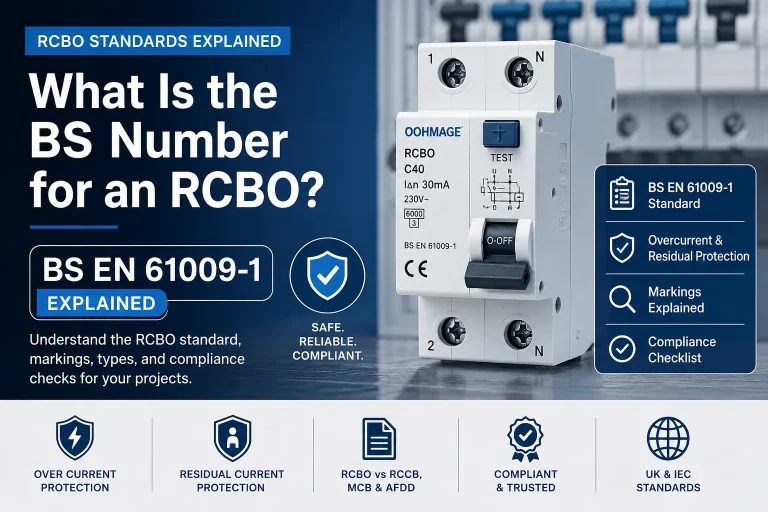
Introduction If you are searching for the RCBO BS number, the answer most commonly required in UK and IEC-based electrical procurement is BS EN 61009-1. This is the principal product standard associated with residual current circuit breakers with overcurrent protection used in residential, commercial, and similar installations. However, merely the BS number is not sufficient […]