IP65 vs IP66: Which Rating Does Your Distribution Box Need?
Ngày đăng: Tác giả: Whelve
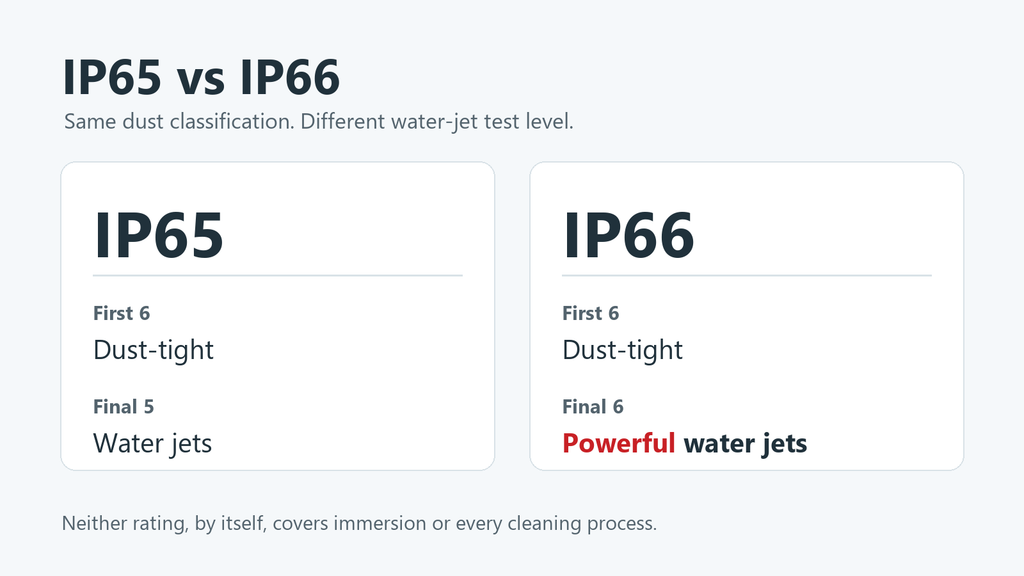
IP65 and IP66 both classify an enclosure as dust-tight, but they differ in water-jet protection. IP65 covers water jets; IP66 covers powerful water jets under the specified test conditions. Neither label, on its own, confirms suitability for immersion, every pressure-washing process, or every outdoor environment.
Start with the water exposure the distribution box actually faces and the manufacturer’s declared installation conditions. Then verify the rating for the proposed arrangement, including its door, cable entries and accessories. A rating for an empty enclosure does not settle every question about the finished assembly.
Does the code establish UV resistance or corrosion resistance?
No; check separate evidence
No; check separate evidence
Does it approve every cleaning method?
Không
Không
What must a buyer confirm?
Exact model, installation conditions and complete sealing arrangement
The same items, against the required water exposure
For this comparison, the useful distinction is the declared water-jet performance. IP66 is not a shortcut to deciding whether an enclosure suits the whole project.
When can an IP65 distribution box be considered
Consider an IP65 distribution box when the project calls for that ingress-protection level and the selected model’s environmental and installation limits suit the location. Tell the supplier whether the box is sheltered or exposed, the expected water contact, and the contaminants and temperature conditions at the site. Those details make a model-specific answer possible.
For example, “mounted below a canopy, exposed to occasional rain splash, with no washdown” tells a supplier more than “outdoor waterproof box.” The description does not automatically approve IP65; the proposed model needs its own assessment.
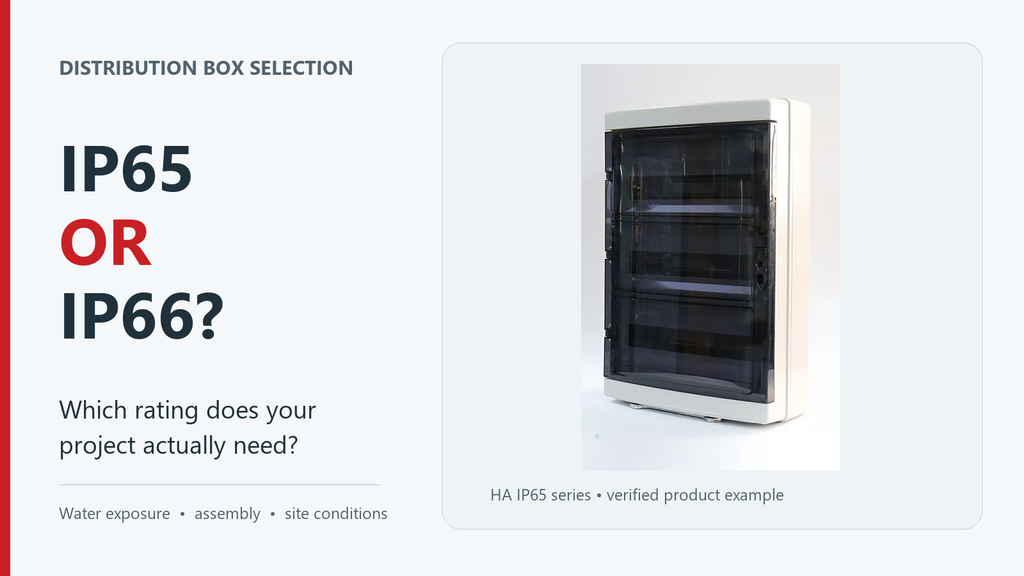
OOHMAGE lists an HA IP65 distribution-box series. Use that series as a product enquiry starting point, then confirm the proposed enclosure, accessories and project requirements. Its IP65 designation must not be rewritten as IP66 to match a specification.
When should IP66 enter the specification
Bring IP66 into the specification when the project requires protection against powerful water jets. Ask for documented IP66 performance for the enclosure arrangement being offered, and describe the actual exposure or cleaning process rather than using the bare word “washdown.”
Do not read IP66 as approval for every high-pressure or hot-water cleaning process. Water temperature, nozzle conditions, cleaning chemicals and the direction of water contact all matter to the assessment. Give the manufacturer the intended process and request confirmation for it.
A procurement specification can make the evidence request explicit:
Required ingress protection: IP66 for the proposed enclosure arrangement. Please identify the covered model and accessories, supply the applicable supporting document, and state installation and cleaning restrictions.
Where IP66 is required, check the supporting evidence for the exact model and configuration before you place the order.
Outdoor suitability needs more than an IP number
An outdoor location can expose a box to several stresses at once. Record each one separately; a water-jet classification does not stand in for the rest of the specification.
Site condition
Information to request
Direct sunlight
Outdoor-use declaration, UV-resistance evidence and temperature limits
Coastal air or chemical exposure
Relevant material, coating and corrosion-resistance information
Large day-to-night temperature changes
Condensation assessment and any approved climate-control arrangement
Installed electrical devices
Space, heat-dissipation and assembly requirements
Mechanical exposure
Separately declared impact performance, where required
Hammond’s enclosure-selection guidance treats material and environmental sealing as separate selection considerations. NEMA enclosure types also cover considerations beyond IP ratings, so do not substitute a simple conversion table for the actual project requirement.
Condensation deserves its own check. Moisture can form when humid air meets colder internal surfaces; an ingress rating is not a promise of condensation-free operation. Rittal explains this mechanism and separate climate-control measures. Any ventilation, heating or pressure-equalization solution must be selected for the enclosure and application rather than added without review.
Check what the rating actually covers
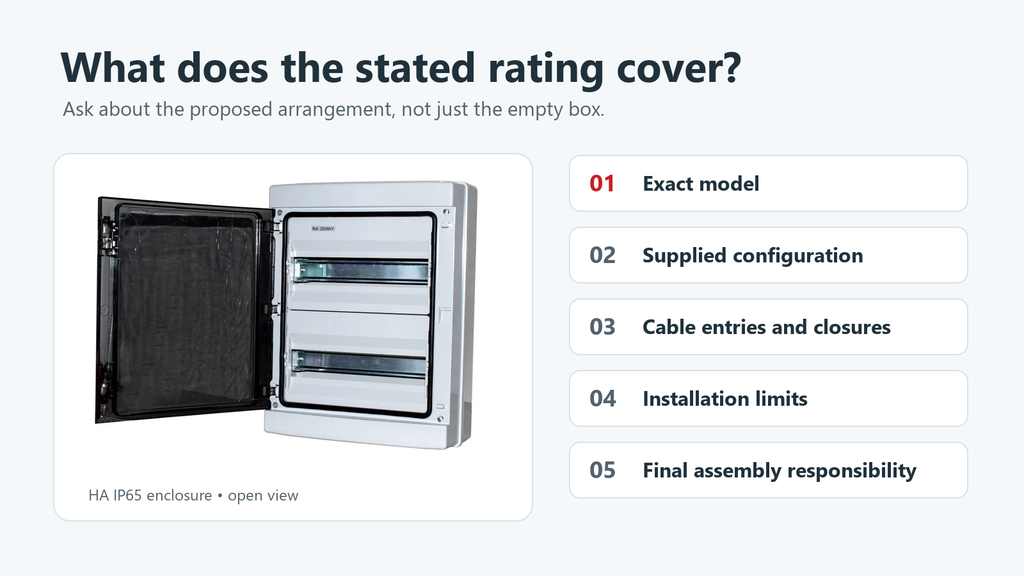
Before comparing quotations, establish what each stated rating covers: an empty enclosure, a specified arrangement of accessories, or the completed equipment offered for the project. Otherwise, two offers may appear equivalent while describing different assemblies.
Include cable glands, blanking plugs, door-mounted devices and other penetrations in that check. An individual component’s IP rating does not establish the rating of the whole assembly. Ask which combination is approved and request its installation instructions.
Use five checks to make the offer specific:
Product identity: Is the exact enclosure model identified in the supporting document?
Supplied configuration: Which lid, door, seals and accessories are included?
Cable-entry arrangement: Which entries and unused-opening closures are covered?
Installation limits: Are mounting position, closure instructions and environmental restrictions stated?
Final responsibility: Who confirms the assembled equipment against the project specification?
Together, these checks put competing offers on the same basis. The manufacturer’s instructions and the required assessment of the finished electrical assembly still govern the final choice.
What to send with a distribution box enquiry
For a useful quotation, send the required IP rating with the enclosure dimensions or way count, whether you need an empty or assembled box, the intended devices, cable-entry needs, site conditions, quantity and destination market. Include the project specification if you have one.
IP66 declares a higher level of water-jet protection. It does not, by itself, establish better corrosion resistance, UV performance, thermal performance or suitability for every site. Compare those requirements separately.
Are IP65 and IP66 waterproof?
“Waterproof” is too broad to specify the exposure the box needs to withstand. State the required IP classification and the exposure conditions instead. Neither IP65 nor IP66, on its own, covers immersion.
Can I upgrade an IP65 box to IP66 by changing the gasket?
No gasket change alone proves an upgraded assembly rating. Ask the manufacturer whether a documented IP66 configuration exists for that exact IP65 product.
Does an IP rating approve the electrical equipment inside?
No. An enclosure’s ingress-protection rating addresses one part of the specification. The responsible qualified parties need to assess device ratings, assembly design and local installation requirements separately.
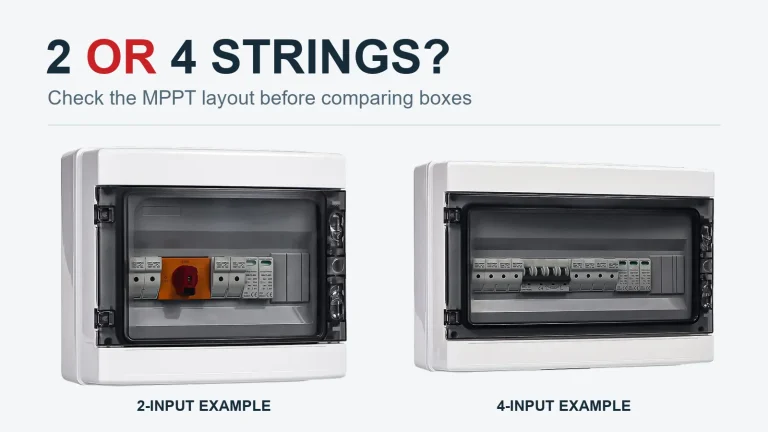
Start with the inverter layout when choosing between a 2 string and a 4 string solar combiner box. Confirm which PV strings may be combined, how many electrically separate output groups the design requires, and whether each receiving inverter input can accept the resulting voltage and current. Four string inputs do not necessarily mean one […]
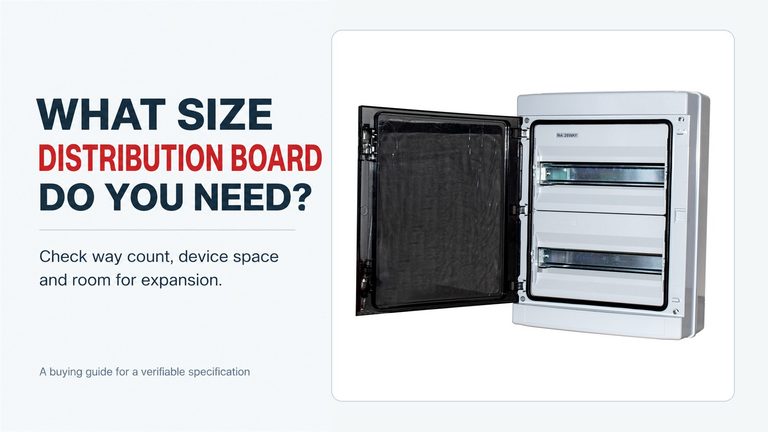
Figure 1. Board selection starts with the circuit schedule, device space, and planned reserve. A request for a “12 way distribution board” can sound specific, but it leaves the layout unresolved. One project may use mostly single-pole devices; another may need multi-pole devices, an incomer, surge protection, metering, or more terminal space. The same number […]
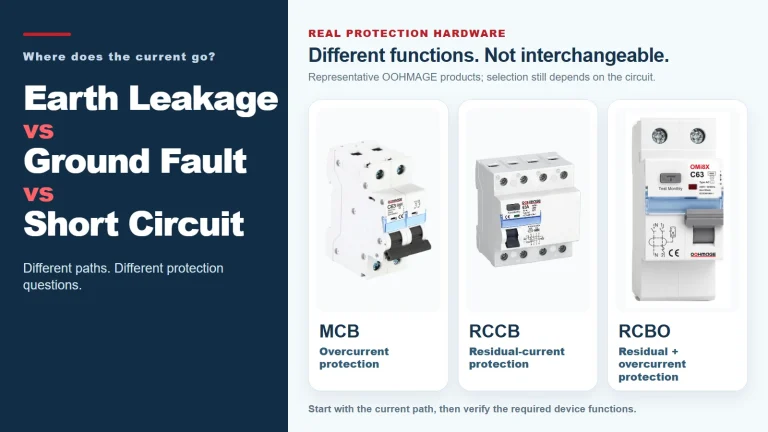
A report of “leakage,” a “ground fault,” or a “short” is not yet a diagnosis. Each term points to a current path, and each path may call for a different protection function. Earth leakage means current has left the intended live and neutral paths; it may be normal in electronic equipment or may indicate deteriorated […]