Understanding How Does a Circuit Breaker Work in Layman Terms
Published: Author: Conor
Circuit breakers are crucial in protecting electrical systems from damage overloads and short circuits may cause. The devices automatically interrupt the flow of electricity when they sense a fault. As a result, the breakers prevent hazards like electrical sparks, fires, and equipment damage. In residential and commercial buildings, circuit breakers improve electrical safety and maintain a reliable circuitry system.
How a circuit breaker works is not complicated for electric equipment suppliers. The breakers constantly monitor the current flow to the devices. When they detect excessive current in the wires, circuit breakers disconnect the flow. Thus, ensuring the electrical system remains functional and safe for the users.
Key Takeaways
Circuit breakers are essential safety devices that protect electrical systems from overloads and short circuits.
They automatically interrupt the flow of electricity to prevent damage and hazards.
Understanding how circuit breakers work can enhance safety and reliability in both residential and industrial settings.
What is a Circuit Breaker?
The safety device will automatically interrupt electrical current flow when it detects an overload or short circuit in the wires. After the current is cut off, the breakers successfully prevent damage to wiring and appliances. Moreover, they reduce the risk of electrical fires. Circuit breakers are essential for protecting both residential and commercial electrical systems.
The breakers monitor the electrical flow closely. Subsequently, they react to the inconsistencies. When they identify a fault, the circuit breaker disengages from the system. It stops the current to prevent damage. The leading response maintains the safety and integrity of electrical installations. Here are its components:
Terminal
The terminal is the point at which the circuit breaker is connected to the electrical circuit. It allows the current to flow into the breaker and then to the connected devices or wiring. The terminal ensures a secure connection. It adds to the reliable operation of the breaker.
Stationary Contact
The stationary contact is a fixed part of the circuit breaker that always remains in place. When the breaker is closed, it offers a consistent point of interaction with electrical current flow. When an overload or fault occurs, the stationary contact breaks away from the wiring that is connected to the circuit.
Catch
The catch is a mechanism inside the circuit breaker. It stays in a closed position. When the breaker identifies a fault, the catch is released. It allows the switch to move to an open position. The action interrupts the current flow. The breaker disconnects the circuit to prevent future damage.
Simple Switch
The simple switch in a circuit breaker controls the connection between the terminal and the stationary contact. It has open and closed positions to allow or stop the flow of electricity. The switch activates when the breaker identifies an oncoming overload or short circuit.
Electromagnet
The electromagnet is an important component that causes the breaker to trip during a fault. When excess current flows through the circuit, it energizes the electromagnet and generates a magnetic field. The magnetic field pulls a lever to activate the switch. It disconnects the circuit.
Types of Circuit Breakers
Now that you know how circuit breakers work, here are some of their types.
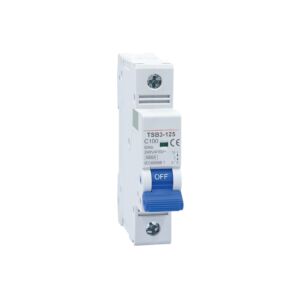
Single-Pole
Single-pole circuit breakers are the most commonly found in residential systems. They control a single circuit and endure 120 volts of electricity. The breakers are perfect for protecting low-voltage circuits such as lighting and small appliances. With their simple design, single-pole breakers are easy to install. They are simple to maintain.
Additionally, single-pole breakers are budget-friendly and reliable. They trip quickly in response to overloads or short circuits. They ensure the safety of electrical systems. Because of their simplicity, they are a famous choice for homeowners who are looking to safeguard their household wiring. It saves you from complex installation and testing requirements.
Two-Pole
Two-pole circuit breakers manage higher voltage circuits with a range of 240 volts. They are found in residential and commercial settings. They control two hot wires simultaneously. Moreover, they protect large appliances like water heaters, dryers, and air conditioners. The dual protection guarantees that both wires disconnect when a fault or overload occurs.
Moreover, two-pole breakers offer more safety features compared to single-pole breakers.
They can prevent significant electrical hazards. The circuit trips both poles in response to a short circuit or overload.
Two-pole circuits offer robust construction and the ability to handle higher voltages. They are essential for protecting expensive and major electrical appliances.
Three-Pole
Three-pole circuit breakers are essential for industrial and large commercial applications. They will protect three-phase electrical systems that are commonly used in factories and large-scale office buildings. The breakers can sustain high power loads. They ensure the safety of heavy-duty machinery and complex systems.
In addition, three-pole breakers provide detailed protection.
The circuit disconnects all three phases at the same time, of a fault.
The coordinated tripping avoids equipment damage. Also, it reduces the risk of electrical fires.
The circuit can sustain substantial electrical loads. As a result, they are a critical component in industrial safety and efficiency in operations.
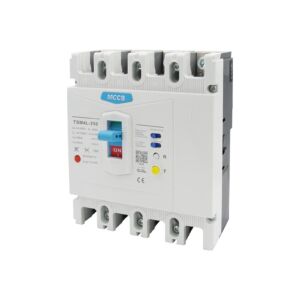
Four-Pole
Four-pole circuit breakers are used in specific industrial applications where neutral isolation is necessary. They have three phases in addition to a neutral wire. They ensure balanced protection in systems with a neutral connection. The breakers are crucial for safeguarding sensitive equipment that needs a stable neutral. Examples are certain types of generators and transformers.
They will completely isolate the electrical circuit, including the neutral.
Subsequently, the feature will prevent potential electrical imbalances and ensure comprehensive protection. The specialized application is crucial in maintaining safety.
Four-pole circuits add reliability to complex industrial electrical systems.
Circuit Breaker Working Principles
Thermal Protection
Thermal protection in a circuit breaker is from a bimetallic strip. It bends when exposed to excessive heat or current. As the current increases and generates heat, the strip heats up and bends. It triggers the breaker to open. The thermal protection disconnects the circuit. The mechanism prevents overheating in the connected wires.
Moreover, thermal protection manages overloads. They occur when a circuit is consistently attracting more current than its average rating. The bimetallic strip will gradually respond so the breaker can react to overcurrent situations. It ensures that devices and wiring are protected from damage because of excessive heat.
Short Circuit Protection
Short circuit protection requires an electromagnetic mechanism that reacts quickly to sudden, high-current situations. When a short circuit occurs, the surge generates a powerful magnetic field. It activates an electromagnet present inside the breaker. The electromagnet trips the breaker. It cuts off the current and safeguards the circuit.
Moreover, short circuit protection will prevent severe electrical damage and hazards. The circuit breaker will react quickly to short circuits. It minimizes potential damage to electrical appliances. Also, the mechanism reduces the probability of electrical fires. The instant disconnection prevents dangerous conditions because the circumstances are addressed before they cause severe harm.
Conclusion
In summary, circuit breakers are essential for protecting electrical systems. They will quickly address overloads and short circuits. Furthermore, the disconnection of electricity flow will prevent damage. At the same time, it enhances safety. The circuit breakers ensure the reliability and longevity of electrical systems in domestic and industrial settings. Don’t forget to educate your social circle on how a circuit breaker works so they learn of its importance.
Frequently Asked Questions
1. What is the purpose of a circuit breaker?
If you are thinking about how a circuit breaker works, it interrupts the flow of electricity to prevent damage. The presence is necessary during overloads or short circuits. It protects wiring and appliances from harm and reduces the risk of electrical fires. They guarantee the safety and reliability of electrical systems.
2. How often should you test circuit breakers?
Circuit breakers are tested at least once a year so they function properly. Regular testing will highlight potential issues before they aggravate into serious problems. You can consult the manufacturer’s guidelines or a professional electrician to learn about specific recommendations on testing periods.
3. What causes a circuit breaker to trip?
A circuit breaker trips when it identifies excessive current flowing from an overload or short circuit. It trips and disconnects the circuit to prevent fire. Common causes are faulty appliances, damaged wiring, or a circuit working on more current than its average capacity.
4. Can a tripped circuit breaker be reset?
Yes, you can reset a tripped circuit breaker. Simply switch the breaker to the “off” toggle. You can return it to the “on” position. If it trips again, it means the circuit is experiencing an ongoing issue that requires expert inspection. You will need to hire a professional electrician.
5. What is the difference between a single-pole and a double-pole circuit breaker?
A single-pole circuit breaker protects a 120-volt circuit and is used for standard household wiring. On the other hand, a double-pole circuit breaker is preferred for a 240-volt circuit. It is used on large appliances like dryers or ovens. The double-pole breaker disconnects hot wires at the same time for improved safety.
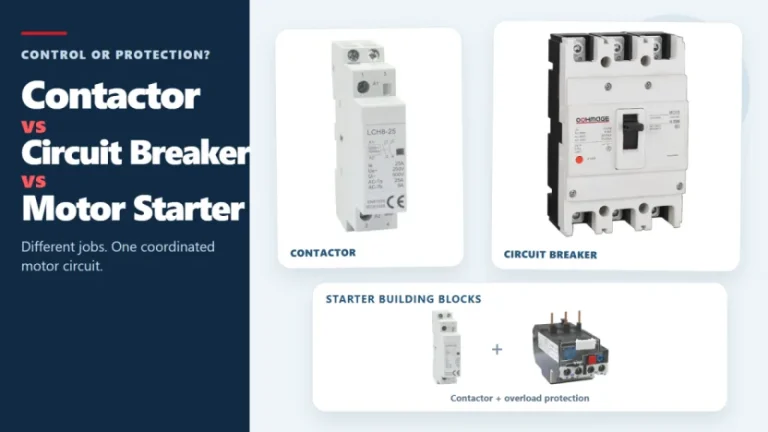
Figure 1. Contactors, circuit breakers, and motor starters solve different control and protection tasks. These three devices often appear in the same motor-control panel, but they solve different problems. A contactor handles frequent, remote, or automatic switching during normal operation. A circuit breaker interrupts abnormal current within its rated capability. A motor starter normally combines […]
Introduction The concept of remote tripping is simple, but in actual operation, project teams often encounter difficulties in specifying the components. The panel factory may require circuit breakers triggered by fire alarm relays, PLC outputs, building management system instructions, or other coordinated control. At this point, “diversion tripping” is only the first step in the […]
The main types of circuit breakers used in low-voltage distribution include miniature circuit breakers (MCBs), molded case circuit breakers (MCCBs) and residual-current devices such as RCCBs and RCBOs. They are not interchangeable. MCBs and MCCBs are selected for overcurrent protection in different circuit roles, an RCCB provides residual-current protection without integral overcurrent protection, and an […]